
Description
What Exactly Is Ivermectin 15 mg?
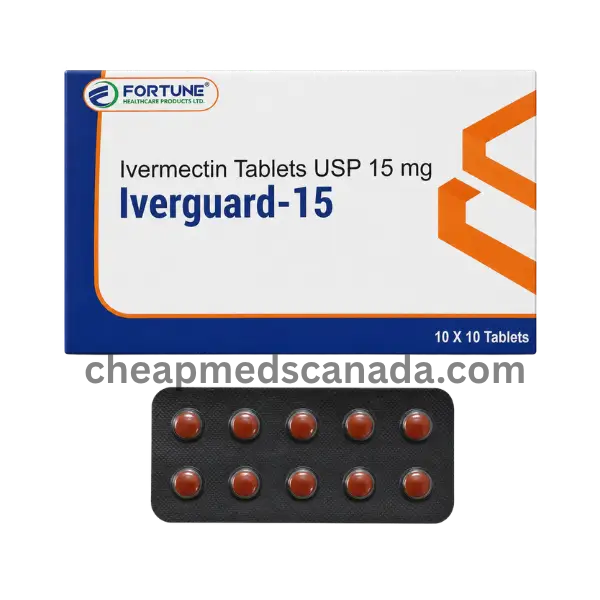
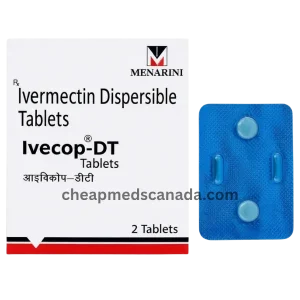
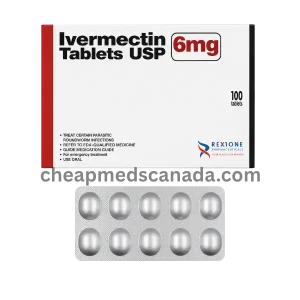
Ivermectin 15 mg is a prescription antiparasitic tablet. it's designed to get rid of parasites that have infected your body — whether they've settled into your skin, your gut, or in some cases, your eyes.
The "15 mg" part isn't a random number. Your dose is calculated based on your body weight, and people who weigh roughly between 66 and 79 kilograms typically end up with a 15 mg dose. Your doctor works this out for you — it's not something you need to figure out on your own.
You may have heard the brand name Stromectol come up. That's just the original branded version of this drug. Generic ivermectin is equally effective and usually more affordable.
How Does Ivermectin Actually Work?
Think of it this way — parasites have a nerve system that keeps their muscles working. Ivermectin goes in and essentially jams that system. It latches onto specific channels in the parasite's nervous system called glutamate-gated chloride channels. Once those get blocked, the parasite loses all muscle control, becomes completely paralysed, and dies off.
Here's the reassuring part — those particular nerve channels aren't found in the human central nervous system the same way. So while ivermectin is shutting down the parasite's system, it's leaving yours completely alone. That's what makes it both targeted and safe when used at the right dose.
Ivermectin has a well-earned reputation for tackling several different parasitic infections. Here's what it's commonly prescribed for:
- Scabies — Probably the most familiar use. Whether you've got a straightforward case or the harder-to-treat crusted scabies, oral ivermectin is often what doctors reach for when topical creams alone aren't cutting it.
- Onchocerciasis (River Blindness) — Caused by a worm called Onchocerca volvulus, spread through blackfly bites. Left untreated, it can cause irreversible vision damage. Ivermectin is the cornerstone treatment for this condition.
- Strongyloidiasis — A roundworm infection that sets up in your intestinal tract. Ivermectin is one of very few medications proven to fully clear it, and it carries official approval for this use.
- Lymphatic Filariasis — A mosquito-transmitted parasitic infection that disrupts your lymphatic system. Ivermectin plays a key role in bringing the worm population under control.
- Head Lice — In stubborn cases where topical treatments have failed, oral ivermectin can be prescribed to finish the job.
- Other Intestinal Worm Infections — Including hookworm and whipworm, where ivermectin may be part of a broader treatment plan.
Ivermectin 15 mg Dosage — What You Need to Know
Your prescribed dose is determined by one main factor — your body weight. The tables below show the standard dosing guidelines for the two most commonly treated conditions.
For Strongyloidiasis (200 mcg per kg of body weight, taken as a single dose):
| Body Weight | Recommended Dose |
|---|---|
| 15 – 24 kg | 3 mg |
| 25 – 35 kg | 6 mg |
| 36 – 50 kg | 9 mg |
| 51 – 65 kg | 12 mg |
| 66 – 79 kg | 15 mg |
| 80 kg or more | 0.2 mg/kg |
For Onchocerciasis (150 mcg per kg of body weight, repeated every 3 to 12 months as needed):
| Body Weight | Recommended Dose |
|---|---|
| 15 – 25 kg | 3 mg |
| 26 – 44 kg | 6 mg |
| 45 – 64 kg | 9 mg |
| 65 – 84 kg | 12 mg |
| 85 kg or more | 0.15 mg/kg |
For Scabies: Generally 0.2 mg/kg, often repeated once roughly two weeks later.
Use these tables as a reference, not a prescription. Your doctor's instructions take priority over any chart you find online.
How Should You Take It?
The way you take ivermectin matters — and it actually changes depending on what you're being treated for:
- For Onchocerciasis and Strongyloidiasis — Take it on a completely empty stomach. That means at least one hour before your first meal or two full hours after eating. Water only when swallowing the tablet.
- For Scabies — This one is typically taken with food, which also tends to help with any nausea.
- Always swallow the tablets whole with a full glass of water — no crushing, splitting, or chewing.
- If you've been given a single-dose prescription, that means one time only — don't repeat it unless your doctor specifically tells you to.
Side Effects of Ivermectin 15 mg
The majority of people who take ivermectin don't have a rough time with it. Side effects, when they do show up, are usually mild and don't stick around for long.
Side effects that are fairly common and generally manageable:
- Nausea or general stomach discomfort
- Dizziness or feeling a bit lightheaded
- Loose stools or diarrhoea
- Fatigue or low energy
- Mild itching or a faint skin rash
- Headache
Most of these settle on their own within a day or two. If something is bothering you or doesn't seem to be getting better, it's worth a quick call to your doctor or pharmacist.
Side effects that need immediate medical attention:
- Severe skin rash, hives, or swelling — especially of the face, lips, or throat
- Trouble breathing or swallowing
- Eye pain, redness, or unexpected changes in your vision
- Confusion, seizures, or loss of consciousness
- Intense dizziness that makes it hard to stand or walk
- Signs of liver trouble — yellowing of the skin or whites of the eyes, dark-coloured urine, or persistent nausea that won't let up
Serious reactions are uncommon, but they do happen. If anything feels off in a way that concerns you, don't try to wait it out — go to a walk-in clinic or emergency room.
Important Precautions Before You Start
Before taking Ivermectin 15 mg, these are the things your doctor needs to know about:
- Pregnancy — Ivermectin isn't generally recommended during pregnancy, especially in early stages. If there's any chance you could be pregnant, bring it up before starting the medication.
- Breastfeeding — Small amounts of ivermectin do pass into breast milk. Your doctor will help you weigh whether the benefits outweigh any potential concern.
- Children under 15 kg — This medication isn't considered safe for kids weighing less than 15 kg (roughly 33 lbs). Dosing for younger children must always be worked out by a physician.
- Liver conditions — Since ivermectin is processed through the liver, anyone with hepatic disease may need closer monitoring or a dose adjustment.
- Loa loa exposure — If you've spent time in parts of Central or West Africa where Loa loa infections are common, flag that for your doctor. In rare cases, taking ivermectin with an active Loa loa infection can trigger serious neurological complications.
- Alcohol — Skip the drinks while you're on this medication. Alcohol can amplify side effects and make you feel significantly worse.
Drug Interactions — What to Tell Your Doctor
Ivermectin plays reasonably well with most medications, but there are some combinations worth being cautious about. Always give your doctor and pharmacist a complete picture of everything you're taking — that includes vitamins, supplements, and any herbal products:
- Warfarin (blood thinners) — Ivermectin can boost the blood-thinning effect of warfarin, which raises your bleeding risk
- Benzodiazepines — The sedating effects of both medications together can be stronger than either one alone
- Valproic acid — Drug levels in the body may be affected
- Barbiturates — Can intensify central nervous system depression when combined with ivermectin
What If You Miss a Dose?
Because ivermectin is usually a single-dose medication, a missed dose isn't quite the same concern as forgetting a daily pill. That said, if your doctor has you on a schedule with repeat doses and you've missed one — don't double up to compensate. Just reach out to your healthcare provider and let them guide you on what to do next.
How to Store Ivermectin Properly
- Room temperature storage works fine — keep it below 30°C (86°F)
- Keep it away from direct sunlight, heat sources, and damp areas like bathrooms
- Leave it in its original packaging until you're ready to use it
- Store it somewhere children absolutely cannot reach
- Always check the expiry date before taking any dose — expired medication should be disposed of properly
How fast does Ivermectin 15 mg start working?
Ivermectin 15 mg typically begins working within 24 to 48 hours after administration. However, the time required for complete infection clearance depends on the type of parasite being treated and the severity of the infection. Follow-up evaluation may be necessary to confirm treatment success.
Is a single dose of Ivermectin 15 mg usually enough?
For certain infections, such as uncomplicated strongyloidiasis, a single dose is often sufficient. Other conditions, including onchocerciasis, may require repeat treatment at intervals determined by your healthcare provider to maintain control of the infection.
Is Ivermectin 15 mg available over the counter in Canada?
No. Ivermectin is a prescription-only medication in Canada and requires authorization from a licensed healthcare provider. Always obtain prescription medications from reputable, licensed pharmacies.
Can Ivermectin 15 mg be used to treat COVID-19?
No. Ivermectin is not approved for the prevention or treatment of COVID-19. Health authorities, including Health Canada and the World Health Organization, do not recommend ivermectin for COVID-19 treatment outside approved clinical settings.
Should I take Ivermectin 15 mg with food?
Ivermectin is generally recommended on an empty stomach with a full glass of water unless your healthcare provider instructs otherwise. Following the prescribed directions helps ensure consistent absorption and effectiveness.
What should I do if I miss a dose?
If you miss a scheduled dose, contact your healthcare provider or pharmacist for guidance. Do not take a double dose to make up for a missed one unless specifically instructed by a medical professional.
Final Thoughts
Ivermectin 15 mg has a long track record as a reliable, well-understood antiparasitic medication. When it's prescribed for the right condition, taken at the right dose, and used under proper medical guidance — it works. The key is sticking to your doctor's instructions, paying attention to how your body responds, and not hesitating to reach out if something doesn't feel right during treatment.
You've already done the right thing by wanting to understand what you're taking. That kind of awareness genuinely makes a difference in how well any treatment goes.
Please note that the information provided on this page is for educational and informational purposes only and should not be considered medical advice, diagnosis, or treatment. Ivermectin 15 Mg is a prescription antiparasitic medication that should be used only under the guidance of a qualified healthcare professional.
Before using this medication, inform your doctor about any medical conditions, allergies, liver problems, immune system disorders, or medications you are currently taking. Follow all prescribing instructions carefully and do not exceed the recommended dosage.
Reviews
There are no reviews yet.