
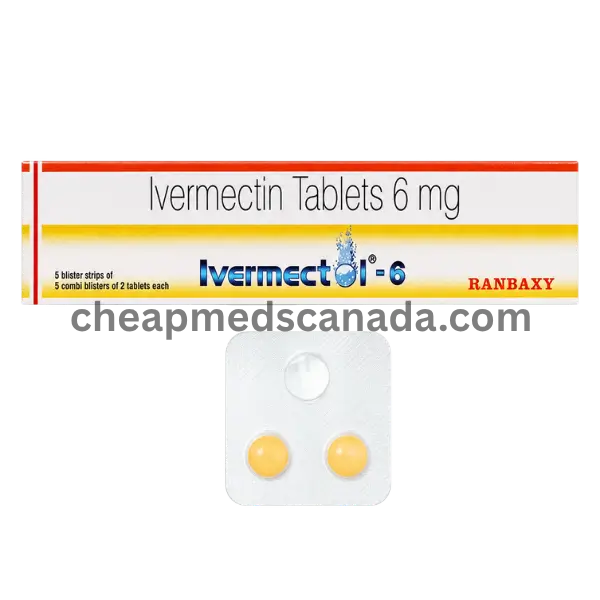
Description
What Conditions Does It Treat?
Ivermectin has a broad spectrum of effectiveness against parasites. This makes Ivermectol 6mg useful for a wide range of illnesses. This is what it is prescribed for actually: Scabies: is an infestation of microscopic mites that tunnel under the skin and produce extreme itching, especially at night. It spreads easily through skin contact. Oral Ivermectin is used when topical therapies have failed or when the infection is widespread in the body. Strongyloidiasis (Threadworm digestive Infection): The roundworm Strongyloides stercoralis infects the digestive system. It is transmitted through contact with soil and can remain undetected in the body for years. In immunocompromised persons it might be life threatening if not treated. Ivermectin is the drug of choice for this illness. Onchocerciasis (River Blindness): Onchocerciasis is a parasitic worm spread by the bites of blackflies and is one of the world’s major causes of preventable blindness. Regular dosing with Ivermectin is a major part of management strategies across the world. It destroys the microfilariae – the larval stage of the worm – and stops the damage they do to the eyes and skin. Oral Ivermectin: is a reliable alternative when topical lice treatments are ineffective or not appropriate. Head Lice (Pediculosis Capitis) It acts systemically such that lice are reached by the blood stream of the host rather than by a direct-contact application. Lymphatic Filariasis: A parasite infection caused by mosquito bites, lymphatic filariasis causes swelling of the limbs and tissues (elephantiasis in severe cases). In endemic areas, ivermectin is employed in combination treatment procedures.How It Kills Parasites
The mechanism is specific and well-understood — Ivermectin doesn't work by broad toxicity, which is why it's relatively safe for humans while being lethal to parasites.
Ivermectin binds to glutamate-gated chloride ion channels in the nerve and muscle cells of parasites. These channels are found in invertebrates but not in mammals — which is the key to its safety profile.
When Ivermectin binds to these channels, they stay open. Chloride ions flood into the nerve cells of the parasite, causing hyperpolarization — which essentially means the nerve cells become paralyzed. The parasite can't move, can't feed, can't reproduce. It dies, and the body clears it.
In worm infections like strongyloidiasis, this kills the adult worms and larvae. In scabies, it kills the mites. In onchocerciasis, it kills the microfilariae circulating in the bloodstream and skin tissue.
The process isn't instantaneous — full clearance typically takes a few days as the body eliminates the dead and paralyzed parasites.
Dosage — Why It's Based on Body Weight
Unlike most tablets with a fixed daily dose, Ivermectin dosing is calculated by body weight. This is important. The standard dosing is 200 micrograms (mcg) of Ivermectin per kilogram of body weight.
At 6mg per tablet, here's how that typically works out:
| Body Weight | Approximate Dose | Tablets (6mg) |
|---|---|---|
| 15 – 24 kg | 3mg | 0.5 tablet |
| 25 – 35 kg | 6mg | 1 tablet |
| 36 – 50 kg | 6mg | 1 tablet |
| 51 – 65 kg | 12mg | 2 tablets |
| 66 – 79 kg | 12mg | 2 tablets |
| 80 kg and above | 200mcg/kg | As calculated |
Your doctor will determine the right dose based on your weight and the specific infection being treated. Do not self-dose based on this table alone.
How to take it:
- Swallow the tablet whole with a full glass of water
- Take it on an empty stomach — at least one hour before eating
- For most infections, it's a single dose
- Some conditions (particularly strongyloidiasis with immune compromise) may require repeat dosing — your doctor will advise
- Do not crush or chew the tablet
What to Expect After Taking It
Within hours: Ivermectin starts circulating in the bloodstream relatively quickly after an empty-stomach dose.
Day 1 to 2: Medicine begins to destroy or paralyze parasites. In scabies there is a transient increase in itching as the mites die off - this is a typical response and does not mean that the treatment is not working. Day 2-7: Noticeable improvement in symptoms. The itching of scabies normally begins to subside significantly after a few days. Symptoms of intestinal worms usually start to get better. After 2 weeks: Almost all infections cleared. Your doctor may order another test to be sure the infection is gone, especially with strongyloidiasis. One thing to be aware of is that with scabies especially, the remnants of dead mites in the skin might continue to cause itching for two to four weeks following therapy, even if the infection is completely gone. That doesn't imply the treatment didn't work, it just indicates the immune reaction is still coming down.Side Effects — What's Common vs What's Serious
Ivermectin is well-tolerated by most people. Side effects at the standard dose are usually mild and short-lived.
Commonly reported:
- Nausea or upset stomach — more likely if taken with food rather than on an empty stomach
- Mild dizziness or light-headedness
- Headache
- Diarrhea
- Fatigue for a day or two
Related to parasite die-off (Mazzotti reaction — specific to onchocerciasis treatment): When large numbers of microfilariae are killed rapidly, some people experience a temporary inflammatory response — fever, rash, joint pain, swollen lymph nodes, low blood pressure. This is called the Mazzotti reaction and is more pronounced when the parasite burden is high. It typically resolves within a few days.
Skin reactions: In scabies treatment, temporary worsening of rash or itching is common in the first 48 hours — again, this is the immune response to dying mites, not an adverse reaction to the medication.
Rare but serious — seek medical attention if you experience:
- ⚠️ Severe dizziness or loss of consciousness
- ⚠️ Difficulty breathing
- ⚠️ Extreme swelling of face, hands, or feet
- ⚠️ Confusion or neurological symptoms — slurred speech, difficulty walking
- ⚠️ Severe skin reaction — widespread rash, blistering, peeling
Serious neurological side effects are rare in healthy adults at standard doses. They are more likely in people with a specific co-infection called loiasis (Loa loa) — a parasitic infection prevalent in parts of Central and West Africa. If you've spent time in those regions, inform your doctor before taking Ivermectin.
Who Should Use Caution or Avoid It
Ivermectol 6mg is not suitable for everyone without medical guidance.
Speak with your doctor first if you:
- Are pregnant — Ivermectin is generally not recommended during the first trimester; use only if clearly necessary and under medical supervision
- Are breastfeeding — small amounts of Ivermectin pass into breast milk; discuss with your doctor
- Have a compromised immune system — particularly relevant for strongyloidiasis, where hyperinfection is a risk and treatment needs careful monitoring
- Have liver disease — Ivermectin is processed through the liver; impaired function affects clearance
- Are taking warfarin or other blood thinners — Ivermectin can enhance the anticoagulant effect of warfarin, requiring dose monitoring
- Have spent time in loiasis-endemic regions of Africa — the risk of serious neurological reactions is higher in people with high Loa loa worm burdens
- Are giving it to children under 15 kg — dosing requires extra care at this weight range
Do not take if:
- ❌ You are allergic to Ivermectin or any component of the tablet
- ❌ You are under 15 kg body weight unless specifically prescribed by a physician
- ❌ You are using it for conditions it isn't prescribed for — including viral infections
Drug Interactions
Inform your doctor about all medications before starting Ivermectol 6mg:
- Warfarin and other anticoagulants — Ivermectin increases the blood-thinning effect; INR monitoring is required
- Barbiturates — may reduce Ivermectin effectiveness by speeding up its breakdown
- Benzodiazepines and CNS depressants — potential for additive sedative effects
- Levamisole — used in some combination antiparasitic protocols; always under medical guidance
Alcohol and grapefruit juice should be avoided around the time of taking Ivermectol — both can affect how the medication is processed and may intensify dizziness.
Storage
- Store below 25°C in a cool, dry place
- Away from direct sunlight and humidity
- In the original packaging until ready to use
- Out of reach of children
- Do not use past the expiry date printed on the strip — Ivermectin past its date should not be relied upon
Is one dose of Ivermectol 6mg usually enough?
For many cases of scabies and uncomplicated strongyloidiasis, a single dose may be sufficient. However, some patients may require a repeat dose after 1 to 2 weeks depending on the type of infection, severity, and their healthcare provider’s recommendation. Always follow the treatment plan prescribed by your doctor.
Why should I take Ivermectol 6mg on an empty stomach?
Ivermectin is generally recommended on an empty stomach because food can increase how much of the medication is absorbed into the bloodstream. Taking it as directed helps maintain the intended therapeutic effect and reduces the risk of unwanted side effects.
Does everyone in the household need treatment for scabies?
In many scabies cases, close household contacts may also need treatment, even if they do not currently have symptoms. This helps prevent re-infestation and limits the spread of mites. Your healthcare provider will advise who should be treated.
Why is the itching worse after taking Ivermectol 6mg?
A temporary increase in itching can occur after treatment, particularly when treating scabies. This reaction may happen as the body responds to dead mites and their debris. Symptoms usually improve gradually over the following days or weeks.
Can I take Ivermectol 6mg if I'm not sure what infection I have?
No. Ivermectol 6mg should only be used when prescribed by a healthcare professional for a confirmed or suspected parasitic infection. Self-diagnosing can delay appropriate treatment and may expose you to unnecessary medication risks.
Is human Ivermectol the same as veterinary Ivermectin?
No. Human Ivermectol 6mg tablets are manufactured and regulated specifically for human use. Veterinary ivermectin products are formulated differently and are not intended for people. Only use medications prescribed and approved for human treatment.
Please note that the information provided on this page is intended for educational and informational purposes only and should not be considered medical advice, diagnosis, or treatment. Ivermectol 6mg contains Ivermectin, a prescription antiparasitic medication used to treat certain parasitic infections. Its use should always be guided by a qualified healthcare professional.
Before taking Ivermectol 6mg, inform your doctor about any existing medical conditions, allergies, liver disorders, immune system conditions, or medications you are currently using. Dosage requirements may vary depending on the type of infection being treated and individual patient factors.

Reviews
There are no reviews yet.