
Description
The Stronger Option When Standard Doses Fall Short
Parasitic infections don't always respond the way you'd expect them to. You take a full course of medication, symptoms ease off, and then weeks later — sometimes months later — things start up again. That's not unusual with certain types of parasites, particularly ones that have life cycles allowing them to persist inside the body for years without being fully eliminated.
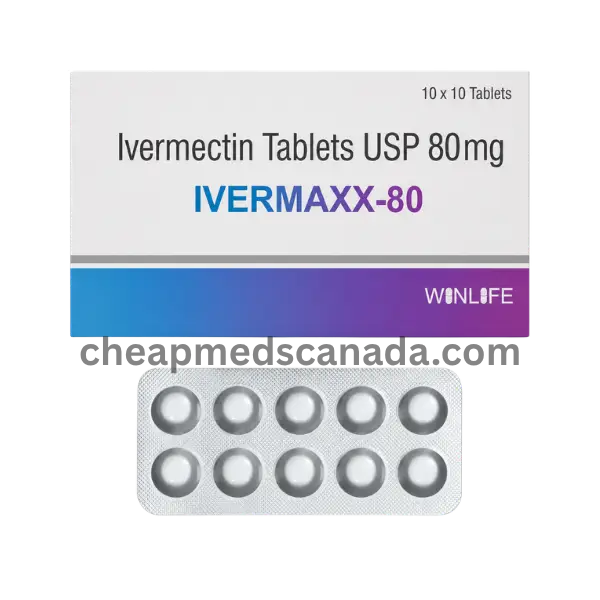
Ivermectin 80 Mg is the formulation doctors turn to when that happens. Same active ingredient that's been used safely in medicine since the 1980s, but at a dose built for adults who need a stronger therapeutic response — whether because of body weight, infection severity, or a previous treatment that didn't fully do the job.
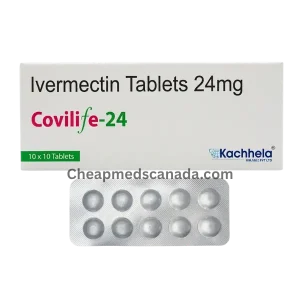
Each strip contains 10 tablets, produced by Kachhela Medex Pvt. Ltd., and we deliver to customers across Canada in plain, unmarked packaging.
What Infections Does Ivermectin 80 Mg Treat?
Strongyloidiasis
This one catches a lot of people off guard because it's not well known outside of medical circles, yet it's more common than most Canadians realise — especially among people who've spent time in tropical or subtropical regions. The parasite responsible, Strongyloides stercoralis, has a trick that most intestinal worms don't: it can complete its entire life cycle inside the human body, reinfecting the host repeatedly without any outside exposure needed. That's why some people have had this infection quietly sitting in their gut for 20 or even 30 years, showing up as nothing more than vague stomach discomfort and an occasional skin rash on the lower abdomen or buttocks.
When infection is moderate to severe, or when a previous ivermectin dose didn't clear it completely, the 80 mg strength gives doctors the coverage they need.
Crusted Scabies
Regular scabies is uncomfortable. Crusted scabies is a different situation entirely. It usually affects people whose immune systems aren't functioning at full capacity — transplant patients, people on long-term steroids, those living with HIV — and instead of the dozen or so mites you'd find in an ordinary case, crusted scabies can involve hundreds of thousands. The skin becomes thick, flaky, and heavily infested in a way that creams applied to the surface simply cannot reach deep enough to address.
Oral ivermectin at this dose, often used alongside a topical treatment, is the accepted approach for crusted scabies in Canadian clinical practice.
Filarial Infections
Worm infections transmitted through insect bites — including the ones that cause river blindness and swelling of the lymph nodes and limbs — respond to ivermectin treatment. The drug doesn't wipe out adult worms in one hit, but it clears the microfilariae (the larval stage circulating through the body) and disrupts the infection cycle effectively enough to make it the cornerstone of treatment programs for these diseases worldwide.
Other Parasitic Conditions
Doctors sometimes prescribe ivermectin for head lice infestations that haven't cleared with topical treatments, for cutaneous larva migrans (a creeping skin infection from hookworm larvae), and for certain intestinal worm infections where standard antiparasitic drugs haven't worked. Your doctor will confirm whether this is the right medication for your specific situation.
How Ivermectin Works Inside the Body
The reason ivermectin works against parasites without causing the same effect in humans comes down to a specific biological difference. Parasites — worms, mites, insects — have a type of nerve receptor that mammals either don't have or have in a location the drug can't easily reach. When ivermectin attaches to these receptors in a parasite, it causes a flood of signals that essentially shuts down muscle and nerve function. The parasite becomes paralysed, stops feeding, and dies.
In humans, the equivalent receptors sit behind the blood-brain barrier, which ivermectin doesn't cross at normal therapeutic doses. That's the biological reason this drug can be so effective at killing parasites while being relatively safe for the person taking it.
Worth noting — ivermectin works on larvae and adult worms, not on eggs. Parasite eggs already present in the body at the time of the dose will still hatch. That's why for infections like scabies, a second tablet is often taken roughly two weeks after the first, to catch the newly hatched mites before they mature and start reproducing again.
How to Take Ivermectin 80 Mg
Take the tablet on an empty stomach with a full glass of water — ideally 30 to 60 minutes before your first meal of the day. At 80 mg, this matters more than it would at lower doses. A meal that's high in fat taken around the same time as the dose can dramatically increase how much of the drug your body actually absorbs, and at this concentration, that kind of spike in blood levels raises your risk of side effects noticeably.
Your doctor will calculate the right dose for you based on body weight. The standard formula works out to roughly 200 micrograms per kilogram. For many adults, the 80 mg tablet is where that calculation lands — it's not an unusually high dose for someone of larger build being treated for a heavy infection.
Most treatment courses involve a single dose, sometimes followed by a second dose two weeks later. Do not add extra doses on your own — the drug works by reaching a therapeutic level, not by accumulating over time.
Side Effects You Should Know About
The majority of people who take ivermectin don't experience anything significant. The side effects that do come up most often are nausea, a mild headache, some dizziness, and loose stools. These tend to show up in the hours after taking the tablet and pass on their own.
Skin reactions — itching, mild rash, temporary redness — sometimes occur and in many cases are actually the body responding to dead or dying parasites rather than to the medication itself. It can feel counterintuitive, but this kind of reaction can be a sign the treatment is working.
What to watch for more carefully: if you feel unusually lightheaded, have trouble keeping your balance, notice your heart beating faster than normal, or feel confused or disoriented after taking the dose — get medical attention. These reactions are uncommon but do happen, particularly at higher doses, and they shouldn't be ignored.
Who Should Not Use This Medication
People with a known sensitivity to ivermectin should not take this tablet. Those with liver problems may need their dose adjusted and should be monitored more closely, since the liver is how the body processes ivermectin.
For pregnant women, the general guidance in Canada is to avoid ivermectin unless the treating doctor has determined the infection itself poses a greater risk. It does pass into breast milk in small amounts, so breastfeeding women should have this conversation with their doctor before taking it.
This 80 mg tablet is not for children or for adults under approximately 75 kg body weight — the dose would be disproportionately high for someone lighter than that.
Interactions With Other Medications
A few drug combinations are worth flagging before you start. Medications that slow down the central nervous system — certain sleep aids, anti-anxiety drugs, older antihistamines — can add to ivermectin's sedative effect and make dizziness or drowsiness worse.
If you take a blood thinner like warfarin, your doctor should know you're taking ivermectin because it can alter how warfarin behaves, and your INR may need checking. Some antiretroviral medications used in HIV treatment are processed through the same liver pathway as ivermectin, which can push ivermectin levels higher than expected.
Give your pharmacist or prescribing doctor a complete picture of what you're currently taking — that includes supplements and herbal products, not just prescription drugs.
Storage
Room temperature storage, away from direct sunlight and moisture. Not in the bathroom. Not near a stove or windowsill. Leave the tablets sealed in their original strip until you're ready to use them, and keep them somewhere children can't access.
Do I need a prescription to order Ivermectin 80 Mg in Canada?
Yes. Ivermectin is a prescription-only medication in Canada and should only be used under the supervision of a licensed healthcare provider. A proper diagnosis and individualized treatment plan are important to ensure safe and effective use.
How soon will I notice results after taking Ivermectin 80 Mg?
The timeline depends on the condition being treated. For scabies, itching may continue for several days after treatment before gradually improving. Many patients notice meaningful relief within 1 to 2 weeks. For certain intestinal parasitic infections, symptoms may begin improving within a few days, although follow-up testing may be required to confirm successful treatment.
Why should I take Ivermectin 80 Mg on an empty stomach?
Ivermectin is generally recommended on an empty stomach with water because food can affect how much medication is absorbed into the bloodstream. Following the prescribed instructions helps maintain consistent absorption and effectiveness.
Is one dose of Ivermectin 80 Mg enough?
In many cases, a single dose may be sufficient. However, some conditions such as scabies or strongyloidiasis may require additional doses or repeat treatment depending on the severity of the infection and your doctor's recommendations.
Can I take Ivermectin 80 Mg if I have used a lower dose before?
Many patients who have previously used lower-strength ivermectin tablets can take a higher dose when prescribed by their healthcare provider. The appropriate dosage depends on factors such as body weight, the type of infection being treated, and your medical history.
What should I do if I miss a dose?
If you miss a scheduled dose, contact your healthcare provider or pharmacist for advice. Do not take extra medication or double your next dose unless specifically instructed by a medical professional.
This content is for informational purposes only and does not replace professional medical advice, diagnosis, or treatment. Always consult a licensed healthcare professional or pharmacist before using any medication.

Reviews
There are no reviews yet.