
Description
Heartgard Plus for Dogs — Monthly Protection Against Heartworm and Intestinal Parasites
Heartworm disease is one of those threats that's easy to overlook until it's serious. The infection develops silently for months, often without any visible symptoms in the early stages — by the time a dog shows coughing, fatigue, or difficulty breathing, the worms have usually been established in the heart and lungs for a while. Treatment at that point is invasive, expensive, and genuinely risky for the dog. Prevention, by comparison, is simple. One chewable, once a month.
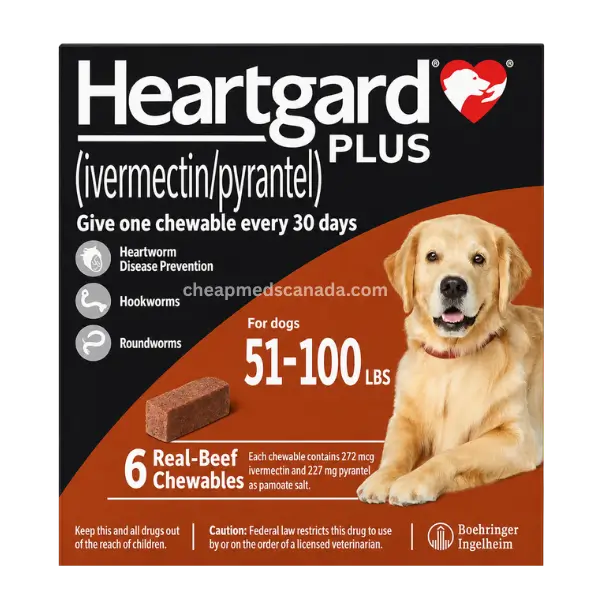
Heartgard Plus is a prescription monthly chewable for dogs that prevents heartworm disease and treats three common intestinal parasites at the same time. It's manufactured by Boehringer Ingelheim and has been a standard recommendation from Canadian veterinarians for decades — not because it's the newest option on the market, but because the track record is long and the safety profile is well established.
What's Actually in Heartgard Plus
Heartgard Plus contains two active ingredients working on different parasite targets.
Ivermectin is the heartworm-preventive component. It doesn't work the way most pet owners assume — it's not killing adult heartworms that are already established. Instead, it eliminates the immature larval stages (specifically the L3 and L4 larvae) that a dog picks up from a single mosquito bite, before those larvae have a chance to migrate and mature into adult worms living in the heart and pulmonary arteries. This is why timing matters so much with heartworm prevention — the medication is working retroactively each month, clearing out larvae from the past 30 days of potential exposure.
Pyrantel pamoate handles a different job entirely. It's a dewormer that targets roundworms and hookworms — two of the most common intestinal parasites in dogs, particularly puppies and dogs with outdoor access. Pyrantel paralyzes these parasites, which are then passed out of the body through normal digestion.
Together, the combination means a single monthly chewable is covering heartworm prevention and ongoing intestinal parasite control — rather than needing separate products for each.
How Dogs Actually Get Heartworm
This part gets misunderstood a lot. Heartworm isn't contagious between dogs directly — it requires a mosquito as the transmission vector. A mosquito bites an infected animal (which could be a dog, but coyotes and other wild canids carry it too), picks up microscopic larvae from that animal's bloodstream, and then transmits those larvae to the next dog it bites.
This is why heartworm risk in Canada isn't uniform across the country. Southern Ontario, parts of Quebec, and regions with longer mosquito seasons see meaningfully higher heartworm prevalence than colder northern regions. That said, climate patterns have been shifting mosquito activity windows in many provinces, and veterinarians increasingly recommend year-round prevention rather than only during the warmer months — a single missed month during an active mosquito season is enough to create a gap in protection.
Dosing — Based on Body Weight, Not a Fixed Amount
Heartgard Plus chewables come in three size categories, dosed according to the dog's weight:
- Up to 25 lbs — brown package
- 26 to 50 lbs — green package
- 51 to 100 lbs — brown/clear package (higher strength)
Giving the wrong size for your dog's weight either under-doses (insufficient protection) or unnecessarily exceeds the needed dose. Always confirm the correct package size with your veterinarian, especially for dogs near a weight threshold or dogs that are still growing.
The chewable is given once a month, ideally on the same calendar date each time — many owners find it easier to remember by tying it to the first of the month or a specific recurring reminder. Most dogs take it readily since it's formulated as a flavoured chew rather than a hard tablet, though some dogs are pickier than others.
Starting Heartgard Plus — What Vets Typically Require First
This is an important step that gets skipped sometimes, and it matters for safety. Before starting any dog on heartworm prevention, veterinarians require a heartworm test — a simple blood test that checks whether the dog already has an active adult heartworm infection.
Here's why this step can't be skipped: if a dog already has adult heartworms and is then started on Ivermectin-based prevention, the rapid die-off of circulating larvae in an infected dog can trigger a serious, potentially fatal reaction. The test confirms the dog is heartworm-negative before starting, and most Canadian vets recommend annual retesting even for dogs on consistent monthly prevention, since no preventive is 100% foolproof against a missed dose or unusual exposure.
Puppies under 7 months of age generally don't require testing before starting, since there hasn't been enough time for an infection to mature to a detectable, dangerous stage — but this still needs to be confirmed with your vet based on the puppy's specific history.
Side Effects — What to Watch For
Heartgard Plus has a strong safety record across decades of use, and most dogs tolerate it without any noticeable reaction. That said, side effects can occur, and it's worth knowing what's typical versus what warrants a call to your vet.
Generally mild and uncommon:
- Vomiting or loose stool shortly after dosing
- Decreased appetite for a day
- Mild lethargy
Less common but worth monitoring:
- Excessive drooling
- Diarrhea lasting more than a day
Rare but serious — contact your vet immediately:
- Signs of an allergic reaction — facial swelling, hives, difficulty breathing
- Severe lethargy, stumbling, or disorientation — particularly relevant in certain dog breeds discussed below
- Seizures
One breed-specific consideration matters significantly here. Certain herding breeds — Collies, Australian Shepherds, Shetland Sheepdogs, and related breeds — can carry a genetic mutation (MDR1) that affects how their bodies process Ivermectin and similar drugs, making them more sensitive to neurological side effects at doses that are completely safe for most other dogs. Heartgard Plus is dosed well within the safety margin even for MDR1-affected breeds at the labeled heartworm-prevention dose, but owners of these breeds should mention this genetic consideration to their vet, particularly if any other Ivermectin-containing products are being used concurrently.
Heartgard Plus vs. Regular Heartgard — What Is the Difference?
A lot of dog owners get confused between these two. The difference is straightforward:
Regular Heartgard: Contains only ivermectin. Prevents heartworm. Nothing else.
Heartgard Plus: Contains ivermectin AND pyrantel. Prevents heartworm AND treats hookworms and roundworms with every dose.
For the extra coverage you get, most vets recommend Heartgard Plus over the basic version. The price difference is minimal, and controlling intestinal parasites proactively is always better than treating an established infection.
Is the brown pack suitable for a 100 lb dog?
Yes. The brown pack is designed for dogs weighing up to and including 100 lbs. Consult your veterinarian if your dog weighs more than 100 lbs.
Do I need a prescription for Heartgard Plus?
In many regions, a veterinarian's prescription and a current heartworm test are required before starting Heartgard Plus.
What should I do if my dog receives a double dose?
Contact your veterinarian immediately for advice. Do not wait for symptoms to appear before seeking guidance.
Does Heartgard Plus protect against fleas and ticks?
No. Heartgard Plus helps prevent heartworm disease and treats certain intestinal worms, but it does not provide flea or tick protection.
Is the beef flavor in Heartgard Plus real?
Yes. Heartgard Plus chewables are made with real beef, which helps make them more appealing to many dogs.
Heartgard Plus is a prescription veterinary medication intended for use in dogs only and should be administered under the guidance of a licensed veterinarian. The information provided on this page is for general educational purposes and is not a substitute for professional veterinary advice, diagnosis, or treatment.
Before using Heartgard Plus, consult your veterinarian to determine whether it is appropriate for your dog's age, weight, breed, and health condition. Dogs should be tested for existing heartworm infection before starting a heartworm prevention program.

Reviews
There are no reviews yet.