
Description
What Makes Ivercor 6 mg Different From Other Ivermectin Doses?
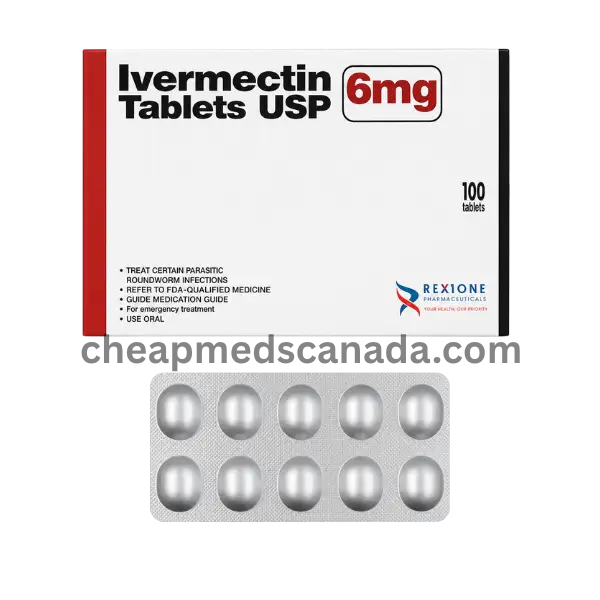
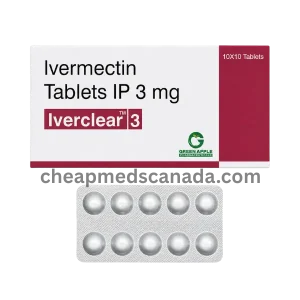
Ivermectin tablets come in three standard strengths — 3 mg, 6 mg, and 12 mg. The strength doesn't mean one is stronger or better than another in the way people sometimes think. Your dose is always calculated by your body weight, and your doctor simply arrives at the total using whichever tablet strength adds up most conveniently.
The 6 mg tablet is widely considered the most versatile format. For patients in the 25 to 35 kg range, one tablet is the complete dose. For heavier adults, two or three of these tablets combine to reach the right total. Many pharmacists and physicians prefer prescribing 6 mg tablets because they reduce the number of tablets a patient needs to take at once — which matters more than it sounds when you're taking several in one sitting.
The brand name Ivercor specifically refers to Actiza's formulation. You may also encounter equivalent products like Stromectol (the original brand), Ivermectol, or Vermact — they all contain the same active ingredient and work identically.
The Infection List — What Ivercor 6 mg Actually Treats
Intestinal Strongyloidiasis
This is the condition ivermectin is most definitively approved for. Strongyloides stercoralis is a roundworm that enters the body through skin contact — often bare feet on contaminated soil — and eventually makes its way to the small intestine. What makes it uniquely dangerous is its ability to autoinfect — meaning it can reproduce inside your body and sustain an infection indefinitely without any new exposure.
People with compromised immune systems can develop what's called hyperinfection syndrome, where the worm population explodes and larvae spread to organs beyond the gut. This can be life-threatening. Ivercor 6 mg is one of the most reliable treatments to stop this cycle.
Onchocerciasis — River Blindness
Caused by Onchocerca volvulus — a filarial worm transmitted through the bite of blackflies that breed near fast-moving rivers in Africa and parts of Latin America. The adult worms live under the skin and in connective tissue, sometimes for up to 15 years. The real damage comes from the microfilariae they produce, which migrate into the eyes and cause progressive, irreversible blindness.
Ivercor 6 mg kills the microfilariae — the juvenile worms — but not the adults. This is why treatment needs to be repeated every 6 to 12 months for as long as the adult worms are still alive and producing offspring. It's a long-term management strategy, not a one-and-done cure.
Scabies
The Sarcoptes scabiei mite burrows into the top layer of skin, lays eggs, and causes an intensely itchy rash — particularly at night. Standard treatment is topical permethrin cream, but there are real situations where oral ivermectin becomes necessary:
- When the topical treatment has been applied correctly and the infestation hasn't cleared
- When someone has crusted (Norwegian) scabies — a severe form where thousands of mites are present, usually in immunocompromised patients
- When treating an entire household or institution at once, oral treatment is far more practical than applying cream to every person individually
For scabies, a second dose two weeks after the first is standard practice — the first dose kills the live mites, but eggs are not affected and hatch after roughly 10 days. The second dose catches that next generation before they can reproduce.
Lymphatic Filariasis
Transmitted by mosquitoes, this infection involves filarial worms (Wuchereria bancrofti, Brugia malayi) lodging in the lymphatic system. Over time, they cause lymphatic damage that results in the extreme swelling of limbs known as elephantiasis. Ivermectin is used as part of a combination treatment strategy — often alongside albendazole — to reduce microfilariae levels and interrupt transmission.
Head Lice — When Topicals Have Failed
For routine head lice, prescription-strength topical treatments are tried first. But lice resistance to topical insecticides is a growing and well-documented problem. When two properly applied topical treatments haven't worked, oral ivermectin is a clinically supported next step. It works differently from topicals and doesn't face the same resistance issues.
Other Parasitic Infections
Doctors also prescribe ivermectin off-label for cutaneous larva migrans (creeping eruption from hookworm larvae), gnathostomiasis, and certain cases of trichuriasis (whipworm). Always confirm the specific indication with your prescribing doctor.
What Happens Inside Your Body
This section matters because it explains why the instructions say what they say.
After you swallow an Ivercor 6 mg tablet, it gets absorbed through your gastrointestinal tract and reaches peak plasma concentration in approximately 4 hours. The drug distributes widely through body tissues — it crosses into skin, muscle, and connective tissue where parasites typically live.
Ivermectin is metabolised primarily in the liver and excreted mainly through faeces, with less than 1% eliminated through urine. Its half-life is roughly 12 to 16 hours, though some metabolites remain in the body longer.
This is why liver disease is a significant precaution — if your liver isn't metabolising the drug efficiently, plasma levels can climb higher than intended and side effects become more likely.
Dosage — Calculated by Weight, Confirmed by Your Doctor
For Strongyloidiasis — 200 mcg per kg of body weight, single dose:
| Body Weight | Ivercor 6 mg Tablets | Total Ivermectin Dose |
|---|---|---|
| 25 – 35 kg | 1 tablet | 6 mg |
| 36 – 50 kg | 1.5 tablets | 9 mg |
| 51 – 65 kg | 2 tablets | 12 mg |
| 66 – 79 kg | 2.5 tablets | 15 mg |
| 80 kg or more | Doctor calculates | 0.2 mg/kg |
For Onchocerciasis — 150 mcg per kg, repeated every 6 to 12 months:
| Body Weight | Ivercor 6 mg Tablets | Total Ivermectin Dose |
|---|---|---|
| 26 – 44 kg | 1 tablet | 6 mg |
| 45 – 64 kg | 1.5 tablets | 9 mg |
| 65 – 84 kg | 2 tablets | 12 mg |
| 85 kg or more | Doctor calculates | 0.15 mg/kg |
For Scabies — 200 mcg per kg, repeated once after 14 days.
Your prescription may combine 6 mg tablets with 3 mg tablets to reach an exact dose. That's intentional — follow the prescription exactly as written.
How and When to Take It — The Details That Actually Matter
Empty stomach vs. with food — this is not optional advice:
- For Strongyloidiasis and Onchocerciasis — take on a completely empty stomach. At least one hour before your first meal or two full hours after eating. Food — particularly a high-fat meal — significantly increases ivermectin absorption, which pushes plasma levels higher than calculated and increases side effect risk.
- For Scabies — generally taken with food. Your doctor will confirm this.
Practical tips most people aren't told:
- Take it first thing in the morning, before breakfast — simplest way to guarantee an empty stomach
- Use a full glass of water — 240 ml minimum
- Don't split or crush the tablets — swallow them whole
- If your dose includes a half-tablet (e.g., 1.5 tablets of 6 mg), your pharmacist will have scored the tablet at the right point
- Stay well-hydrated throughout the day after taking your dose
Side Effects — Separated by What's Expected vs. What Needs Attention
Normal Reactions — Your Body Processing the Medication
- Mild headache — very common, usually resolves within a few hours
- Low-level nausea — most common when taken without food in scabies treatment
- Dizziness or lightheadedness — especially noticeable when standing up quickly
- Fatigue or a general feeling of being "off" for a day or two
- Mild, temporary itching — sometimes a reaction to dying parasites, not the drug itself
The Mazzotti Reaction — Specific to Onchocerciasis Treatment
In the first 1 to 4 days of treatment for River Blindness, some patients experience what's clinically called the Mazzotti reaction. This is not a side effect of the drug — it's your immune system responding to the mass die-off of microfilariae. Symptoms include:
- Fever and chills
- Joint and muscle aches
- Swollen, tender lymph nodes
- Eye redness, mild swelling, or temporary vision changes
- Skin rash or hives
This reaction is actually a sign the medication is working. It typically settles on its own within 3 to 5 days. Your doctor may recommend antihistamines or anti-inflammatories to manage the discomfort. Let your doctor know if it feels severe.
Side Effects That Require Immediate Medical Attention
Stop taking the medication and seek care right away if you experience:
- Swelling of the face, lips, tongue, or throat
- Difficulty breathing or swallowing
- Severe or spreading skin rash, blistering
- Sudden changes in vision or significant eye pain
- Confusion, disorientation, extreme drowsiness, or loss of consciousness
- Seizures
- Yellowing of skin or eyes, very dark urine — signs of liver involvement
Precautions — Who Needs to Be Extra Careful
Pregnancy: Ivermectin is not recommended during pregnancy, particularly in the first trimester. Animal studies have shown teratogenic effects at high doses. If there's any chance you could be pregnant, this must be discussed with your doctor before the first dose.
Breastfeeding: The drug does pass into breast milk in small amounts. The risk to a nursing infant is considered low, but your doctor should weigh this against the urgency of your treatment.
Children under 15 kg: Safety data for this weight group is insufficient. Do not use in children under 15 kg without explicit physician guidance.
Liver disease: Since ivermectin is hepatically metabolised, patients with significant liver conditions need closer monitoring. A dose adjustment may be necessary.
Loa loa co-infection: This is the most critical precaution that often goes unmentioned. If you have lived in or travelled to Central or West Africa — specifically regions of Cameroon, Nigeria, Gabon, or the Congo Basin — there is a risk of Loa loa co-infection. In patients with high Loa loa microfilariae counts, ivermectin has triggered severe neurological events including encephalopathy and coma. Your doctor should screen for this before prescribing.
Elderly patients: The liver processes drugs more slowly with age. Older adults may experience more pronounced or longer-lasting side effects and should be monitored accordingly.
Drug Interactions — Give Your Full Medication List Every Time
| Medication | What Happens | Action Needed |
|---|---|---|
| Warfarin | INR levels may increase — higher bleeding risk | Monitor INR closely |
| Benzodiazepines | Sedation intensifies | Use with caution, avoid driving |
| Valproic acid | Drug metabolism may be altered | Inform your doctor |
| Barbiturates | CNS depression deepens | Doctor review required |
| Alcohol | Increases dizziness, worsens side effects | Avoid completely |
Missed Dose, Overdose & Storage
Missed dose: Since Ivercor 6 mg is usually a single-dose medication, a missed dose works differently than a daily prescription. If you've missed a scheduled repeat dose (for Onchocerciasis, for example), take it as soon as you remember unless your next scheduled dose is approaching soon. Never double up.
Overdose signs: Rash, swelling, severe dizziness, tremors, nausea and vomiting, difficulty walking, or loss of consciousness. Seek emergency care immediately if overdose is suspected.
Storage:
- Room temperature — below 30°C (86°F)
- Away from direct sunlight, moisture, and heat sources
- Original packaging until point of use
- Completely out of reach of children
- Dispose of expired tablets through a pharmacy take-back program
My symptoms are gone after a few days — did Ivercor 6 mg work?
Symptom improvement does not always mean the infection has been completely cleared. For conditions such as scabies, itching can continue for several weeks even after the mites have been eliminated. Follow-up evaluation with your healthcare provider may be needed to confirm treatment success.
Can I take a second dose of Ivercor 6 mg on my own?
No. Additional doses should only be taken if recommended by your healthcare provider. Some infections, such as scabies, may require a second scheduled dose, while others may not. Taking extra medication without medical advice can increase the risk of side effects.
Is Ivercor 6 mg the same as veterinary ivermectin products?
No. Ivercor 6 mg is manufactured specifically for human use and is produced according to pharmaceutical quality standards. Veterinary ivermectin products are formulated for animals and may contain different concentrations or ingredients that are not suitable for humans.
Can Ivercor 6 mg be used to treat COVID-19?
No. Ivermectin is not approved for the prevention or treatment of COVID-19. Health Canada, the World Health Organization (WHO), and the U.S. FDA do not recommend its use for COVID-19 outside approved clinical research settings.
How should I take Ivercor 6 mg?
Ivercor 6 mg is generally taken on an empty stomach with a full glass of water unless your healthcare provider advises otherwise. Always follow the dosage instructions provided with your prescription.
Do I need a prescription for Ivercor 6 mg in Canada?
Yes. Ivercor 6 mg is a prescription-only medication in Canada and should be used only under the supervision of a licensed healthcare professional.
The information presented on this page is intended solely for general educational purposes. It is not a substitute for professional medical advice, diagnosis, or treatment. Ivercor 6 Mg (Ivermectin) should only be used according to the instructions of a licensed healthcare provider.
Do not start, stop, or change the dosage of any medication without consulting a qualified medical professional. The suitability of Ivercor 6 Mg depends on your individual health condition, medical history, and any other medicines you may be taking.

Reviews
There are no reviews yet.