
Description
What Is This Medication?
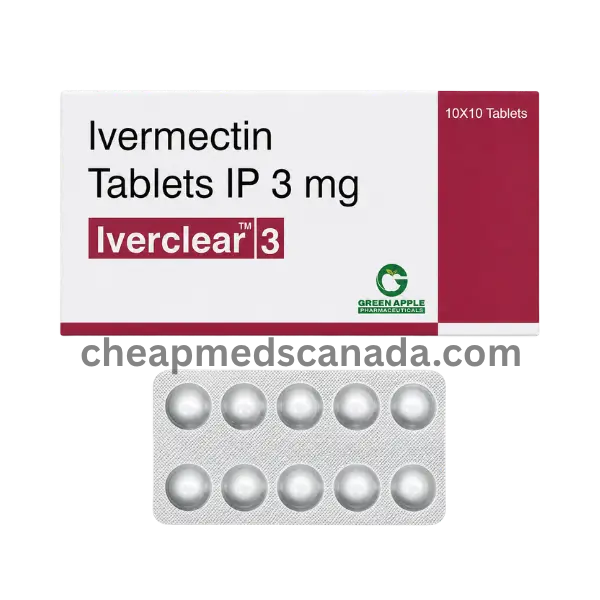
Each Ivermectin 3 mg tablet contains 3 milligrams of ivermectin as its active ingredient. Ivermectin belongs to a drug class called anthelmintics — medications specifically built to target and destroy parasites inside the human body.
The 3 mg tablet is the standard unit. Depending on your body weight and your specific diagnosis, your doctor may prescribe you one tablet or several taken all at once. The brand name version is called Stromectol, though generic Ivermectin 3 mg is equally effective and widely available.
One thing worth knowing upfront — this is a prescription-only medication in Canada and most countries. That means a licensed healthcare provider has assessed your condition and decided this is the right treatment for you. That context matters.
The Science Behind It — Without the Jargon
Here is what actually happens when ivermectin enters your body.
Parasites — worms, mites, and similar organisms — rely on a specific set of nerve channels to keep their muscles functioning. These channels are called glutamate-gated chloride channels. Ivermectin binds directly to these channels and blocks them. The moment that happens, the parasite loses complete muscular control, becomes paralysed, and dies.
The key point for patients is this: those specific channels are not present in the human central nervous system in the same way. Ivermectin's attack is targeted at the parasite. Your nervous system isn't in the crossfire. That selective action is exactly why this medication has such a strong safety record when used as directed.
Which Infections Does It Actually Treat?
Strongyloidiasis A roundworm infection caused by Strongyloides stercoralis that takes hold in the intestinal tract. It can linger for years without obvious symptoms, quietly causing damage. Ivermectin carries full FDA approval for this condition and is considered a first-line treatment.
Onchocerciasis — River Blindness Caused by the worm Onchocerca volvulus and spread through blackfly bites, predominantly in parts of Africa. Without treatment, repeated infections can cause irreversible vision loss and severe skin disease. Ivermectin is the cornerstone of both individual treatment and global control programs for this condition.
Scabies The skin infestation caused by the Sarcoptes scabiei mite. Oral ivermectin is prescribed when topical treatments haven't fully worked, for severe or widespread cases, or when treating multiple people in the same household at once.
Lymphatic Filariasis A mosquito-spread parasitic infection that affects the lymphatic system and can cause serious long-term complications if untreated. Ivermectin is part of the multi-drug treatment approach used globally.
Head Lice — Resistant Cases When topical lice treatments have failed, oral ivermectin is sometimes prescribed to finish the job that creams and shampoos couldn't.
Off-Label Uses Doctors may occasionally prescribe ivermectin for other parasitic infections including hookworm, whipworm, and cutaneous larva migrans. Always confirm with your doctor if your prescription falls outside the standard approved uses.
Your Dose — How It's Calculated
The number of 3 mg tablets you take depends entirely on your body weight. Your doctor uses a weight-based formula to arrive at your total dose. Here's how that breaks down for the two most commonly treated conditions:
Strongyloidiasis (200 mcg per kg — single dose)
| Your Weight | Tablets to Take | Total Dose |
|---|---|---|
| 15 – 24 kg | 1 tablet | 3 mg |
| 25 – 35 kg | 2 tablets | 6 mg |
| 36 – 50 kg | 3 tablets | 9 mg |
| 51 – 65 kg | 4 tablets | 12 mg |
| 66 – 79 kg | 5 tablets | 15 mg |
| 80 kg or more | Doctor calculates | 0.2 mg/kg |
Onchocerciasis (150 mcg per kg — repeated every 3 to 12 months)
| Your Weight | Tablets to Take | Total Dose |
|---|---|---|
| 15 – 25 kg | 1 tablet | 3 mg |
| 26 – 44 kg | 2 tablets | 6 mg |
| 45 – 64 kg | 3 tablets | 9 mg |
| 65 – 84 kg | 4 tablets | 12 mg |
| 85 kg or more | Doctor calculates | 0.15 mg/kg |
Scabies — 0.2 mg/kg, typically with a second dose given two weeks after the first.
Always defer to your prescription. These tables are a reference — your doctor has considered your individual health history, not just your weight.
Taking It the Right Way
This sounds simple, but the timing of when you take ivermectin actually affects how well it works:
- Strongyloidiasis and Onchocerciasis — Take on a completely empty stomach. At least one full hour before eating, or two hours after your last meal. Water only.
- Scabies — Generally taken with food, which also helps reduce stomach upset.
- Swallow tablets whole with a full glass of water. Don't crush or split them.
- If you've been given a single-dose prescription, that's your complete course. Don't repeat it unless your doctor has specifically told you to.
- After treatment for Strongyloidiasis, you'll likely need follow-up stool tests to confirm the infection has cleared. Your doctor will arrange that.
What to Expect After Taking It
Most people go about their day normally after taking ivermectin. A few things worth knowing:
- Mild drowsiness or dizziness is possible — don't drive or operate heavy machinery until you know how it affects you.
- If you're being treated for River Blindness, expect a stronger reaction in the first few days as the dying parasites trigger your immune response. You may notice joint pain, swollen lymph nodes, eye redness, or a mild fever. This is called the Mazzotti reaction — it means the medication is working, but tell your doctor if it feels severe.
- Results aren't always immediate. Give the medication a few days before judging whether it's working.
Side Effects — What's Normal and What's Not
Mild and common — usually settles within a day or two:
- Headache
- Dizziness or lightheadedness
- Nausea
- Diarrhoea or stomach cramps
- Muscle aches
- Fatigue
- Mild itching or skin rash
Seek immediate medical attention for any of these:
- Hives, facial swelling, or swelling of the lips and throat
- Difficulty breathing or swallowing
- Eye pain, swelling, or sudden vision changes
- Confusion, seizures, or loss of consciousness
- Extreme dizziness — especially when standing up
- Yellowing of skin or eyes, very dark urine, or persistent nausea (signs of liver involvement)
Who Should Be Extra Careful
Ivermectin is safe for the vast majority of adults when prescribed correctly. But there are specific situations where extra caution applies:
- Pregnant women — Not recommended, particularly in the first trimester. Tell your doctor immediately if there's any possibility you could be pregnant.
- Breastfeeding mothers — Small amounts pass into breast milk. Your doctor will help you weigh the decision.
- Children under 15 kg — Safety hasn't been established for this weight group. Dosing must be determined entirely by a physician.
- Liver disease — The liver processes ivermectin. If yours isn't functioning normally, closer monitoring may be necessary.
- Travellers from Loa loa regions — Central and West African travel history matters here. If you've been to areas where Loa loa infection is endemic, let your doctor know before taking ivermectin. The combination in rare cases can trigger serious neurological effects.
Medications That Can Interact With Ivermectin
Before you take ivermectin, your doctor and pharmacist need to know everything you're currently taking — prescription medications, over-the-counter drugs, vitamins, and herbal supplements. Notable interactions include:
- Warfarin — Blood-thinning effect may intensify, raising your bleeding risk. INR monitoring is usually recommended.
- Benzodiazepines — Sedation effects stack. The combination can cause stronger drowsiness than either drug alone.
- Valproic acid — Can affect how ivermectin is metabolised in the body.
- Barbiturates — May deepen central nervous system depression.
- Alcohol — Avoid it completely while on this medication. It increases dizziness and makes side effects worse.
Storing Your Medication Properly
- Room temperature, ideally below 30°C (86°F)
- Away from direct sunlight, humidity, and heat sources
- Keep in original packaging until the moment you need it
- Well out of reach of children at all times
- Dispose of expired medication through a pharmacy take-back program — don't flush it or throw it loose in the trash
Does a single dose of Ivermectin 3 mg really work?
For strongyloidiasis, a single dose is often sufficient for many patients, though follow-up testing may be recommended to confirm the infection has cleared. For onchocerciasis, repeat doses are usually required as part of long-term management. In scabies treatment, a second dose is commonly prescribed 7 to 14 days after the first dose.
Can I buy Ivermectin 3 mg over the counter in Canada?
No. Ivermectin is a prescription-only medication in Canada and requires authorization from a licensed healthcare provider. Always obtain prescription medications through a reputable pharmacy and avoid unverified online sources.
Can Ivermectin 3 mg be used to treat COVID-19?
No. Ivermectin is not approved for the prevention or treatment of COVID-19. Major health authorities, including Health Canada, the World Health Organization (WHO), and the U.S. FDA, do not recommend its use for COVID-19 outside approved clinical research settings.
Is generic Ivermectin 3 mg as effective as Stromectol?
Yes. Generic ivermectin contains the same active ingredient and strength as brand-name Stromectol. Approved generic products must meet the same quality, safety, and effectiveness standards required by regulatory authorities.
Should I take Ivermectin 3 mg with food?
Ivermectin is generally taken on an empty stomach with a full glass of water unless otherwise directed by your healthcare provider. Following the prescribed instructions helps ensure the medication works as intended.
What should I do if I experience side effects?
Common side effects may include dizziness, nausea, diarrhea, or mild skin reactions. If you experience severe symptoms, an allergic reaction, difficulty breathing, or any unexpected effects, seek medical attention immediately and contact your healthcare provider.
Important: The information provided on this page is for educational and informational purposes only and should not be considered medical advice, diagnosis, or treatment. Ivermectin 3 Mg is a prescription antiparasitic medication that should be used only under the supervision of a qualified healthcare professional.
Before taking this medication, inform your healthcare provider about any medical conditions, allergies, liver disorders, immune system conditions, or medications you are currently taking. Follow the prescribed dosage carefully and do not exceed the recommended amount.

Reviews
There are no reviews yet.