
Description
Let's Talk About Something Most People Avoid
Anal fissures are one of those conditions nobody wants to discuss — not with friends, not even always with a doctor. But if you are dealing with sharp pain every time you have a bowel movement, or noticing bright red blood on the toilet paper, you already know how much this condition affects your day. Sitting is uncomfortable. Going to the bathroom feels like something to dread. And the more tense you become about it, the worse the cycle gets.
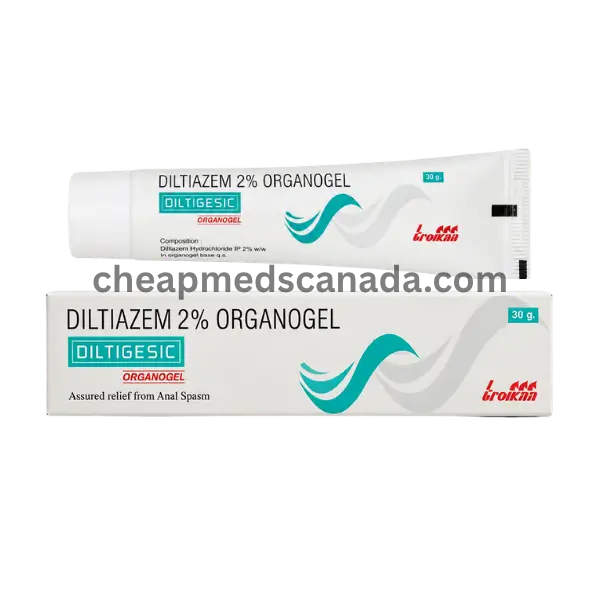
Diltiazem Topical Ointment was developed specifically for this. It is a prescription-only medication available through licensed Canadian pharmacies, and for many patients it represents the most effective non-surgical route to genuine healing.
Drug Overview
| Brand/Generic | Diltiazem Topical Ointment (Generic—Pharmacy Compounded in Canada) |
|---|---|
| Active Ingredient | Diltiazem Hydrochloride |
| Available Strengths | 2%/90gm ointment—and—2% Diltiazem+5% Lidocaine/30gm |
| Drug Class | Calcium Channel Blocker (Topical) |
| Use | Anal fissures—healing,pain relief,and spasm reduction |
| Application | Rectal/perianal use only |
| Prescription Required | Yes |
| Manufactured | Compounded in Canada by licensed pharmacy |
Understanding Anal Fissures — Why They Are So Hard to Heal on Their Own
An anal fissure is a small but painful tear in the lining of the anal canal. It sounds minor. It does not feel minor.
Most fissures start from a single cause — a difficult bowel movement, a bout of constipation, or persistent diarrhea that puts mechanical stress on the delicate tissue of the anal canal. The tear itself is often just a few millimetres long. But what turns a small tear into a stubborn, weeks-long problem is what happens next.
The pain from the fissure causes the internal anal sphincter — the ring of smooth muscle surrounding the anal canal — to go into spasm. That spasm is the body's reflexive response to injury. The problem is that the spasm then cuts off blood supply to the already-injured tissue. Without adequate blood flow, healing cannot happen. The next bowel movement stretches the unhealed tear again. Pain triggers more spasm. Less blood flow. And so the cycle repeats.
This is why fissures that have been present for more than a few weeks rarely heal without medical intervention. The body is essentially stuck in a loop it cannot break on its own.
How Diltiazem Topical Ointment Breaks That Cycle
Diltiazem belongs to a class of drugs called calcium channel blockers. Most people know diltiazem as a heart medication — it is widely used in oral and IV form to treat high blood pressure and certain heart rhythm conditions. What makes it valuable for anal fissures is a specific property it has always had it relaxes smooth muscle.
The internal anal sphincter is smooth muscle. When diltiazem is applied topically to the anal area, it absorbs through the skin and reaches the sphincter directly. It blocks calcium from entering the muscle cells, which prevents the sustained contraction that causes the spasm.
The result is twofold:
First the sphincter relaxes. Resting pressure inside the anal canal drops significantly. This reduction in pressure is referred to as chemical sphincterotomy — essentially doing without surgery what a surgeon would otherwise do with a scalpel by partially cutting the sphincter.
Second — blood flow to the fissure site increases. With the spasm released, the blood vessels in the area open up. Oxygen and nutrients reach the healing tissue. The repair process that was blocked finally gets a chance to move forward.
For the version combining 2% Diltiazem with 5% Lidocaine, there is an added benefit. Lidocaine is a local anaesthetic that numbs the area directly. For patients whose fissure pain is particularly severe — especially during and after bowel movements — this combination formula provides immediate symptom relief alongside the longer-term healing action of diltiazem.
Available Formulations Through Canadian Pharmacies
Option 1 — Diltiazem 2% Ointment / 90 gm The standard formulation. Used twice to three times daily, this jar provides approximately a 4 to 6 week supply depending on the amount applied per dose. Best suited for patients whose primary concern is healing the fissure and reducing sphincter spasm, and whose pain between bowel movements is manageable.
Option 2 — Diltiazem 2% with Lidocaine 5% / 30 gm The combination formula. Particularly useful when pain is severe or is significantly affecting daily life and bowel habits. Lidocaine provides fast local numbing; diltiazem works on the underlying spasm and healing. A smaller jar size reflects the more targeted, often shorter-term use of this formulation.
Both versions are compounded by our licensed Canadian pharmacy — meaning they are freshly prepared to prescription strength rather than mass-manufactured, which is standard practice for topical diltiazem in Canada.
How to Apply Diltiazem Topical Ointment
This medication is for external perianal and lower internal anal canal use only. Never swallow it. Keep it away from the eyes, nose, and mouth.
Before Each Application: Gently clean the anal area with mild soap and warm water. Pat dry with a soft cloth. Wash your hands thoroughly.
Applying the Ointment: Use a clean fingertip or the applicator tip if provided. A pea-sized amount — roughly 1.5 cm — is the standard dose. Gently apply it just inside the anal opening and to the surrounding skin, or as specifically directed by your doctor.
After Application: Wash your hands again immediately. Avoid tight clothing immediately after application if possible, as this helps the ointment remain in contact with the tissue.
Frequency: Two to three times daily is the standard schedule. Many doctors recommend one application in the morning, one in the evening, and a third after a bowel movement if significant pain occurs at that time.
Duration: Most treatment courses run 6 to 8 weeks. Do not stop early just because the pain improves. The fissure may feel better before it is fully healed, and stopping prematurely is one of the most common reasons fissures recur. Follow the full course your doctor prescribes.
Storage: Store at room temperature. Do not freeze. Keep the lid tightly closed. Keep out of reach of children.
Side Effects — Honest Breakdown for Canadian Patients
Because this medication is applied topically rather than taken by mouth, the amount that enters the bloodstream is quite small. That said, some diltiazem does absorb systemically, and side effects — both local and systemic — are possible.
Commonly Reported Side Effects:
- Headache — The most frequently reported systemic side effect. Occurs because diltiazem causes mild vasodilation (widening of blood vessels). Usually mild and tends to improve as the body adjusts after the first week or two of use
- Dizziness — Related to the mild blood pressure-lowering effect of absorbed diltiazem. Standing up quickly may trigger brief lightheadedness
- Local burning or stinging — Expected during the first few applications, particularly if the fissure is actively inflamed. Usually settles within the first week
- Local itching or mild irritation at the application site
Less Common — Mention to Your Doctor:
- Flushing or a sensation of warmth in the face
- Mild nausea
- Feeling unusually tired or low-energy
- Palpitations or awareness of your heartbeat
Serious — Stop Use and Seek Medical Attention:
- Significant rectal bleeding — some spotting from a fissure is expected, but heavy bleeding is not. If you notice substantial blood, stop using the medication and contact your doctor or go to an emergency department
- Very slow heart rate or irregular heartbeat — diltiazem affects cardiac muscle as well as smooth muscle; significant cardiac effects are rare with topical use but possible
- Severely low blood pressure — faintness, extreme dizziness, cold sweats when standing
- Allergic reaction — hives, swelling of the lips, tongue or throat, difficulty breathing — call 911 immediately
Warnings and Who Should Use Caution
Tell your doctor before starting Diltiazem Topical Ointment if you have:
- Heart disease, including cardiomyopathy, heart failure, sick sinus syndrome, or second/third-degree AV block
- Had a recent heart attack
- Very low blood pressure (hypotension)
- Kidney disease — may affect how the drug is processed even with topical use
- Liver disease — diltiazem is metabolized by the liver; impaired function can raise drug levels
- Any known allergy to diltiazem or calcium channel blockers
Pregnancy: Safety data for topical diltiazem during pregnancy is limited. Use only if your doctor determines the benefit clearly outweighs any potential risk. Always inform your doctor if you are pregnant or trying to conceive.
Breastfeeding: Small amounts of diltiazem may pass into breast milk through systemic absorption of the topical form. The quantities are generally considered minimal, but discuss this with your doctor or pharmacist before using it while nursing.
Driving and Alcohol: Dizziness is a known side effect. Avoid driving or operating machinery if you experience this. Do not drink alcohol during treatment — alcohol adds to the blood pressure-lowering effect of diltiazem and increases the risk of dizziness and faintness.
Supporting Your Recovery — Practical Tips That Actually Help
Diltiazem works on the muscle and blood supply side of the healing equation. These habits address the other factors that determine whether your fissure heals cleanly or keeps coming back.
Fibre is not optional — it is treatment: Canadian dietary guidelines recommend 25 to 38 grams of fibre daily depending on age and sex. Most Canadians fall significantly short of this. Soft, bulky stools are the single most important mechanical factor in fissure healing and prevention. Psyllium husk, ground flaxseed, oat bran, and generous servings of vegetables are your allies here. If diet changes alone are not enough, a pharmacist-recommended fibre supplement is a reasonable addition.
Water intake matters more than most people realize: Fibre without adequate fluid can actually worsen constipation. Aim for 8 to 10 cups of water daily. Reduce caffeine and alcohol, both of which dehydrate the bowel.
Do not delay going to the bathroom: Holding in a bowel movement when your body is ready causes the stool to dry out and become harder. This dramatically increases the mechanical stress on an already-injured anal canal. When the urge comes, respond to it.
Sitz baths provide real relief: Sitting in a warm — not hot — shallow bath for 10 to 15 minutes after bowel movements relaxes the sphincter muscle and improves blood flow to the area. Many colorectal surgeons recommend this as a standard part of conservative fissure treatment alongside topical therapy.
Stool softeners as a bridge: If constipation is a persistent problem for you, a short-term stool softener (docusate sodium is available over the counter at Canadian pharmacies without a prescription) can help reduce straining during the healing period. Ask your pharmacist whether this makes sense alongside your diltiazem treatment.
Frequently Asked Questions
Is diltiazem the same medication used for heart conditions?
Yes — it is the same active medication, but used very differently. Oral diltiazem has long been prescribed for blood pressure and heart rhythm conditions. In topical ointment form, it works locally by relaxing the anal sphincter muscle to help fissures heal. Because it is applied directly to the affected area in small amounts, whole-body cardiovascular effects are usually minimal.
How quickly will I notice improvement?
Many patients notice reduced pain during bowel movements within the first one to two weeks as muscle spasm decreases. Complete healing of the fissure itself often takes around 6 to 8 weeks with consistent treatment and supportive dietary changes.
What if the ointment burns or stings when applied?
Mild stinging can happen during the first few applications, especially if the fissure is inflamed. If the burning becomes severe, continues worsening, or causes significant discomfort, contact your doctor or pharmacist for reassessment.
Can topical diltiazem help avoid surgery?
For many patients, yes. Topical diltiazem is considered an effective first-line treatment for chronic anal fissures and may help avoid surgery when combined with proper bowel habits, hydration, and fiber intake. Some severe or long-standing fissures may still require surgical treatment if healing does not occur.
Can I order Diltiazem Topical Ointment from a Canadian pharmacy?
Yes. With a valid prescription from a licensed healthcare provider, many Canadian pharmacies can prepare and dispense compounded diltiazem ointment. Because it is a compounded medication, it is usually prepared specifically for your prescription.
This content is intended for informational and educational purposes only and should not be interpreted as medical advice, diagnosis, or treatment. Diltiazem Topical Ointment is commonly prescribed for certain rectal conditions, including anal fissures, and should only be used under the guidance of a qualified healthcare professional. Do not use this medication without a proper medical evaluation or alter the recommended dosage without consulting your doctor.

Reviews
There are no reviews yet.