

Description
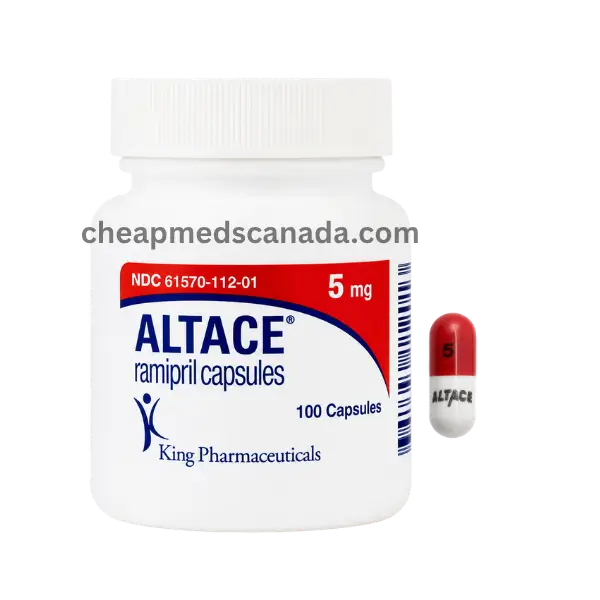
What Is Altace 5 Mg?
Altace 5 Mg is the brand name for ramipril — a prescription medication used primarily to treat high blood pressure and heart-related conditions.
It belongs to a class of drugs called ACE inhibitors — which stands for angiotensin-converting enzyme inhibitors. That sounds complicated, but the idea behind it is straightforward: your body produces a substance that tightens blood vessels, and Altace blocks the enzyme responsible for making it. Less tightening means blood flows more freely, which means the heart doesn't have to work as hard, and blood pressure comes down.
Altace comes in capsule form in several strengths: 1.25 mg, 2.5 mg, 5 mg, and 10 mg. The capsules can be swallowed whole, or for people who have trouble with capsules, they can be opened and the contents mixed into water, apple juice, or a small amount of applesauce. If you mix it, drink or eat the entire amount right away — don't leave it sitting.
Generic ramipril is widely available in Canada and contains the same active ingredient at the same strengths as brand-name Altace 5 mg.
What Is Altace 5 Mg Used For?
Altace 5 mg isn't a one-trick medication. It's prescribed for several distinct conditions — and the reason it works for all of them comes back to the same basic mechanism: relaxing blood vessels and making the heart's job easier.
High Blood Pressure (Hypertension): This is the most common reason Altace 5 mg gets prescribed. Lowering blood pressure isn't just about the number on the monitor — it's about reducing the long-term risk of stroke, heart attack, and kidney damage that come from sustained high pressure inside the arteries.
Reducing Risk of Heart Attack and Stroke: For Canadians over 55 with risk factors for cardiovascular disease — things like diabetes, a history of stroke, high cholesterol, or smoking — Altace 5 mg is prescribed even when blood pressure isn't dramatically elevated. Clinical trials have shown it significantly reduces the chance of a first heart attack or stroke in high-risk individuals.
Heart Failure After a Heart Attack: When someone survives a heart attack, the heart muscle is often weakened and the risk of dying from heart-related causes remains elevated for years afterward. Altace 5 mg is prescribed in the days following a heart attack to reduce that risk, improve survival, and lower the chance of being hospitalized for heart failure down the road.
Congestive Heart Failure: In people with congestive heart failure — where the heart muscle is weakened and can't pump effectively — Altace 5 mg helps by reducing the pressure the heart has to pump against and by allowing the heart chambers to fill more efficiently.
Kidney Protection in Diabetic Patients: High blood pressure and diabetes together are particularly damaging to the kidneys. ACE inhibitors like Altace 5 mg have a protective effect on kidney function that goes beyond just lowering blood pressure — they reduce pressure inside the tiny filtering units of the kidneys, slowing the progression of diabetic kidney disease.
How Altace Works
Your body has a system called the renin-angiotensin system — its job is to regulate blood pressure. One of the key players in this system is an enzyme called angiotensin-converting enzyme (ACE). ACE converts angiotensin I into angiotensin II — a powerful substance that constricts blood vessels and signals the kidneys to retain sodium and water, both of which raise blood pressure.
Altace blocks ACE directly.
No ACE activity means less angiotensin II. Less angiotensin II means blood vessels stay relaxed and open. Relaxed vessels mean blood flows with less resistance. And less resistance means lower blood pressure and a lighter workload for the heart.
Beyond blood pressure, Altace also triggers the release of bradykinin — a substance that causes blood vessels to dilate further and has protective effects on the heart and kidneys. This is also the reason some people develop a dry cough on Altace — bradykinin accumulates in the lungs and irritates the airways.
Altace 5 Mg Dosage — What's Typically Prescribed
Your doctor will start you on the lowest effective dose and adjust based on how your blood pressure responds. Never adjust your dose on your own.
For High Blood Pressure:
- Starting dose: 2.5 mg once daily (lower if you're already on a diuretic)
- Maintenance dose: 2.5 mg to 10 mg daily, in one or two divided doses
- Dose adjustments typically happen every 2 weeks
For Cardiovascular Risk Reduction (heart attack/stroke prevention):
- Starting dose: 2.5 mg once daily for 1 week
- Increased to 5 mg once daily for the next 3 weeks
- Target maintenance dose: 10 mg once daily
For Heart Failure After a Heart Attack:
- Starting dose: 2.5 mg twice daily
- Target dose: 5 mg twice daily if tolerated
- If 2.5 mg twice daily isn't tolerated, 1.25 mg twice daily may be used
Maximum daily dose: 20 mg per day — though most patients are maintained well below this level.
Important notes on taking Altace:
- Take it at the same time every day — consistency matters more than the specific time
- It can be taken with or without food
- Never stop taking Altace 5 mg suddenly — stopping abruptly can cause blood pressure to spike sharply, increasing the risk of heart attack or stroke
- If you decide you want to stop, talk to your doctor first so you can taper off safely
Side Effects of Altace 5 Mg
Like all medications, Altace 5 Mg can cause side effects. Most people tolerate it well, but there are a few things worth knowing before you start.
The most common side effect — and it's not dangerous:
Dry, persistent cough — this is the hallmark side effect of all ACE inhibitors, and it's more common than most people expect. It's not a sign that anything is wrong with your lungs. It's caused by the buildup of bradykinin (mentioned above) in the airways. The cough is usually dry and tickly and doesn't come with any other cold or flu symptoms. It can happen weeks or even months after you start the medication.
Some people find it manageable. Others find it too disruptive to tolerate. If the cough becomes a real problem, tell your doctor — switching to a different class of blood pressure medication (an ARB, for example) eliminates the cough entirely in most cases.
Other common side effects:
- Dizziness or lightheadedness — especially when standing up quickly (this is low blood pressure-related)
- Fatigue or general tiredness
- Headache
- Nausea
- Mild skin rash
Side effects that need medical attention — contact your doctor:
- Dizziness that's severe or doesn't pass quickly after lying down
- Feeling faint or actually fainting
- Signs of high potassium: muscle weakness, numbness or tingling, irregular heartbeat
- Signs of kidney problems: reduced urination, swelling in the legs or ankles, unusual fatigue
- Yellowing of the skin or eyes (rare liver-related reaction)
Stop Altace and get emergency help immediately if you notice:
Angioedema — this is the most serious potential reaction to ACE inhibitors. It involves sudden swelling of the face, lips, tongue, or throat. The throat swelling can progress to the point of blocking the airway. If you experience this, even mildly, call 911 immediately. Do not wait to see if it passes on its own. Angioedema can occur at any point during treatment — not just when starting — and can happen with any ACE inhibitor. If you've ever had angioedema from any ACE inhibitor, you should never take Altace.
The Blood Pressure Drop After the First Dose
There's something specific about Altace 5 Mg that's worth being prepared for — particularly in the first few days.
Some people experience a noticeable drop in blood pressure after their very first dose. This is more likely if you're already taking a diuretic (water pill), if you've been restricting salt heavily, if you've had recent vomiting or diarrhea, or if you simply have more sensitive blood pressure to begin with.
The symptoms of this — dizziness, feeling lightheaded, or feeling faint when you stand up — can be unsettling if you're not expecting them. If this happens, lie down immediately. It usually passes within minutes.
Your doctor may ask you to come in after your first dose for monitoring, or may temporarily reduce or stop your diuretic when starting Altace 5 Mg to reduce this risk.
Drug Interactions — What Not to Combine With Altace 5 Mg
This list is not exhaustive, but these are the most clinically important interactions:
NSAIDs (ibuprofen, naproxen, aspirin at high doses): Very commonly used for pain and inflammation — but NSAIDs can reduce Altace's blood pressure-lowering effect and, more seriously, can damage kidney function when combined with ACE inhibitors long-term. Regular NSAID use alongside Altace 5 mg should always be discussed with your doctor.
Potassium supplements and salt substitutes: Altace 5 mg naturally raises potassium levels slightly by its mechanism of action. Adding extra potassium on top of this — through supplements or potassium-containing salt substitutes like "No Salt" — can push levels too high, which affects heart rhythm in dangerous ways.
Diuretics (water pills): Combining Altace with a diuretic is common and often intentional — diuretics and ACE inhibitors work well together for blood pressure. But the combination can cause too sharp a blood pressure drop early on. Your doctor will manage the doses of both carefully.
Lithium: Altace can cause lithium to build up to toxic levels in the blood. Regular lithium level monitoring is essential if you take both.
Aliskiren (Rasilez): Another blood pressure medication — combining it with Altace is contraindicated in people with diabetes or kidney disease due to risk of serious kidney damage, dangerously low blood pressure, and high potassium.
Sacubitril (Entresto): Do not take Altace within 36 hours before or after taking sacubitril-containing medications. The combination significantly raises the risk of angioedema.
Bee/wasp sting allergy injections (desensitization): A serious and sometimes life-threatening reaction can occur if you receive allergy desensitization injections while taking Altace. Make sure any allergist treating you knows you're on ramipril.
Alcohol: Alcohol lowers blood pressure on its own. Combining it with Altace amplifies this effect and can cause blood pressure to drop to levels that cause fainting or falls. This matters most in the first few days of treatment or after a dose increase — but is worth being mindful of throughout.
Important Warnings — Read These Carefully
Pregnancy — this is a hard stop
Altace is dangerous to a developing baby. During the second and third trimester especially, ramipril can cause severe fetal kidney problems, low amniotic fluid, limb deformities, and can be fatal to the unborn child. If you're pregnant, or planning to become pregnant, tell your doctor immediately — Altace needs to be stopped and replaced with a pregnancy-safe blood pressure medication. If you become pregnant while taking Altace, stop the medication and contact your doctor right away. Do not wait for your next scheduled appointment.
Breastfeeding: Ramipril passes into breast milk. Breastfeeding while taking Altace is not recommended. Talk to your doctor about alternatives if you're nursing.
Kidney disease: Altace is processed through the kidneys, and kidney disease affects how the drug is cleared from the body. People with existing kidney problems need careful dose adjustment and regular monitoring of kidney function while on this medication.
Dehydration risk: This one gets overlooked but matters a lot. If you're vomiting repeatedly, have severe diarrhea, are sweating heavily in a heatwave, or are simply not drinking enough water — your blood pressure can drop dangerously low while on Altace. If you're sick with a stomach bug or working in intense heat, contact your doctor about whether to temporarily reduce your dose.
Surgery: Tell every surgeon, anesthesiologist, or dental professional who treats you that you're on Altace. ACE inhibitors can interact with anesthetics to cause low blood pressure during surgery. This is manageable when the surgical team knows about it in advance — but dangerous if they don't.
Altace vs Generic Ramipril in Canada
Generic ramipril has been available in Canada for years and is the most commonly prescribed form. It contains the same active ingredient at the same dose as brand-name Altace and must meet the same Health Canada bioequivalence standards.
For most patients, generic ramipril works identically to Altace and costs significantly less — often a fraction of the brand-name price, which matters for anyone paying out of pocket or with limited drug coverage.
If your pharmacy switches you between generic manufacturers, you may notice capsules that look slightly different (different color, different size). That's normal — the generic manufacturer may differ, but the active ingredient and dose remain the same.
Who Should Not Take Altace
Do not use Altace if you:
- Have ever had angioedema from any ACE inhibitor
- Are pregnant or planning to become pregnant
- Have a known allergy to ramipril or any ingredient in the capsule
- Are currently taking sacubitril (Entresto) — you must wait at least 36 hours between the two
- Have diabetes and are also taking aliskiren
Monitoring While on Altace
Starting Altace isn't just a matter of taking a pill and moving on. Your doctor will want to check a few things periodically, especially in the early months:
- Blood pressure — to confirm the dose is working and not dropping it too low
- Kidney function (creatinine and GFR) — Altace affects kidney filtering pressure; monitoring ensures the kidneys are handling the medication well
- Potassium levels — since Altace raises potassium slightly, periodic blood tests check it stays in a safe range
- Electrolytes — especially important if you're also on a diuretic
These are routine checks — not signs that something is wrong. They're standard care with ACE inhibitor therapy.
Storing Altace Properly
- Store at room temperature — between 15°C and 30°C
- Keep away from moisture and direct light — a bathroom medicine cabinet is actually one of the worst places to store medication because of humidity
- Keep the bottle tightly closed between uses
- Keep out of reach of children
- Do not use capsules past the expiry date printed on the packaging
How long does it take Altace to lower blood pressure?
You may notice some blood pressure reduction within the first few days of treatment. However, the full effect of Altace is typically seen after 2 to 4 weeks of consistent use. Your doctor may review your blood pressure and adjust the dosage if necessary.
Do I need to take Altace forever?
High blood pressure is often a long-term condition that requires ongoing treatment. Many people take Altace or another blood pressure medication for years. In some cases, significant lifestyle improvements may allow a doctor to reduce or discontinue medication, but this should only be done under medical supervision.
Can I exercise while taking Altace?
Yes. Regular exercise is an important part of managing high blood pressure and supporting heart health. Because both exercise and Altace can lower blood pressure, some people may experience temporary dizziness after physical activity. Staying hydrated and cooling down gradually can help reduce this effect.
What happens if I miss a dose?
Take the missed dose as soon as you remember. If it is nearly time for your next scheduled dose, skip the missed dose and continue with your normal dosing schedule. Do not take two doses at the same time to make up for a missed dose.
Can I eat grapefruit while taking Altace?
Grapefruit is not known to significantly interact with ramipril, the active ingredient in Altace. However, if you regularly consume large amounts of grapefruit or grapefruit juice, it is a good idea to discuss this with your healthcare provider.
Is the dry cough from Altace permanent?
No. If Altace causes a persistent dry cough, the symptom typically resolves within a few weeks after the medication is discontinued. The cough does not usually cause permanent damage to the lungs or airways.
Can I take Altace with ibuprofen for occasional pain?
Occasional use of ibuprofen for short-term pain relief is generally acceptable for many people. However, frequent or long-term use of ibuprofen and other NSAIDs may reduce the effectiveness of Altace and increase the risk of kidney-related side effects. Consult your doctor if you require regular pain management.
Altace is a prescription medication containing ramipril and should be used only as directed by a healthcare professional. The information provided is intended for general informational purposes and is not a substitute for medical advice, diagnosis, or treatment. Do not adjust your dosage or discontinue treatment without consulting your doctor. If you have questions about Altace or experience any adverse effects, seek medical guidance promptly.

Reviews
There are no reviews yet.