
Description
What's Actually Going On Inside Your Body
Here's the plain-language version of the mechanism, because "angiotensin II receptor antagonism" doesn't mean much at 11pm when you're just trying to understand your prescription.
Your blood vessels have a built-in tightening system. A hormone called angiotensin II locks onto receptors on the blood vessel walls and tells them to squeeze narrower — which raises blood pressure. Candesartan sits on those same receptors first, blocking angiotensin II from ever attaching. No signal gets through, so the vessels stay relaxed and wider, and pressure comes down.
It's less like flipping a switch and more like changing the tension on a garden hose — gradual, not instant. That's why most people don't feel a dramatic difference on day one.
Week 1: The Adjustment Period
This is where most of the mild side effects show up, if they're going to show up at all.
Commonly reported (mild, often temporary):
- Headache
- Dizziness, especially standing up quickly
- Back pain
- Symptoms resembling a mild cold (sore throat, congestion)
- Fatigue
Worth calling your doctor about (moderate):
- Persistent lightheadedness
- Unusual muscle weakness or cramping
- Noticeably irregular heartbeat
- Swelling in the ankles or feet that doesn't go away
Seek medical attention promptly (serious, uncommon):
- Signs of a severe allergic reaction — facial or throat swelling, difficulty breathing
- Very little or no urination
- Chest pain paired with an irregular heartbeat
- Fainting
Most people fall into the first category, if anything at all. Candesartan tends to be one of the better-tolerated ARBs, which is part of why it's so widely prescribed.
Weeks 2–4: Titration, and Why 4mg Isn't Always the End Point
If your doctor started you on 4mg, don't be surprised if the dose gets adjusted upward at your next check-in. Clinical dosing guidance typically has physicians doubling the dose every couple of weeks until blood pressure targets are met, up to a maximum of 32mg once daily. The 4mg strength is often just the entry point, particularly for patients who are older, have some kidney impairment, or are naturally more sensitive to blood pressure medications.
This matters for anyone comparing prices between strengths — the 4mg bottle isn't necessarily what you'll be refilling forever.
What You Shouldn't Mix With It
Interactions aren't always dramatic, but a few combinations genuinely change how candesartan behaves in your system.
| Substance/Drug | What Happens |
|---|---|
| Potassium supplements or salt substitutes | Can push potassium levels too high (hyperkalemia) |
| NSAIDs (ibuprofen, naproxen) | May reduce candesartan's blood-pressure-lowering effect and stress the kidneys |
| Lithium | Candesartan can raise lithium levels to unsafe territory |
| Diuretics ("water pills") | Can intensify blood pressure drops, sometimes causing dizziness |
| ACE inhibitors (e.g., perindopril) | Combining ARBs with ACE inhibitors raises the risk of kidney issues and high potassium — generally avoided together |
| Alcohol | Amplifies the blood-pressure-lowering and dizziness effects |
If you're already taking something for blood pressure — Coversyl, for instance — and your doctor is switching you to candesartan, that transition is usually managed carefully rather than stacking both at once.
The Fine Print That Actually Matters
- Pregnancy: Candesartan is not safe during pregnancy. It's typically stopped as soon as pregnancy is confirmed, since drugs acting on this hormone system can seriously harm fetal development.
- Kidney function: People with moderate kidney impairment often start at a lower dose; severe impairment usually rules candesartan out entirely.
- Children: It's approved for hypertension in children as young as one year old, though dosing is calculated by body weight rather than a flat number.
- Storage: Room temperature, away from moisture — a bathroom cabinet isn't ideal.
Who Usually Gets Prescribed Candesartan Over Other Options
Doctors don't pick an ARB at random — candesartan tends to get chosen for a few specific reasons:
- Patients who couldn't tolerate an ACE inhibitor. ACE inhibitors (like perindopril, sold as Coversyl) and ARBs work on the same hormone pathway but at different points. The dry, persistent cough that sometimes shows up with ACE inhibitors is far less common with candesartan.
- People managing heart failure alongside hypertension. At higher doses, candesartan has documented benefit in reducing hospitalization and cardiovascular death in certain heart failure patients, which is part of why it's not just a generic "blood pressure pill."
- Patients with diabetic kidney concerns. Candesartan is sometimes favored for its role in slowing the progression of kidney damage linked to diabetes, though this is always a doctor's call based on bloodwork.
- Anyone needing simple, once-daily dosing. Compared to medications requiring multiple daily doses, candesartan's long half-life makes it easier to stick with — and consistency is what actually controls blood pressure over time.
A Few Everyday Habits That Make It Work Better
- Take it at roughly the same time each day — mornings work well, since a missed night dose is more common than a missed morning one.
- Cut back on high-sodium processed foods; salt works against what the medication is trying to do.
- Get potassium levels checked periodically if you're also using salt substitutes, since many are potassium-based.
- Don't stop abruptly even if you feel fine — blood pressure medications manage a condition, they don't cure it.
- Log home blood pressure readings for the first month. It gives your doctor real data instead of one clinic-visit snapshot, which can be skewed by "white coat" anxiety anyway.
Buying Atacand 4mg vs. Generic Candesartan
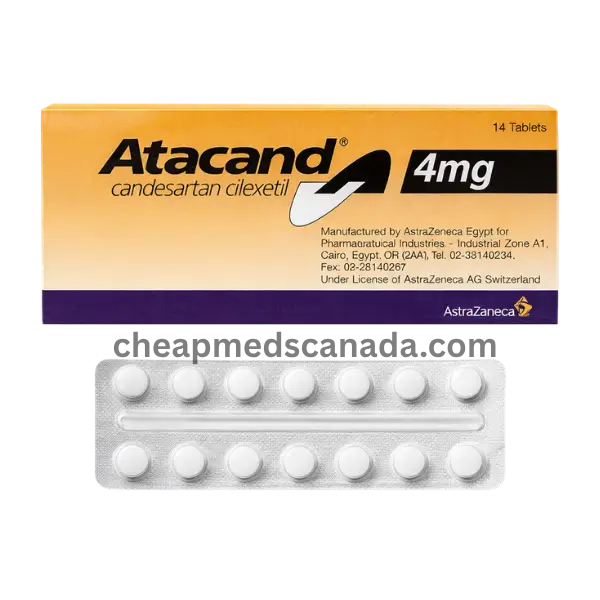
Candesartan cilexetil is off-patent, so the generic contains the exact same active ingredient at the same strength — the difference is branding and, usually, price. For long-term maintenance, many pharmacists point toward the generic once the working dose is established, since there's no clinical reason to pay more for the brand label. The exception: if you've had an unusual reaction to a specific manufacturer's fillers or coatings, sticking with a known brand can avoid the guesswork.
Is Atacand 4 mg a starting dose or a full treatment dose?
Atacand 4 mg is usually prescribed as a starting dose. Depending on how your blood pressure responds, your doctor may gradually increase the dose, with many adults taking between 8 mg and 32 mg daily for ongoing treatment.
How long does Atacand 4 mg take to work?
Some people notice improvements in their blood pressure within the first two weeks. However, the full blood pressure-lowering effect typically develops after 4 to 6 weeks of regular use.
Can I take Atacand 4 mg with ibuprofen?
Occasional use of ibuprofen is generally acceptable for most people. However, frequent or long-term use of NSAIDs such as ibuprofen may reduce the effectiveness of Atacand and increase the risk of kidney problems. Speak with your doctor or pharmacist if you regularly use NSAID medications.
Is candesartan the same as Atacand?
Yes. Candesartan cilexetil is the active ingredient, while Atacand is the brand name. Both provide the same blood pressure-lowering effects when taken at equivalent doses.
What is the difference between Atacand and Atacand HCT?
Atacand contains candesartan alone, while Atacand HCT combines candesartan with hydrochlorothiazide, a diuretic. Atacand HCT is often prescribed when additional blood pressure control is needed.
Atacand 4 mg should be used only under the guidance of a qualified healthcare professional. It is prescribed to treat high blood pressure and certain heart conditions and may not be suitable for everyone. Take the medication exactly as directed and consult your healthcare provider if you experience dizziness, swelling, kidney-related symptoms, or any unusual side effects. Do not stop treatment without medical advice.
Reviews
There are no reviews yet.