
Description
Diamicron MR 30mg: What It Gets Right, What It Doesn't, and How to Actually Take It
Most diabetes medication pages either oversell the benefits or bury you in warnings without context. Here's a more honest way to look at Diamicron MR 30mg — laid out as a straightforward ledger, followed by the practical, day-to-day details that actually determine whether it works well for you.
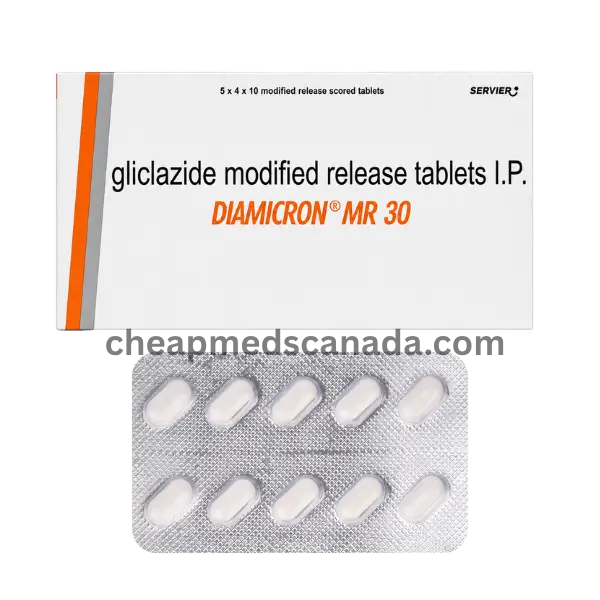
Diamicron MR is the modified-release form of gliclazide, made by Servier, and used alongside diet and exercise to manage type 2 diabetes. The "MR" matters more than people realize — it changes how the tablet behaves in your body, not just how often you take it.
Quick Reference
| Detail | Information |
|---|---|
| Generic name | Gliclazide (modified release) |
| Drug class | Sulfonylurea |
| Common strengths | 30mg, 60mg, 80mg |
| Typical starting dose | 30mg once daily |
| Maximum dose | 120mg once daily |
| Taken with | Breakfast, same time daily |
| Used for | Type 2 diabetes (not type 1) |
| Manufacturer | Servier (brand); generics widely available |
The Ledger: What It Gets Right
- Once-daily dosing. The modified-release formulation releases gliclazide steadily over the day, so most people only need one tablet with breakfast rather than splitting doses.
- Lower hypoglycemia risk than older sulfonylureas. Compared to first-generation options, gliclazide's more gradual release tends to produce fewer sharp blood sugar crashes.
- Long track record. It's been used clinically for decades, so dosing patterns and interactions are well understood — there's not much guesswork left in how it behaves.
- Works well alongside other diabetes medications, including metformin, when diet and a single agent aren't enough on their own.
Where It Falls Short
- It doesn't work for type 1 diabetes. Since it works by pushing the pancreas to release more insulin, it's useless if the pancreas isn't producing insulin in the first place.
- Weight gain is a real, common side effect — one of the more frustrating trade-offs, since weight management is usually part of the broader diabetes plan.
- Hypoglycemia risk still exists, particularly if a meal gets skipped after taking it. Unlike metformin, this drug can push blood sugar down whether or not you've eaten.
- Effectiveness can fade over time as the pancreas's insulin-producing cells naturally decline — a known pattern with sulfonylureas generally, not a flaw specific to this brand.
How the Modified-Release Formula Actually Behaves
Regular gliclazide releases quickly and needs multiple doses a day to keep working. The MR version uses a matrix that lets the tablet dissolve gradually, spreading the release across roughly 24 hours. That's why crushing, splitting, or chewing an MR tablet defeats the entire design — it turns a slow, steady release into a fast dump of the full dose at once, spiking hypoglycemia risk.
Rule of thumb: swallow it whole, with breakfast, at roughly the same time each day.
Your Daily Routine, Step by Step
- Take it with breakfast — not on an empty stomach, and not skipped even if you're not particularly hungry that morning.
- Swallow the tablet whole with a full glass of water.
- Keep meal timing consistent day to day; irregular eating patterns are one of the more common reasons blood sugar swings unexpectedly on this medication.
- Check blood sugar as directed, especially during the first few weeks while your body adjusts.
- Keep fast-acting sugar on hand — juice, glucose tablets, or regular soda — in case of a low blood sugar episode.
- Don't double up if you miss a dose. Skip it and resume the next day at the normal time.
Side Effects, Sorted by Urgency
Mild and common:
- Constipation or diarrhea
- Heartburn
- Nausea
- Gradual weight gain
Moderate — flag to your doctor:
- Blood sugar readings that aren't improving despite consistent use
- Persistent digestive upset
- Unusual fatigue
Serious — treat immediately:
- Signs of hypoglycemia: sudden sweating, shakiness, rapid heartbeat, confusion, or intense hunger
- Signs of a severe allergic reaction: facial swelling, difficulty breathing, widespread rash
- Fainting or loss of consciousness
If a low blood sugar episode happens, the immediate fix is fast-acting sugar — juice, regular soda, or glucose tablets — followed by a proper meal once symptoms ease.
What Changes the Way It Works
| Combined With | Effect |
|---|---|
| Alcohol | Increases hypoglycemia risk and can intensify side effects |
| Other diabetes medications | Combined blood-sugar-lowering effect needs careful dose coordination |
| NSAIDs (ibuprofen, etc.) | Can enhance gliclazide's blood-sugar-lowering effect unpredictably |
| Beta-blockers | Can mask the warning signs of low blood sugar, like a racing heart |
| Corticosteroids | Tend to raise blood sugar, working against the medication |
Situations That Need Extra Caution
- Pregnancy: Not the standard approach — insulin is typically used instead, since it offers more predictable control and doesn't cross into fetal circulation the same way.
- Breastfeeding: Data is limited; doctors generally weigh alternatives first.
- Kidney or liver impairment: Dosing often needs adjustment, since both organs affect how gliclazide is cleared from the body.
- G6PD deficiency: Requires closer monitoring — this genetic condition can affect how some sulfonylureas are tolerated.
Diamicron MR vs. Regular Diamicron
The naming causes real confusion at the pharmacy counter. Standard-release Diamicron (non-MR) requires two doses daily and releases gliclazide faster, which historically meant a slightly higher hypoglycemia risk between doses. Diamicron MR replaced that pattern for most patients specifically because once-daily dosing is easier to stick with, and steadier blood levels tend to mean steadier blood sugar control. If you've been switched from standard Diamicron to the MR version, the dose isn't necessarily a 1:1 match — that conversion is something your doctor calculates directly.
Can I take Diamicron MR without eating breakfast?
No. Diamicron MR should be taken with breakfast or your first main meal of the day. Taking it without eating increases the risk of low blood sugar (hypoglycemia), as the medication continues to lower blood glucose even if you skip a meal.
Does Diamicron MR always cause weight gain?
No. While some people may gain weight during treatment, it does not happen to everyone. Maintaining a balanced diet and staying physically active can help reduce the likelihood of weight gain.
How long does Diamicron MR take to lower blood sugar?
Diamicron MR begins lowering blood sugar after your first few doses, but it generally takes 2 to 4 weeks of regular use to fully evaluate how well your prescribed dose is working.
Can Diamicron MR stop working over time?
Yes. In some people, Diamicron MR may become less effective over time as the pancreas naturally produces less insulin. If this happens, your doctor may adjust your dose or recommend adding another diabetes medication.
What should I do if I miss a dose of Diamicron MR?
If you remember on the same day and it is not close to your next dose, take it with food as soon as possible. If it is almost time for your next scheduled dose, skip the missed dose and continue as normal. Do not take a double dose to make up for the missed one.
Diamicron MR 30 mg should be used only under the supervision of a qualified healthcare professional. It is intended for adults with type 2 diabetes and should not be used to treat type 1 diabetes or diabetic ketoacidosis. Follow the prescribed dosage and seek medical advice if you experience symptoms of low blood sugar or other serious side effects.


Reviews
There are no reviews yet.