
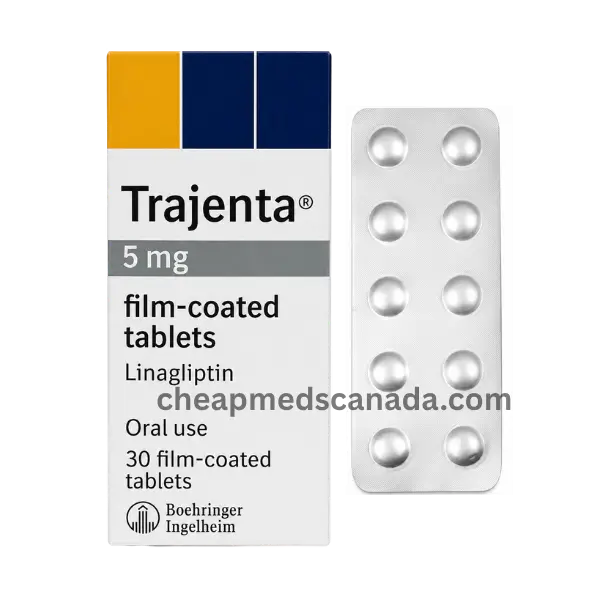
Description
If your doctor recently handed you a prescription for Tradjenta and you left the clinic with more questions than answers — you are not alone. A lot of people with Type 2 diabetes feel that way. The good news? This medication has been around long enough that we know quite a bit about it, and most of what we know is reassuring.
Here is a plain-language breakdown of what Tradjenta actually is, what it does in your body, how to take it properly, and what side effects to keep an eye on.
What Exactly Is Tradjenta?
Tradjenta is a prescription tablet that contains Linagliptin as its active ingredient. It falls under a class of diabetes drugs called DPP-4 inhibitors — sometimes just called "gliptins." The company behind it is Boehringer Ingelheim, and it comes in one strength only: 5mg.
You take one tablet a day. That is it. No complicated dosing schedule, no splitting pills, no adjusting based on meals. Just one tablet, once daily — with or without food, whichever fits your routine better.
It is a prescription-only medication, which means you will need your doctor on board before you start. And since it is available through Canadian pharmacies, patients across the country have been accessing it for years without needing to look far.
What Is Tradjenta Actually Used For?
Tradjenta is prescribed for adults living with Type 2 diabetes. Its job is to help bring blood sugar (glucose) levels down to a healthier range — but it does not work in isolation. Doctors typically prescribe it alongside a proper diet and regular physical activity.
Think of it as a support tool, not a solution on its own.
Your doctor might bring up Tradjenta when:
- Your blood sugar is still running high despite making lifestyle changes
- Your HbA1c numbers are not where they need to be
- You need something to complement other diabetes medications you are already taking, like metformin or insulin
- Other medications have not worked well or caused too many side effects
One thing worth knowing: Tradjenta has been studied in nearly 7,000 adults — including people who already had heart or kidney disease. A two-year cardiovascular safety study found that it did not increase the risk of heart attack, stroke, or cardiovascular death compared to placebo. That is meaningful for a lot of Type 2 diabetes patients who already carry higher cardiovascular risk.
Quick note: Tradjenta is not for people with Type 1 diabetes. It simply does not work the way it needs to in that situation.
How Does It Work?
Your gut releases two hormones after you eat — GLP-1 and GIP. These hormones tell your pancreas to pump out more insulin and signal your liver to ease up on releasing extra glucose into the blood.
The problem? An enzyme called DPP-4 breaks those hormones down very quickly, often before they have done their full job.
Tradjenta blocks DPP-4. That is really the whole mechanism. By keeping DPP-4 from doing its thing, Tradjenta lets GLP-1 and GIP stay active longer. Your pancreas responds by releasing more insulin when you need it — particularly after meals — and your liver holds back on releasing sugar it does not need to release right now.
The result is a more natural, steadier blood sugar response throughout the day.
Because the whole process is tied to your own body's hormone system, Tradjenta does not typically cause blood sugar to crash on its own. Low blood sugar risk goes up, though, if you are also taking insulin or sulfonylurea-type medications — something your doctor will factor into your treatment plan.
Dosage: How to Take Tradjenta 5 mg
- Dose: One 5mg tablet, once per day
- Timing: Same time every day works best — morning with breakfast, or evening, whatever you can stick to
- Food: Does not matter — take it with a meal or on an empty stomach
Missed a Dose?
Take it as soon as you remember. But if your next dose is only a few hours away, skip the missed one entirely. Do not try to catch up by doubling up — one tablet per day is the maximum, full stop.
Storing Your Medication
- Room temperature is fine — no need to refrigerate
- Keep it away from humidity and heat (bathrooms are a bad storage spot)
- Leave it in the original blister pack until you are ready to use it
- Keep it somewhere children cannot reach
Side Effects: What to Expect
Most people who take Tradjenta do not have a hard time with it. The side effect profile is actually one of the reasons doctors often consider it — especially for patients who have had trouble tolerating other diabetes medications.
That said, side effects can happen. Here is what to know:
Mild Side Effects (These Usually Settle on Their Own)
- Runny or stuffy nose
- Scratchy or sore throat
- Dry cough
- Loose stools or diarrhea
Serious Side Effects — Do Not Wait, Call Your Doctor
- Pancreatitis: Sharp, severe pain in your upper belly that radiates to your back — sometimes with nausea or vomiting. This needs immediate attention
- Low Blood Sugar (Hypoglycemia): More likely if you are also on insulin or a sulfonylurea. Watch for shakiness, sudden sweating, confusion, a racing heartbeat, or feeling unusually hungry out of nowhere
- Severe Allergic Reaction: Swelling in your face, tongue, or throat, hives, trouble swallowing or breathing — go to emergency
- Bullous Pemphigoid: An uncommon but real skin reaction — large, itchy blisters that appear on the trunk or limbs. Tell your doctor immediately if you notice this
Warnings Worth Reading Before You Start
Things to Tell Your Doctor Before Taking Tradjenta
- Any history of pancreatitis, gallstones, or high triglycerides
- Heart failure or kidney problems
- Heavy alcohol use, past or present
- If you are pregnant, planning to become pregnant, or currently breastfeeding
- Any allergies to medications, especially other gliptins
Poorly controlled blood sugar during pregnancy carries serious risks for both mother and baby. Your doctor will help you weigh the options carefully if this applies to you.
Alcohol
Alcohol can lower blood sugar on its own. Combined with certain diabetes medications, especially insulin or sulfonylureas, the risk of hypoglycemia gets higher. Limit alcohol while you are on Tradjenta — and if you do drink, do not do it on an empty stomach.
Stress, Illness, and Surgery
Your body's blood sugar can behave unpredictably when you are sick, under serious stress, or recovering from surgery. If something major is going on health-wise, loop in your diabetes care team — your medication or dose may need a temporary adjustment.
Drug Interactions: What to Watch For
Tradjenta can interact with other medications in ways that affect how well it works — or how safe it is. Always give your pharmacist and doctor a complete list of everything you take, including supplements and over-the-counter products.
Medications that can reduce Tradjenta's effectiveness:
- Rifampin — used to treat tuberculosis
- Certain anti-seizure medications — phenobarbital, carbamazepine
- Some HIV medications
- St. John's Wort — a common herbal supplement that many people do not think to mention
Medications that may increase the risk of low blood sugar when combined with Tradjenta:
- Insulin
- Sulfonylureas — glipizide, glimepiride, glyburide
Your doctor may adjust the doses of these other medications when adding Tradjenta to your regimen.
Who Should Not Take Tradjenta?
Tradjenta is not the right fit for everyone. It is not recommended for:
- People with Type 1 diabetes
- Anyone experiencing diabetic ketoacidosis — this is a medical emergency that needs a different treatment entirely
- Children and teenagers under 18 — it has not been studied in younger patients
- Anyone with a known allergy to linagliptin or any other ingredient in the tablet
Keeping Track of Your Progress
Tradjenta does its job best when it is part of a bigger picture. Here are the habits that make a real difference alongside your medication:
- Test your blood sugar at home as often as your doctor recommends
- Get your HbA1c checked every few months — it gives a fuller view of your blood sugar trends over time
- Show up to your follow-up appointments — even when you feel fine
- Keep a current medication list on hand, including doses, and bring it to every doctor or pharmacy visit
- Wear a medical ID that identifies you as a person with diabetes — it matters in emergencies
A diabetes diagnosis is a lot to take in. But with the right medication, a realistic plan, and a care team you can actually talk to, living well with Type 2 diabetes is genuinely possible.
What is Tradjenta 5 mg used for?
Tradjenta 5 mg is used to help adults with type 2 diabetes manage their blood sugar levels. It works by improving the body's natural insulin response and reducing excess glucose production. It is most effective when combined with a healthy diet and regular exercise.
How long does Tradjenta 5 mg take to work?
Tradjenta starts working after your first dose, but noticeable improvements in blood sugar develop over several days. Your doctor will usually check your HbA1c after about three months to assess how well the medication is working.
Can I take Tradjenta 5 mg with metformin?
Yes. Tradjenta is commonly prescribed together with metformin because the two medications lower blood sugar through different mechanisms and work well together. Always take them as directed by your healthcare provider.
Does Tradjenta 5 mg cause low blood sugar?
When used on its own, Tradjenta has a low risk of causing hypoglycemia (low blood sugar). However, the risk increases if it is taken with insulin or sulfonylurea medications. Your doctor may adjust your treatment if needed.
Can I take Tradjenta 5 mg with or without food?
Yes. Tradjenta can be taken with or without food. Taking it at the same time each day can help you remember your dose and maintain consistent blood sugar control.
Do I need to take Tradjenta 5 mg long-term?
For many people with type 2 diabetes, Tradjenta is used as part of long-term blood sugar management. Do not stop taking it without speaking to your doctor, as your blood sugar levels may increase if treatment is discontinued.
Tradjenta 5 mg should be used only under the supervision of a qualified healthcare professional. It is intended for adults with type 2 diabetes and is not suitable for treating type 1 diabetes or diabetic ketoacidosis. Follow your prescribed dosage and consult your healthcare provider if you experience severe side effects or changes in blood sugar levels.




Reviews
There are no reviews yet.