

Description
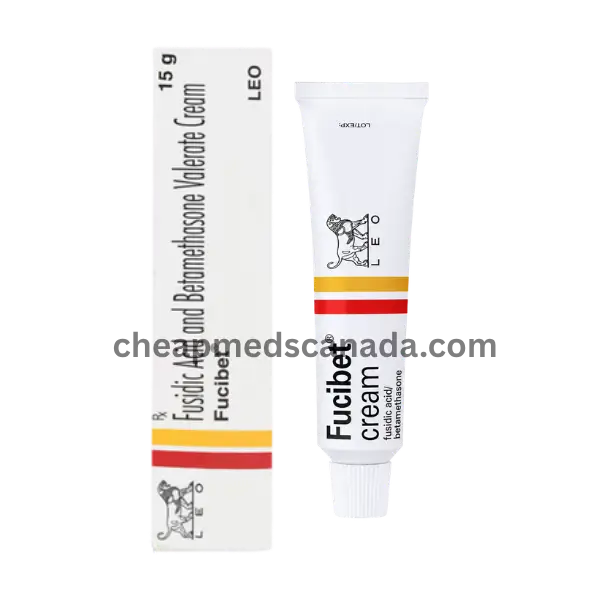
Fucibet Cream: The Full Case File
Think of this less like a product description and more like a file someone handed you before a decision — everything laid out, nothing buried in fine print you have to hunt for. Here's exactly what Fucibet cream is, what it's built to do, and where it stops being the right tool.
The Science, Without the Jargon
Fucibet is doing two jobs at once, and it's worth understanding both separately.
Job one — killing the bacteria: Fusidic acid works by blocking bacteria from producing the proteins they need to multiply. It doesn't kill them outright the way some antibiotics do; it stops them from reproducing, which gives your immune system room to clear out what's left.
Job two — calming the inflammation: Betamethasone valerate is a corticosteroid, and a fairly strong one. It interrupts the chemical signals your skin sends out when it's inflamed — the ones responsible for redness, swelling, and the urge to scratch.
Neither ingredient does the other's job. That's exactly why this is a combination cream in the first place: eczema alone doesn't need an antibiotic, and a bacterial infection alone doesn't need a steroid. It's specifically for when both are happening at the same time.
The Protocol
- Clean and dry the area first. Damp skin changes how the cream absorbs.
- Measure a fingertip unit — cream from the tip of your finger to the first joint covers roughly two adult palms' worth of skin.
- Apply a thin, even layer, morning and night.
- Leave it uncovered unless your doctor specifically says otherwise — bandaging traps the steroid against the skin and increases absorption.
- Wait 30 minutes before applying any other cream or moisturizer on top.
- Stop at day 14, regardless of how well it seems to be working, unless your doctor extends it.
Risk Levels
Low-concern (common):
- Mild stinging or itching right after application
- Dryness at the site
- Slight burning during the first couple of uses
Watch-and-report (moderate):
- Skin discolouration where it's applied
- New hair growth on treated skin
- A rash that's spreading rather than shrinking
Stop immediately (serious):
- Swelling of the face, lips, tongue, or throat
- Trouble breathing
- Blistering or peeling skin
- The original condition visibly getting worse
Exclusion List — When Fucibet Isn't the Right File
- Fungal infections (ringworm, athlete's foot) — the steroid component can actually make these worse, not better
- Viral skin infections, including cold sores or shingles
- Untreated tuberculosis or syphilis skin manifestations
- Rosacea or perioral dermatitis — steroids tend to aggravate both
- Open wounds or broken skin beyond the infected eczema itself
- Use near the eyes — raises long-term risk of elevated eye pressure
Cross-Reference: Fucibet vs. Fucidin H
Both share fusidic acid as the antibiotic half, so the real difference sits entirely in the steroid component.
| Status | Fucibet | Fucidin H |
|---|---|---|
| Steroid used | Betamethasone valerate (potent) | Hydrocortisone (mild) |
| Best suited for | Moderate-to-severe infected eczema | Mild infected eczema, sensitive areas |
| Typical next step if this doesn't work | — | Often escalated to Fucibet |
| Facial use | Generally avoided or short-term only | More commonly tolerated |
If a mild option like Fucidin H hasn't cleared things up, Fucibet is usually the next file opened — not a random alternative, but a deliberate step up in strength.
Interaction Notes
Systemic drug interactions are minimal here, mainly because so little of either ingredient reaches the bloodstream when the cream is used as directed. The real interaction risk is topical, not systemic:
| Combined With | What Happens |
|---|---|
| Other steroid creams, same area | Compounds skin-thinning risk |
| Antifungal creams, same area | Can dilute effectiveness of both |
| Airtight dressings or bandages | Sharply increases steroid absorption |
| Cosmetics/makeup over treated skin | Can trap moisture and worsen irritation |
Special Circumstances
- Pregnancy: Not recommended unless clearly necessary — there isn't enough safety data on the steroid component during pregnancy to call it low-risk by default.
- Breastfeeding: Considered generally safe, but shouldn't be applied to the breast area, to avoid accidental transfer to a nursing infant.
- Children under 6: Not established as safe; a doctor typically prescribes something else for younger kids.
- Diabetics: No direct interaction, but any topical steroid used on larger areas warrants closer blood sugar monitoring.
Will Fucibet cure my eczema permanently?
No. Fucibet is designed to treat infected eczema flare-ups by reducing inflammation and eliminating the bacterial infection. It does not cure eczema itself, which is a long-term skin condition that often requires ongoing management with moisturizers and other prescribed treatments.
What happens if I stop using Fucibet too early?
Even if your skin appears to have improved, the bacterial infection may not be completely cleared. Stopping treatment early can allow the infection to return and may make it more difficult to treat. Always use Fucibet for the full course recommended by your healthcare provider.
Can I use Fucibet on my scalp?
Fucibet cream is not usually recommended for scalp application because creams are difficult to apply through hair. If you have an infected scalp condition, speak with your doctor about a scalp-specific treatment that may be more suitable.
Is a burning sensation normal when using Fucibet?
A mild burning or stinging sensation may occur during the first few applications and usually settles quickly. However, if the burning becomes severe, persists, or is accompanied by worsening redness or irritation, stop using the cream and contact your doctor.
Storage and Shelf Life
- Room temperature, away from bathroom humidity and direct sunlight — both speed up degradation of the cream base.
- Once opened, most pharmacies recommend discarding an unused tube after the course is finished rather than keeping it "just in case." Skin infections aren't identical each time, and reusing an old course without a fresh diagnosis is one of the more common ways resistance develops.
- Keep it out of reach of children — even though it's a topical, ingestion of steroid-antibiotic combinations isn't something to take lightly.
How Misuse Patterns Usually Show Up
Pharmacists tend to see the same handful of patterns repeat:
- The "just in case" reapplication — using leftover cream on a new rash months later without checking whether it's actually infected eczema again.
- The extended course — feeling better by day 5 and deciding to "finish it off properly" by continuing well past two weeks.
- The double-duty mistake — applying it to a patch of eczema that was never infected in the first place, usually because a leftover tube was on hand and it seemed like the obvious thing to reach for.
None of these come from carelessness — they're just what happens when a fairly strong medication ends up being treated like a general-purpose skin cream. It isn't one, and the file above is really just a reminder of where its actual boundaries sit.
Final Verdict
Fucibet earns its place specifically at the intersection of "infected" and "inflamed" — not before that intersection, and not for much longer than two weeks after it. Used within that narrow, deliberate window, it's a genuinely effective, low-drama treatment. Used outside it — too long, too much, or on the wrong kind of rash — is where nearly every complaint about it actually originates.
Fucibet Cream should be used only as directed by a qualified healthcare professional. It is intended for the short-term treatment of bacterial skin infections with inflammation and should not be used for viral, fungal, or untreated skin conditions. Avoid prolonged use unless advised by your healthcare provider, and seek medical attention if irritation, worsening symptoms, or allergic reactions occur.
Reviews
There are no reviews yet.