
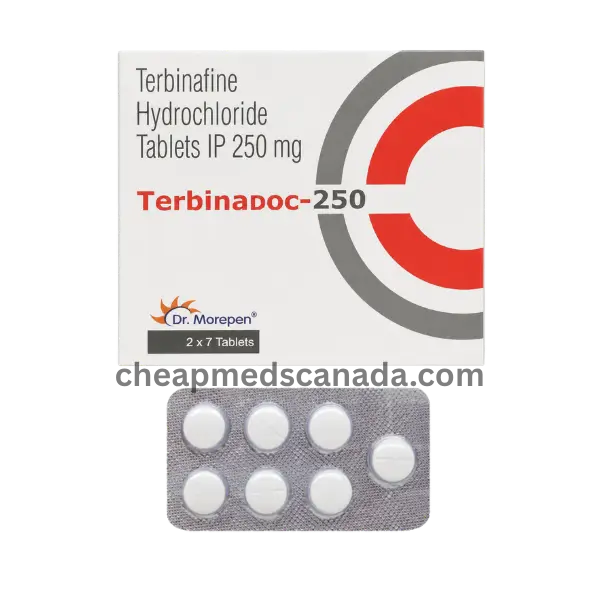

Description
Terbinafine 250 mg Tablets: Match the Treatment Length to Your Actual Infection
Terbinafine isn't a one-size, one-duration medication — how long you take it depends entirely on which fungal infection it's treating, and mixing up the timelines is one of the most common reasons people either stop too early or take it longer than necessary. Here's Terbinafine broken down by infection type, so the course length actually makes sense for your situation.
Quick Reference
| Detail | Information |
|---|---|
| Generic name | Terbinafine (hydrochloride) |
| Brand name | Lamisil |
| Drug class | Allylamine antifungal |
| Strength | 250mg tablets |
| Prescription status | Prescription required (oral tablets) |
| Key requirement | Baseline liver function testing before starting |
How Terbinafine Works
Terbinafine interferes with an enzyme fungi need to build ergosterol — a compound that's essentially the structural backbone of a fungal cell membrane, doing for fungus what cholesterol does for human cells. Without it, the membrane can't hold together properly, which is what makes terbinafine fungicidal (actually killing the fungus) rather than just fungistatic (merely stopping it from spreading) for most common dermatophyte infections. That's part of why oral terbinafine tends to have higher cure rates for stubborn infections like nail fungus compared to some other oral antifungals.
Toenail Fungus (Onychomycosis)
Typical course: 12 weeks
This is the longest standard course, and for good reason — toenails grow slowly, and the medication needs to be on board long enough for healthy new nail to grow out and replace the infected portion. A completely clear-looking nail usually isn't visible until months after the 12-week course ends, simply because of how slowly nails grow; that delayed visual result is normal and not a sign the treatment failed.
Fingernail Fungus
Typical course: 6 weeks
Fingernails grow noticeably faster than toenails, which is the entire reason the course is half as long. Same medication, same mechanism, just a shorter timeline to match faster nail turnover.
Ringworm on the Body (Tinea Corporis)
Typical course: 2 to 4 weeks
For skin-based ringworm rather than nail infections, the course is considerably shorter, since it's treating surface skin rather than waiting for nail regrowth.
Jock Itch (Tinea Cruris)
Typical course: 2 to 4 weeks
Similar timeline to body ringworm, targeting the groin area specifically. Oral terbinafine tends to be reserved for cases that haven't responded to topical antifungal creams first, since most straightforward jock itch clears with topical treatment alone.
Athlete's Foot (Tinea Pedis)
Typical course: 2 to 6 weeks
The range here is wider because athlete's foot presentation varies — a mild case between the toes clears faster than a more widespread, moccasin-pattern infection covering the sole.
Scalp Ringworm (Tinea Capitis)
Typical course: Around 6 weeks, sometimes longer
This one specifically requires oral treatment — topical antifungals alone generally aren't enough because the fungus sits inside the hair follicle, where topical products can't reach effectively. Dosing here is also weight-based in children rather than a flat 250mg.
The Part That Matters Regardless of Infection Type: Liver Function
This is the single most important thing to understand about oral terbinafine, and it's worth being direct about: liver function testing before starting is standard practice, not an optional precaution. Rare but serious liver injury — including cases that have led to liver failure, transplant, or death — has occurred with oral terbinafine, in patients both with and without pre-existing liver disease. It's considered an idiosyncratic reaction, meaning it isn't clearly dose-related and can't be fully predicted, which is exactly why baseline bloodwork matters before treatment begins.
Terbinafine is contraindicated entirely for anyone with chronic or active liver disease. For everyone else, it's about awareness rather than alarm — the reaction is rare, and periodic monitoring during longer courses (like the 12-week toenail regimen) is the standard way it's managed.
Side Effects
Common:
- Changes in taste (sometimes lasting weeks after stopping)
- Diarrhea, mild stomach pain, or nausea
- Headache
- Loss of appetite
- Heartburn
Report to your doctor:
- Joint or muscle aches
- Fever
- Persistent stomach discomfort
Serious — stop and seek care immediately:
- Yellowing of the skin or eyes (jaundice)
- Dark urine or pale stools
- Persistent nausea, vomiting, or loss of appetite alongside fatigue
- Unusual bruising, pale skin, or unexplained fever (rare blood-related effects)
- Severe skin reactions — blistering, peeling, or widespread rash
- Difficulty swallowing, facial swelling, or difficulty breathing (allergic reaction)
What Not to Combine It With
Terbinafine inhibits a liver enzyme called CYP2D6, which affects how several other medications are processed:
| Combined With | The Concern |
|---|---|
| Amiodarone | Terbinafine can raise amiodarone levels, affecting heart rhythm |
| Metoprolol and similar beta-blockers | Levels can rise, intensifying blood-pressure-lowering effects |
| Tamoxifen | Terbinafine can reduce how effectively tamoxifen is converted to its active form |
| Warfarin | Can affect blood-clotting response, requiring closer INR monitoring |
| Certain antidepressants (SSRIs/tricyclics) | Levels can be affected via the same enzyme pathway |
Who Needs Extra Caution
- Chronic or active liver disease — contraindicated outright.
- Reduced kidney function (creatinine clearance under 50 mL/min) — generally not recommended.
- Pregnancy — considered relatively low risk based on available data, but it's still worth a specific conversation with a doctor before starting.
- Breastfeeding — terbinafine passes into breast milk, and breastfeeding isn't recommended during treatment.
- History of allergic reaction to terbinafine — a repeat reaction risks anaphylaxis and is a contraindication.
Why is my terbinafine treatment longer than someone else's?
The length of treatment depends on the type and location of the fungal infection. Skin infections usually require only a few weeks of treatment, fingernail infections often need about 6 weeks, and toenail infections commonly require up to 12 weeks.
Will my nail look normal as soon as I finish terbinafine?
Not usually. Although the fungal infection may be cleared by the end of treatment, the damaged nail still needs time to grow out. It can take several months before the nail returns to a normal appearance.
Do I need blood tests while taking terbinafine?
Your doctor may recommend liver function tests before starting treatment. Additional blood tests may be needed if you are taking terbinafine for a longer period, such as for a toenail infection, or if you develop symptoms of liver problems.
Can I drink alcohol while taking terbinafine?
It is best to limit or avoid alcohol during treatment. Both terbinafine and alcohol are processed by the liver, and drinking alcohol may increase the risk of liver-related side effects.
What should I do if I miss a dose of terbinafine?
Take the missed dose as soon as you remember unless it is almost time for your next scheduled dose. If your next dose is due soon, skip the missed dose and continue with your regular schedule. Do not take a double dose to make up for a missed one.
Terbinafine 250 mg should be used only as prescribed by a healthcare professional. Complete the full course of treatment even if symptoms improve. Contact your doctor immediately if you experience signs of liver problems, severe skin reactions, or allergic symptoms while taking this medication.

Reviews
There are no reviews yet.