
Description
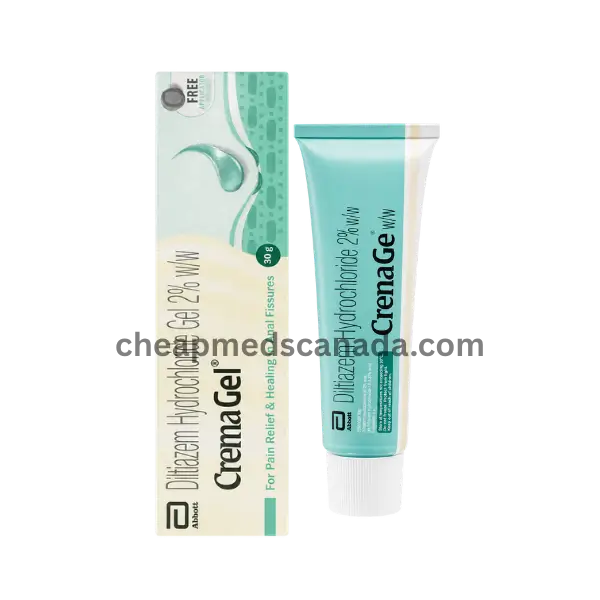
Diltiazem Gel (CremaGel) for Anal Fissure: How It Works and How to Use It Properly
An anal fissure is a small tear that sits in a genuinely painful spot — the internal anal sphincter goes into spasm in response to the tear, and that spasm is what keeps the fissure from healing on its own. Diltiazem Gel (CremaGel) is built to interrupt that specific cycle. Here's how it works, where it fits in the actual treatment ladder for fissures, and how to apply it in a way that gets the medication where it actually needs to go.
Why Fissures Don't Heal on Their Own
A fissure creates pain, pain causes the internal anal sphincter to spasm and tighten, and that spasm reduces blood flow to the exact tissue that needs blood flow to heal. It's a self-sustaining loop — tighter sphincter, less circulation, slower healing, more pain with each bowel movement, more spasm. Anything that breaks that cycle at the sphincter-spasm stage gives the fissure an actual chance to close.
What's in CremaGel
The active ingredient is diltiazem hydrochloride, formulated at 2% for topical anal use. Diltiazem is a calcium channel blocker — originally developed for cardiovascular use — that blocks calcium from entering smooth muscle cells. Less calcium influx means less ability for the internal anal sphincter to sustain that spasm. Applied topically, it acts locally at the site rather than being absorbed significantly into general circulation, which is the reason side effects are typically limited to the application area rather than systemic.
Pain Relief vs. Healing: Two Different Timelines
These get conflated constantly, so it's worth separating them clearly. Pain and spasm relief from the sphincter relaxation effect can start within days of consistent use — often within the first one to two weeks, patients notice bowel movements are less sharp and burning. Actual fissure closure is a slower process, generally requiring a full 6-8 week course. Feeling better in week two doesn't mean the fissure has healed — it means the spasm cycle has eased, which is exactly why stopping early is the most common reason fissures reopen after initially improving.
Where Diltiazem Fits in Fissure Treatment
Fissure management typically follows a step-up approach, and knowing where topical diltiazem sits in that sequence helps set realistic expectations:
- Conservative measures first — increased fibre intake, hydration, stool softeners, and warm sitz baths to reduce straining and irritation
- Topical smooth-muscle relaxants — diltiazem gel or GTN (nitroglycerin) ointment, used when conservative measures alone haven't resolved symptoms within a couple of weeks
- Botox injection — considered when topical treatment over a full course hasn't achieved healing
- Lateral internal sphincterotomy — a minor surgical procedure reserved for fissures that haven't responded to non-surgical options
Diltiazem is usually reached for before surgery is ever on the table, which is why it's positioned as first-line topical therapy rather than a last resort.
Diltiazem vs. GTN (Nitroglycerin) Ointment
Both work on the same spasm-relief principle but through different mechanisms, and the choice between them usually comes down to side effect tolerance rather than effectiveness alone.
| Diltiazem Gel | GTN (Nitroglycerin) Ointment | |
|---|---|---|
| Mechanism | Calcium channel blocker | Nitric oxide donor |
| Headache risk | Lower | Notably higher — one of the most common reasons patients stop GTN |
| Blood pressure effect | Minimal at topical dose | Can cause more noticeable drops, especially combined with other vasodilating medications |
| Typical frequency | 2-3 times daily | Usually 2-3 times daily |
| Common first choice when | Headache sensitivity is a concern | GTN hasn't been tried yet, or diltiazem has been insufficient |
Many prescribers now start with diltiazem specifically because the headache rate is meaningfully lower — GTN's nitric oxide mechanism affects blood vessels more broadly, which is exactly what causes the vascular headache that leads a lot of patients to abandon it early.
How to Apply It Correctly
Getting the gel to the internal sphincter — not just the external skin around the fissure — is what actually determines whether it works.
- Wash your hands thoroughly before touching the tube or the area
- Clean the anal area gently with warm water and a mild, unscented soap; pat dry rather than rubbing
- Squeeze out a small amount — roughly a 2.5cm ribbon is the typical guide — onto a clean fingertip
- Gently insert the fingertip just past the anal opening to apply the gel to the internal sphincter, not only the external skin. Surface-only application significantly under-delivers the medication to where the spasm is actually happening
- Apply as directed, typically 2-3 times daily, commonly timed after bowel movements and before bed
- Wash your hands again afterward to avoid accidental contact with eyes or other sensitive areas
Why It Can Sting or Feel Warm
A mild burning, tingling, or warm sensation after application is common and expected — it reflects the same vasodilation effect responsible for the improved blood flow that supports healing, not a sign of irritation or an allergic reaction. This usually settles within the first several applications as the tissue adjusts. Persistent or worsening irritation, rather than a mild transient sensation, is what warrants checking in with a doctor.
Side Effects
Common, localized:
- Mild burning or tingling at the application site
- Itching or redness
- Some initial discomfort in the first few applications
Less common, related to minor systemic absorption:
- Headache — present but at a meaningfully lower rate than with GTN
- Dizziness or lightheadedness, particularly if more than the recommended amount is used
Severe headache, significant skin reaction, or worsening symptoms over time are reasons to stop and check in with a doctor rather than continue.
Who Should Be Cautious
- Anyone with a known allergy to diltiazem or other calcium channel blockers
- Existing low blood pressure, heart conduction abnormalities, or significant liver impairment — worth flagging to a doctor before starting
- Patients on beta-blockers, digoxin, or certain antifungals, due to potential interaction even with topical use
- Pregnancy and breastfeeding — safety data for topical diltiazem in these situations is limited, so it's a discuss-with-your-doctor-first situation rather than an outright contraindication
Storage
Keep between 15°C and 25°C, away from direct sunlight, tube tightly closed after each use, and out of reach of children. Discard after the expiry date printed on the packaging.
How is diltiazem ointment different from GTN ointment?
Both medications help relax the internal anal sphincter to promote healing of an anal fissure. However, diltiazem is less likely to cause headaches than GTN ointment, which is why many doctors choose it as a first-line treatment.
Can I stop using diltiazem ointment once the pain goes away?
No. Pain often improves before the fissure has completely healed. Continue using the ointment for the full treatment course recommended by your doctor to reduce the risk of the fissure returning.
Does it matter if I only apply the ointment to the outside?
Yes. Diltiazem should be applied exactly as directed because the medication needs to reach the internal anal sphincter where the muscle spasm occurs. Applying it only to the outside may reduce its effectiveness.
What should I do if diltiazem ointment doesn't work?
If your symptoms have not improved after a full 6 to 8 weeks of treatment, speak with your doctor. Other options, such as Botox injections or surgery, may be recommended for persistent anal fissures.
How long does diltiazem ointment take to work?
Many people notice less pain within the first few weeks, but complete healing of the fissure usually requires 6 to 8 weeks of consistent treatment.
Diltiazem Gel should be used only under the guidance of a qualified healthcare professional. It is intended for external rectal use only and should be applied exactly as prescribed. Discontinue use and seek medical advice if symptoms worsen, severe irritation occurs, or you experience signs of an allergic reaction.

Reviews
There are no reviews yet.