
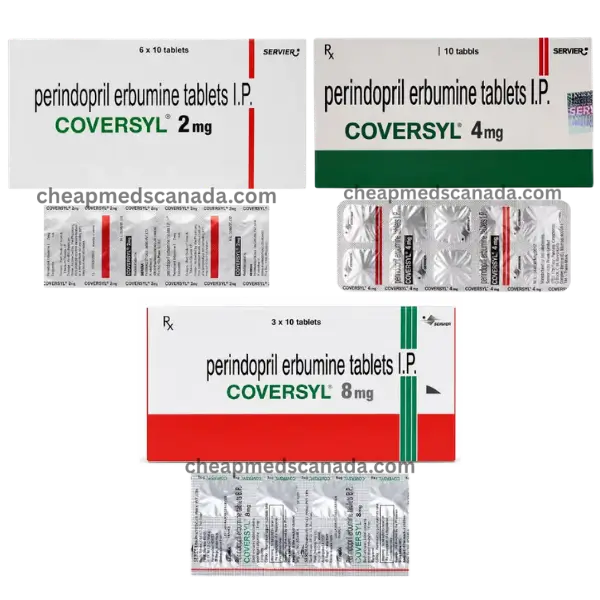
Description
The Blood Pressure Tablet Most Canadian Cardiologists Trust
There are hundreds of blood pressure medications on the market. So why do so many Canadian doctors keep coming back to the same one?
Coversyl — the brand name for Perindopril — has been prescribed across Canada for over three decades. Not because it's flashy or new, but because it works quietly and consistently, day after day, without making patients feel like they're on medication. No drowsiness. No brain fog. No dramatic swings. Just steady, predictable blood pressure control that protects the heart, the kidneys, and the blood vessels over the long term.
It comes in three strengths — 2 mg, 4 mg, and 8 mg — each one designed for a different stage of treatment. Whether you're just starting out or your doctor has decided it's time to step things up, there's a Coversyl dose built for exactly where you are right now.
Which Strength Is Right For You?
This is the question most patients have when they first hear about Coversyl. The answer depends entirely on where your blood pressure sits right now, what condition is being treated, and how your body responds to the initial dose. Here's a simple breakdown:
Coversyl 2 Mg — The Gentle Starting Point
Who it's for:
- Elderly patients (typically 65 and above) whose kidneys clear medication more slowly
- Patients with mild hypertension who need careful, gradual treatment
- Anyone with reduced kidney function where a conservative starting dose is safer
- Patients being introduced to ACE inhibitors for the first time who need a lower entry dose
What to expect: At 2 mg, the blood pressure-lowering effect is real but modest. Think of it as easing the door open rather than pushing it wide. Doctors use this dose to let the body adjust — particularly in older patients where a sudden significant blood pressure drop can cause dizziness and falls. Most patients who start here move up to 4 mg after four weeks if readings allow.
Coversyl 4 Mg — The Standard Working Dose
Who it's for:
- Most adults with newly diagnosed hypertension
- Patients with mild to moderate high blood pressure
- Anyone stepping up from 2 mg after their body has adjusted
- Patients where a moderate ACE inhibitor effect is clinically appropriate
What to expect: This is where the majority of Coversyl patients spend most of their treatment. Four milligrams provides enough perindopril to bring most moderate blood pressure cases into the healthy range — below 130/80 mmHg, which is the Hypertension Canada target for most adults. It's also the dose where side effects are least likely and easiest to manage. If four weeks at 4 mg brings your readings where they need to be, this may be the dose you stay on indefinitely.
Coversyl 8 Mg — When The Job Needs More Muscle
Who it's for:
- Patients whose blood pressure hasn't reached target on 4 mg after four weeks
- Adults with established coronary artery disease (strong clinical evidence at this dose)
- Patients with heart failure who are being titrated to the highest tolerated dose
- Anyone where the treating cardiologist has determined that maximum ACE inhibition is the clinical goal
What to expect: At 8 mg, perindopril's cardiovascular protection goes beyond just lowering blood pressure. Clinical trials — including the landmark EUROPA study involving over 12,000 patients — showed a 20% reduction in heart attack, cardiac death, and cardiac arrest risk at this dose in patients with stable coronary artery disease. Canadian cardiologists frequently target 8 mg specifically for this broader protective benefit.
What Conditions Does Coversyl Treat?
High Blood Pressure (Hypertension)
Nearly 1 in 4 Canadian adults lives with high blood pressure — and most of them don't feel anything unusual because of it. That's the danger. Hypertension doesn't hurt. It doesn't warn you. It just quietly damages arteries, strains the heart, and raises the risk of stroke and heart attack year after year until something finally gives.
Coversyl lowers that risk by bringing blood pressure down and keeping it there — across all three strengths, with the dose matched to how much lowering is needed.
What patients notice once it's working:
- Consistent readings below 130/80 mmHg on home monitoring
- Less strain-related headaches that some hypertension patients experience
- Better results from regular exercise as blood pressure responds more appropriately
- Peace of mind at routine appointments when the numbers finally look right
Coronary Artery Disease
When the arteries supplying the heart are narrowed by fatty plaques, every heartbeat happens in a compromised environment. The heart works harder. The risk of a clot breaking off and causing a heart attack is elevated. And the inside lining of the arteries — already damaged — needs protection from further stress.
Coversyl — particularly at the 8 mg dose — has been shown to:
- Reduce the risk of heart attack and cardiovascular death by up to 20%
- Improve the flexibility and health of arterial walls independently of blood pressure
- Reduce inflammation inside plaques that makes them more likely to rupture
- Lower the overall workload on a heart already operating under stress
Heart Failure
Heart failure doesn't mean the heart has stopped. It means the muscle has weakened to the point where it can no longer pump blood efficiently enough to meet the body's demands. Fluid backs up. Breathing becomes harder. Energy disappears.
Coversyl is one of the cornerstone medications for heart failure management in Canada because it:
- Reduces the resistance the heart pumps against — making each beat more efficient
- Slows the progression of the disease — not just managing symptoms but changing the course
- Improves how much patients can physically do — exercise tolerance improves meaningfully over months
- Reduces hospitalisation rates — patients on ACE inhibitors at therapeutic doses spend significantly fewer days in hospital
Kidney Protection in Diabetes
High blood sugar damages tiny blood vessels throughout the body. The kidneys are built almost entirely from tiny blood vessels — which makes them one of the first organs to suffer when diabetes isn't well controlled.
Perindopril reduces pressure inside the kidney's filtering units, slowing kidney disease progression even when blood pressure isn't severely elevated. This is why many Canadian diabetes specialists prescribe Coversyl specifically for kidney protection — not just for blood pressure management.
Post-Heart Attack Recovery
After a heart attack, the damaged area of the heart can stretch and reshape itself in ways that reduce the remaining muscle's pumping efficiency over time. Perindopril slows this process, protects the surviving heart tissue, and reduces the statistical risk of a second cardiac event during the months when vulnerability is highest.
How Perindopril Works
Imagine your blood vessels like a garden hose. When the hose is squeezed tight, more pressure builds up inside. Your body squeezes those vessels using a hormonal system — and in people with hypertension, that system is stuck in the "squeeze" position even when it doesn't need to be.
The hormone that causes the squeezing is called Angiotensin II. It's made by an enzyme called ACE. Perindopril blocks that enzyme.
The result:
- 🔓 Blood vessels stop being held tight and relax naturally
- 💧 Kidneys release more fluid instead of holding onto it
- ❤️ Heart pumps against less resistance with every beat
- 📉 Blood pressure drops steadily and stays down
The higher the dose, the more complete that blockade. Which is why 8 mg produces a stronger effect than 4 mg, and why doctors increase the dose when the lower strength hasn't brought things fully under control.
How To Take Coversyl — Dosage Guide
One tablet. Once a day. Every day.
That's the core of it. But a few details make a real difference:
Take it at the same time each day Blood pressure medication works best when it maintains consistent levels in the bloodstream. Pick a time — morning or evening — and stick to it.
| Timing | Best For |
|---|---|
| Morning | Most patients — covers the high-risk early hours when blood pressure peaks |
| Evening | Patients who experience first-dose dizziness — side effects happen during sleep |
Food doesn't matter much Unlike some medications, Coversyl can be taken with or without food — eating doesn't significantly change how well it's absorbed.
Swallow it whole Don't crush or split the tablet without checking with your pharmacist first. The film coating affects how it's released.
Missing a dose
- Remembered a few hours later → take it immediately
- Almost time for the next dose → skip the missed one and carry on
- Never take two tablets together to catch up
Side Effects — Honest And Complete
What Most Patients Experience
| Side Effect | How Common | What It Feels Like | What To Do |
|---|---|---|---|
| Dry cough | 1 in 8 to 1 in 10 | Persistent tickle, worse at night | Tell your doctor — switching to an ARB solves it |
| Dizziness | Common early on | Lightheaded when standing quickly | Rise slowly, sit at bed edge before standing |
| Headache | Occasional | Mild, usually first few weeks | Typically settles on its own |
| Fatigue | Some patients | Tiredness in early weeks | Usually passes as body adjusts |
The Cough — The One Everyone Asks About
Important facts every Coversyl patient should know:
- ❌ It does NOT improve over time
- ❌ It does NOT respond to cough medicine
- ❌ Lowering the dose doesn't reliably fix it
- ✅ It goes away completely when the medication is switched
- ✅ Switching to an ARB (like ramipril or candesartan) solves it while keeping blood pressure just as well controlled
If the cough is affecting your sleep or daily life — don't put up with it. Tell your doctor. There are excellent alternatives.
Less Common But Important
High potassium (Hyperkalemia) Perindopril changes how the kidneys handle potassium. Levels can drift upward over time without any obvious symptoms — which is exactly why blood tests are important. Higher risk in patients with diabetes, kidney disease, or those taking potassium supplements.
Kidney function changes For most patients, Coversyl actually protects the kidneys. In rare cases — particularly in patients with narrowed kidney arteries — it can temporarily reduce filtration. Blood tests before starting and during treatment catch this early.
Rare But Serious — Know The Signs
🚨 Angioedema Sudden swelling of the lips, tongue, face, or throat. Can develop at any point — even after months of taking the medication without problems. Throat swelling that affects breathing is a medical emergency.
If this happens:
- Stop taking Coversyl immediately
- Call emergency services or go to the nearest ER
- Never take an ACE inhibitor again — ever
Who Should Not Take Coversyl
- 🚫 Pregnant women — causes serious foetal harm at any dose, in any trimester
- 🚫 Anyone who has previously had angioedema from an ACE inhibitor
- 🚫 Patients with bilateral renal artery stenosis
- 🚫 Children under 18
Use with extra caution if you have:
- Reduced kidney function — dose adjustment needed
- Diabetes — blood sugar and potassium monitoring required
- Significant liver disease — clearance is affected
- You are over 70 — starting dose is usually 2 mg with gradual increases
Drug Interactions — Show This List To Your Doctor
| Medication | Risk Level | Why It Matters |
|---|---|---|
| Diuretics (water tablets) | ⚠️ High on first dose | Can cause significant blood pressure drop |
| Potassium-sparing diuretics | ⚠️ Ongoing | Combined potassium rise — monitoring essential |
| Lithium | ⚠️ High | ACE inhibitors slow lithium clearance — toxic levels possible |
| Insulin / diabetes tablets | ⚠️ Moderate | Blood sugar may run lower than expected |
| Ibuprofen / Naproxen (NSAIDs) | ⚠️ Moderate | Reduces Coversyl's effectiveness + kidney stress |
| Another ACE inhibitor or ARB | 🚫 Avoid | Serious kidney and blood pressure risks |
| Amlodipine (calcium channel blocker) | ✅ Safe — commonly combined | Standard combination in Canadian hypertension practice |
Storage
- Room temperature — between 15°C and 25°C
- Away from sunlight, heat, and humidity
- Not in the bathroom or near kitchen appliances
- Keep in original blister strips until use
- Out of reach of children at all times
- Return unused medication to your pharmacy — Health Canada advises against flushing medications
Ordering Coversyl Online in Canada
Coversyl is a daily medication. There's no such thing as a minor supply gap — even a few days without it means blood pressure starts climbing back toward where it was before treatment began.
Why Canadians order online:
- No appointment needed to manage a refill
- Available in all three strengths — 2 mg, 4 mg, and 8 mg
- Discreet packaging — no product names or pharmacy branding on the outside
- Delivery anywhere in Canada — cities, smaller towns, and rural addresses
- Multiple quantity options — order months of supply in one go
- Estimated delivery 6 to 15 business days
How long before Coversyl starts lowering my blood pressure?
Most patients notice a measurable reduction in blood pressure within the first one to two weeks of treatment. However, the full effect of a particular dose generally takes around four weeks to develop. Your doctor may review your blood pressure readings after this period to determine whether any dosage adjustments are needed.
Why did my doctor start me at 2 mg instead of 4 mg?
A lower starting dose is often chosen for older adults or individuals with reduced kidney function. Beginning with 2 mg allows the body to adjust gradually and may help reduce the risk of excessive blood pressure lowering or dizziness. If treatment is well tolerated, your doctor may increase the dose based on your response and test results.
Can I take Coversyl with amlodipine?
Yes. Perindopril and amlodipine are commonly prescribed together because they work in different ways to help control blood pressure. Your doctor can advise whether separate tablets or a combination medication is the most appropriate option for your treatment plan.
The cough is really bothering me. What are my options?
A persistent dry cough is a known side effect of ACE inhibitors such as perindopril. If the cough becomes troublesome, speak with your doctor. They may consider switching you to another type of blood pressure medication that is less likely to cause this side effect while still providing effective blood pressure control.
Is it safe to take Coversyl long-term?
For many patients, long-term use of perindopril is considered safe and may provide cardiovascular and kidney-protective benefits when used as prescribed. Regular monitoring of kidney function and potassium levels is typically recommended to ensure ongoing safety and effectiveness.
What if I want to stop taking it?
Do not stop taking Coversyl without consulting your doctor. Blood pressure may rise again after treatment is discontinued, and stopping suddenly may increase health risks in some patients. If you have concerns about side effects, cost, or other issues, discuss them with your healthcare provider before making any changes.
Can I drink alcohol while taking Coversyl?
Moderate alcohol consumption may be tolerated by some patients, but alcohol can also lower blood pressure and may increase the risk of dizziness or light-headedness when combined with Coversyl. If you choose to drink alcohol, do so cautiously and discuss any concerns with your doctor.
Coversyl is a prescription medication used to help manage high blood pressure and certain cardiovascular conditions. The information provided is for educational purposes only and should not replace professional medical advice, diagnosis, or treatment. Always use Coversyl exactly as prescribed by your healthcare provider. Consult a qualified healthcare professional before starting, stopping, or changing any medication. Read the patient information leaflet carefully before use.

Reviews
There are no reviews yet.