
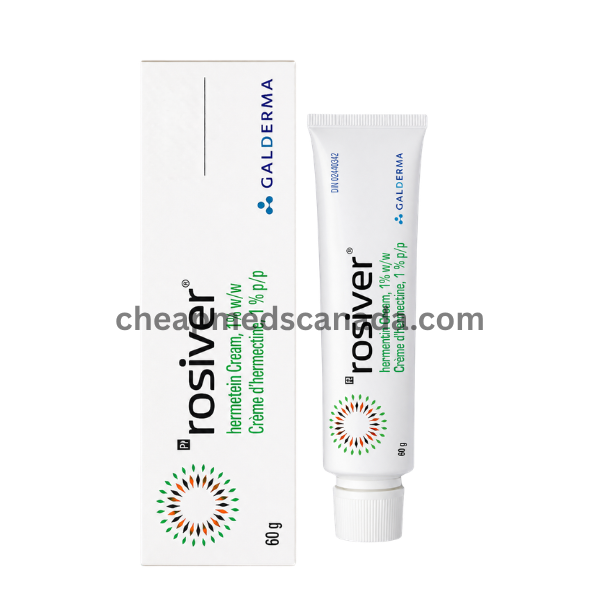
Description
Rosiver (Ivermectin Cream): Is It Even the Right Rosacea Treatment for You?
"Rosacea" isn't one single condition — it's an umbrella term covering four genuinely different presentations, and Rosiver is built for exactly one of them. Using it for the wrong subtype won't cause harm, but it also won't do much, which is why sorting out which kind of rosacea you're actually dealing with matters before anything else.
Quick Reference
| Detail | Information |
|---|---|
| Active ingredient | Ivermectin 1% |
| Manufacturer | Galderma (Canada) |
| Treats specifically | Papulopustular rosacea |
| Form | Topical cream, 60g tube |
| Application | Once daily at bedtime, full face |
The Four Subtypes, Sorted
Erythematotelangiectatic Rosacea
What it looks like: Persistent facial redness and flushing, often with visible small blood vessels (telangiectasia) across the cheeks and nose. No significant bumps or pustules — it's primarily a vascular presentation.
Does Rosiver treat this? Not really its intended target. This subtype is driven mainly by blood vessel dysregulation rather than the inflammatory bump-and-pustule pattern ivermectin is designed for. Treatments addressing the vascular component — like topical brimonidine, which works on blood vessel constriction — are the more direct fit here.
Papulopustular Rosacea
What it looks like: Persistent central facial redness combined with inflammatory bumps and pustules — this is the "acne-like" presentation of rosacea, though it's a distinct condition from actual acne.
Does Rosiver treat this? Yes — this is specifically what it's indicated for. Clinical trials showing meaningful reductions in inflammatory lesion counts were conducted on this subtype specifically, and it's the one where ivermectin's dual anti-inflammatory and anti-parasitic mechanism has the clearest evidence behind it.
Phymatous Rosacea
What it looks like: Thickened, bumpy skin texture, most commonly on the nose (where it's specifically called rhinophyma), from long-term tissue changes and enlarged oil glands.
Does Rosiver treat this? No — this is a structural skin change rather than an active inflammatory process a topical cream can reverse. Phymatous rosacea generally needs a different approach entirely, sometimes including procedural or surgical options, and is a conversation specifically for a dermatologist rather than something addressed with ivermectin cream.
Ocular Rosacea
What it looks like: Eye-focused symptoms — dryness, irritation, a gritty feeling, redness of the eyelids or eye surface.
Does Rosiver treat this? No, and specifically shouldn't be used for it — Rosiver is explicitly not for ophthalmic (eye) use under any circumstances. Ocular rosacea needs its own targeted treatment, usually involving eye-specific drops or ointments prescribed by an ophthalmologist or dermatologist.
If You've Confirmed Papulopustular Rosacea: How Rosiver Works
Ivermectin approaches this subtype from two angles at once. It calms the inflammatory response directly, reducing the visible bumps and pustules along with less obvious symptoms like stinging and dryness. It also has genuine antiparasitic activity against Demodex mites — tiny organisms that live in facial hair follicles and appear to overgrow in a meaningful share of papulopustular rosacea cases, contributing to the inflammatory cycle. Addressing both the inflammation and a likely underlying contributor together is part of why it tends to hold results longer than treatments that only address one side of the problem.
How to Actually Apply It
- Wash and dry your face.
- Use a pea-sized amount of cream.
- Apply small amounts across all five zones — forehead, nose, chin, and both cheeks — then blend evenly across the entire face.
- Don't spot-treat individual bumps; the whole face gets treated, not just the visibly affected areas.
- Avoid the eyes and lips completely.
- Wash your hands afterward.
- Apply once daily, at bedtime, and let it dry fully before applying anything else — including cosmetics.
What to Expect
- By week 4: Many patients notice a distinct improvement.
- Through week 12: Continued improvement is typical; clinical data shows a substantial share of patients reaching "clear" or "almost clear" status by this point.
- At 3 months with no change: Stop and follow up with your doctor rather than continuing — this suggests either a diagnosis mismatch (possibly a different subtype, or a different skin condition entirely) or that a different treatment approach is needed.
Side Effects
Common, mild:
- Burning on application
- Irritation
- Itching
- Dry skin
Serious — stop and get care:
- Signs of a severe allergic reaction: swelling, difficulty breathing, widespread rash
What Makes Symptoms Worse Regardless of Treatment
- Alcohol-based cleansers, astringents, or abrasive scrubs
- Chemical peeling agents
- Excessive sun exposure
These apply across rosacea in general, not just while using Rosiver — worth avoiding regardless of subtype or treatment.
Who Shouldn't Use It
- Allergy to ivermectin or any cream ingredient
- Under 18 — not recommended
- Not for oral, eye, or intravaginal use, ever
Can I have more than one type of rosacea at the same time?
Yes. Many people have features of more than one rosacea subtype, such as persistent redness along with bumps and pimples. A dermatologist can determine which type of rosacea you have and whether Rosiver is the most appropriate treatment.
Will Rosiver help if I only have redness and no bumps?
Rosiver is primarily used to treat the inflammatory bumps and pimples of rosacea. While some people may notice a small improvement in redness, it is not specifically intended to treat redness alone. Your doctor may recommend a different treatment if flushing and redness are your main symptoms.
How can I tell which type of rosacea I have?
The best way to identify your rosacea subtype is through an examination by a dermatologist or healthcare provider. Several skin conditions can look similar to rosacea, so a professional diagnosis is important before starting treatment.
Is it normal for Rosiver to irritate my skin at first?
Mild irritation, dryness, or a slight burning sensation may occur during the first few days of treatment and often improves as your skin adjusts. If your rosacea becomes noticeably worse or the irritation is severe, contact your doctor.
How long does Rosiver take to work?
Some people begin to notice improvement within a few weeks, but it may take up to 12 weeks of regular daily use to see the full benefit. Continue using the medication as prescribed unless your doctor advises otherwise.
Rosiver Cream should be used only as prescribed by a qualified healthcare professional. For external use only. Avoid contact with the eyes, mouth, and broken skin. If severe irritation, worsening symptoms, or an allergic reaction occurs, discontinue use and seek medical advice promptly.
Reviews
There are no reviews yet.