
Description
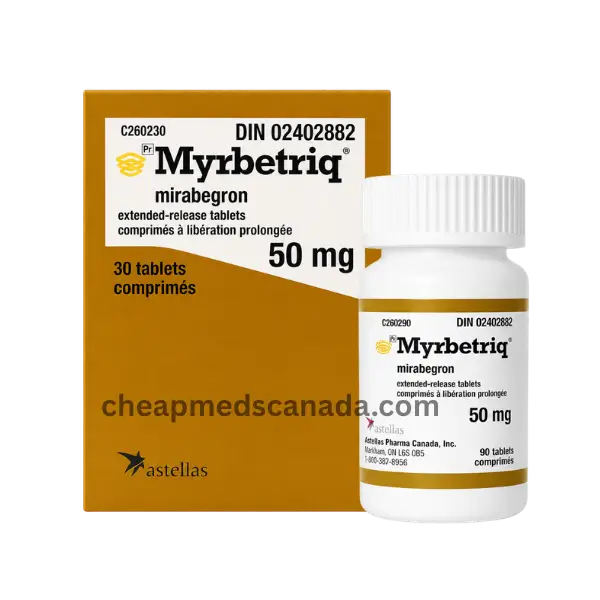
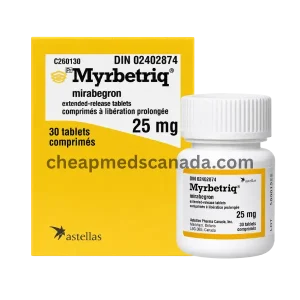
Myrbetriq (Mirabegron) 50mg
Myrbetriq — also sold as Betmiga in some countries — is a prescription medicine for overactive bladder. If you're dealing with that sudden, hard-to-control urge to go, needing to pee more often than feels normal, or the occasional accident that comes with either of those, this is what it's built to treat. It works by relaxing the muscle around your bladder, which lets it hold more urine before your brain starts sending those urgent "go now" signals.
Why 50mg Specifically
Most people don't start here. The typical path is beginning at 25mg once daily, and after 4 to 8 weeks, if symptoms haven't improved enough and the lower dose is being tolerated well, the doctor bumps it up to 50mg. So if you've been prescribed the 50mg strength, there's a decent chance you've already been through that first stage — or your doctor decided, based on your specific situation, that starting higher made sense.
Available Strengths
| Strength | Form |
|---|---|
| 25mg | Extended-release tablet |
| 50mg | Extended-release tablet |
How to Take It
One tablet, once a day, with a full glass of water. You can take it with or without food — whichever's easier for you to remember consistently.
Swallow it whole. Don't crush it, chew it, or split it — it's extended-release, meaning it's built to release the medication gradually over the day, and breaking the tablet defeats that.
Don't expect overnight results. It can take up to 8 weeks before you notice a real improvement in symptoms. Keep taking it as prescribed through that window, and let your doctor know if things still aren't better once you've hit that mark.
If you miss a dose, just wait for your next scheduled one — don't double up to make up for it.
Side Effects
Common:
- Increased blood pressure
- Headache, dizziness
- Cold-like symptoms — stuffy nose, sneezing, sore throat
- Constipation or diarrhea
- Dry mouth
- Back pain, joint pain
Stop and call your doctor if you notice:
- A fast or pounding heartbeat
- Pain or burning when you urinate (could signal a UTI)
- Painful or difficult urination
- Severe headache, blurred vision, pounding in your neck or ears, nosebleeds, anxiety, confusion, severe chest pain, shortness of breath, or an irregular heartbeat
Get emergency help immediately if you experience:
- Hives, trouble breathing, or swelling of your face, lips, tongue, or throat — signs of a serious allergic reaction, including a condition called angioedema, which can be fatal if untreated
Before You Start
Tell your doctor if any of these apply to you:
- End-stage renal disease or severe kidney disease
- Severe, uncontrolled high blood pressure
- Severe liver disease
- Trouble fully emptying your bladder — very little urine or a weak stream
- A known ECG abnormality called QT prolongation, or you're taking another medication known to cause it
It's not known whether Myrbetriq is safe during pregnancy, so it's generally avoided if you're pregnant or planning to be. It's also not known whether it passes into breast milk, so breastfeeding while on it isn't recommended.
It's not approved for anyone under 18.
What to Watch With Alcohol
Alcohol can make certain side effects — dizziness in particular — worse. Ask your doctor how much, if any, makes sense while you're on this medication.
Drug Interactions
Tell your doctor about everything else you're taking, especially:
- Digoxin
- Flecainide
- Warfarin
- Propafenone
- Thioridazine
- Metoprolol
- Desipramine
- Other overactive bladder medications (darifenacin, fesoterodine, oxybutynin, solifenacin, tolterodine, trospium)
This isn't a complete list — bring your full medication list, including over-the-counter products, vitamins, and supplements, to that conversation.
Do I need to start with Betmiga 25 mg before taking the 50 mg dose?
In many cases, yes. The usual approach is to begin with the 25 mg dose so your doctor can assess how well you tolerate the medication before increasing it to 50 mg if needed. However, some patients may start at 50 mg based on their healthcare provider's judgment.
How long does Betmiga take to work?
Betmiga works gradually, and it may take up to 8 weeks to experience its full benefits. You may notice fewer urgent bathroom trips, less frequent urination, and fewer episodes of urinary leakage as treatment continues.
Can I take Betmiga with other overactive bladder medications?
Only if your doctor recommends it. Combining medications for overactive bladder can be appropriate in some cases, but it should only be done under medical supervision to ensure safety and effectiveness.
Is Betmiga the same as Myrbetriq?
Yes. Betmiga and Myrbetriq both contain the same active ingredient, mirabegron. The difference is the brand name, which varies depending on the country where the medication is marketed.
Myrbetriq 50 mg is a prescription medication. Use only as directed by your healthcare provider. Do not self-medicate. Product information is provided for educational purposes and is not a substitute for professional medical advice, diagnosis, or treatment.
Reviews
There are no reviews yet.