
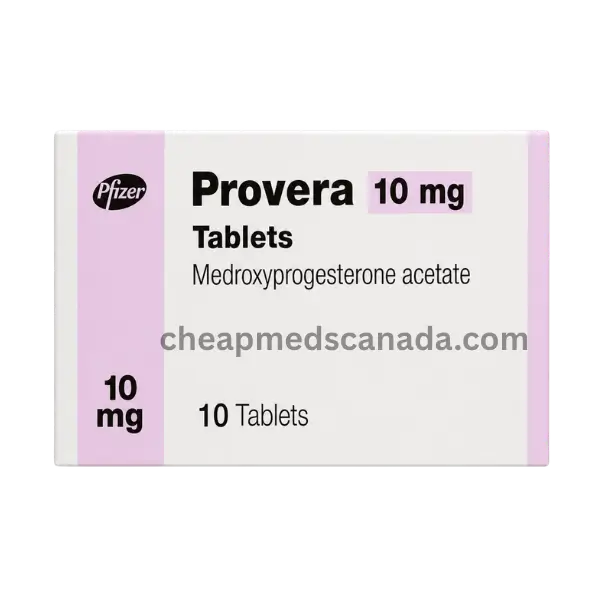
Description
Provera (Medroxyprogesterone) 10 mg: Not the Same Thing as Depo-Provera
The names are close enough that mixing them up is genuinely common — and it matters, because Provera and Depo-Provera aren't interchangeable, don't do the same job, and aren't taken the same way. Here's the actual difference, plus everything specific to the 10mg oral tablet.
The Core Difference
| Status | Provera (this medication) | Depo-Provera |
|---|---|---|
| Form | Oral tablet | Injection |
| Primary use | Irregular periods, abnormal uterine bleeding, endometrial protection during HRT | Contraception |
| Dosing schedule | Daily or cyclical, per your doctor's plan | Once every 3 months |
| Same active ingredient? | Yes — medroxyprogesterone acetate | Yes — same hormone, different formulation and dose |
Both contain medroxyprogesterone acetate, a synthetic form of progesterone. But the oral tablet you're likely looking at here isn't approved or typically used as a standalone birth control method — it's prescribed for menstrual and hormonal regulation, not pregnancy prevention. If contraception is what you're after, that's a different product and a different conversation with your doctor.
What Provera 10 mg Is Actually For
- Irregular or absent periods: Provera mimics what naturally happens during part of a normal ovulatory cycle, helping restore a more regular pattern.
- Abnormal uterine bleeding: Used to help manage bleeding that's heavier, longer, or more unpredictable than typical.
- Endometrial protection during hormone replacement therapy: For postmenopausal women taking estrogen, Provera is added specifically to reduce the risk of endometrial hyperplasia — a thickening of the uterine lining that estrogen alone can cause, and which raises the risk of uterine cancer over time.
Available Strengths
| Strength | Manufacturer | Source |
|---|---|---|
| 2.5mg | Pfizer (brand) | UK |
| 5mg | Pfizer (brand) | New Zealand, UK |
| 10mg | Pfizer (brand) | New Zealand, Canada, UK |
| 100mg, 200mg, 400mg | Pfizer (brand) | UK |
| 2.5mg, 5mg, 100mg | Generic | Canada |
How It Works
Medroxyprogesterone acetate is a synthetic progestin — essentially a lab-made version of the hormone your body produces naturally during the second half of a normal menstrual cycle. It signals the uterine lining to behave the way it would after ovulation, which is what allows it to help regulate irregular cycles and control abnormal bleeding. In the context of hormone replacement therapy, that same signaling keeps the uterine lining from thickening unchecked under estrogen's influence.
Side Effects
Common:
- Spotting or breakthrough bleeding
- Changes in menstrual periods
- Vaginal itching or discharge
- Breast tenderness
- Headache, dizziness
- Bruising or vein swelling
- Sleep problems
- Itching, rash, acne
- Hair growth or scalp hair loss
- Stomach discomfort, bloating, nausea
- Weight gain
- Vision changes
Contact your doctor if you notice:
- A breast lump
- Feeling light-headed, like you might pass out
- Fever
- Jaundice (yellowing skin or eyes)
- Signs of a blood clot in the leg — pain, swelling, warmth, or redness
- Signs of a blood clot in the lung — chest pain, sudden cough, wheezing, rapid breathing, coughing up blood
- Signs of a heart attack — chest pain or pressure, pain spreading to jaw or shoulder, nausea, sweating
- Signs of a stroke — sudden numbness or weakness (especially one-sided), sudden severe headache, slurred speech, vision or balance problems
- Swelling in hands, ankles, or feet
- Vaginal bleeding after menopause
Who Shouldn't Take It
- Allergy to medroxyprogesterone
- Undiagnosed abnormal vaginal bleeding
- Hormone-related cancer, including breast or uterine cancer
- Liver disease
- History of stroke or blood clot
Who Needs a Closer Conversation First
- Heart disease or congestive heart failure
- Recent stroke or heart attack
- High blood pressure, high cholesterol, or high triglycerides
- Low blood calcium
- Severe pelvic pain
- Recent miscarriage or abortion
- Epilepsy
- Asthma
- Migraine headaches
- Thyroid disorder
- Kidney disease
- Diabetes
- Lupus
Provera isn't safe during pregnancy and can cause complications for the fetus — tell your doctor immediately if you become pregnant while taking it. It also passes into breast milk, so breastfeeding needs a specific risk discussion with your doctor first. It's not approved for anyone under 18.
Important Long-Term Considerations
Provera doesn't prevent heart disease, breast cancer, or dementia, and in postmenopausal women, it may actually increase the risk of developing these conditions. It can also raise the risk of uterine or ovarian cancer in some women, and long-term use of estrogen-progestin combinations has been linked to increased risk of heart attack, blood clot, and stroke. Smoking significantly raises blood clot risk while on this medication, so avoiding it matters more here than usual.
Drug Interactions
Provera can interact with a number of medications, including:
- Acitretin
- Brigatinib
- Darunavir
- Idelalisib
- Ivacaftor
- Lesinurad
- Nelfinavir
- Ritonavir
- Saquinavir
- Telithromycin
- Voriconazole
This isn't a complete list — tell your doctor about everything you're taking, including supplements and vitamins, before starting.
Can I use f tablets as birth control?
No. Provera 10 mg tablets are not approved as a standalone contraceptive. If you need reliable pregnancy prevention, speak with your doctor about appropriate contraceptive options, such as Depo-Provera injections or other birth control methods.
Is Depo-Provera stronger than Provera tablets?
Not necessarily. Depo-Provera and Provera tablets contain related forms of medroxyprogesterone but are designed for different purposes. Depo-Provera is a long-acting injection used for contraception, while Provera tablets are commonly prescribed for menstrual disorders or as part of hormone replacement therapy.
Why is Provera added to hormone replacement therapy (HRT)?
If you are taking estrogen and still have your uterus, Provera helps protect the lining of the uterus from becoming too thick. This reduces the risk of endometrial hyperplasia and lowers the risk of developing uterine cancer.
How long will I need to take Provera 10 mg?
The length of treatment depends on the condition being treated and your doctor's treatment plan. Some people take Provera for a few days each month, while others use it for longer periods as part of hormone replacement therapy. Always follow your prescribed schedule.
Provera 10 mg is a prescription medication and should only be used under the guidance of a qualified healthcare professional. Follow your prescribed dosage and consult your doctor if you experience side effects or have concerns about your treatment.



Reviews
There are no reviews yet.