
Description
Monofer (Iron Isomaltoside / Ferric Derisomaltose Injection): What Your Bloodwork Is Telling You
If your doctor has mentioned Monofer, chances are a blood test started the conversation, not the other way around. This page walks through what those numbers usually mean, where Monofer fits into the picture, and what the actual infusion day looks like — so you're not walking in blind.
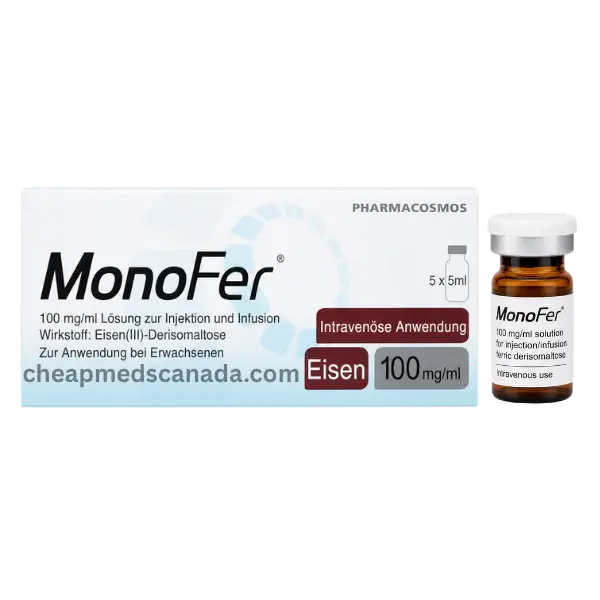
Quick naming note: you may see this product listed as Monofer (the name used in the UK, EU, and Australia) or Monoferric (the Health Canada-approved brand). Same active ingredient — iron isomaltoside 1000, also called ferric derisomaltose — same 100 mg/mL concentration, same manufacturer (Pharmacosmos). The label changes depending on which regulator approved it, not the medication itself.
Ferritin Under 30 ng/mL: Confirmed Iron Deficiency
This is usually the number that gets things moving. Ferritin reflects your body's stored iron, and once it drops below roughly 30 ng/mL (lower in some labs' reference ranges), most physicians consider iron deficiency confirmed, especially when paired with low hemoglobin.
- Ferritin alone doesn't diagnose anemia — hemoglobin and transferrin saturation usually get checked alongside it
- Ferritin can be falsely elevated during infection or inflammation, so your doctor may repeat it or add CRP to the workup
- This stage is where oral iron is typically tried first, before injectable options like Monofer enter the conversation
Hemoglobin Below Normal + Oral Iron Failed: This Is Where Monofer Comes In
Monofer isn't a first-line treatment. Health Canada's approval covers adults with iron deficiency anemia who couldn't tolerate oral iron (nausea, constipation, GI upset are common culprits) or whose levels didn't respond to it after a reasonable trial.
Reasons your doctor might skip straight past oral iron pills:
- Active inflammatory bowel disease, where oral iron can worsen gut symptoms
- Malabsorption conditions (celiac disease, prior bariatric surgery) where pills simply don't get absorbed
- Heavy ongoing blood loss where oral dosing can't keep pace
- Chronic kidney disease, particularly in patients on hemodialysis
- Pregnancy-related anemia where a fast correction is medically preferred
Calculating the Dose: Two Methods Your Pharmacist Might Use
Monofer dosing isn't one-size-fits-all — it's calculated from your body weight and how far below target your hemoglobin sits.
Ganzoni formula — accounts for actual body weight, current hemoglobin, target hemoglobin, and estimated iron stores. This gives the most individualized total iron dose.
Simplified dosing table — many prescribers use a streamlined version instead, landing on 1,000 mg, 1,500 mg, or 2,000 mg total, based on weight and hemoglobin bands.
Either way, the total dose is usually delivered in one or two visits rather than the weekly sessions older IV iron products required — a big part of why patients tend to prefer it once they've had it explained.
Infusion Day: What Actually Happens
Two administration approaches exist, and which one you get depends on your dose and your clinic's protocol.
- Infusion: doses above 500 mg are diluted in 100 mL of saline and dripped in over roughly 15–30 minutes
- Bolus injection: doses up to 500 mg can be given undiluted, injected slowly over a couple of minutes
Either way, plan on staying in the clinic for observation afterward. Hypersensitivity reactions, while uncommon, can occur, so staff will want appropriate treatment on hand and will typically watch you for a period after the injection ends before you're cleared to leave.
Side Effects: Common vs. Ones to Flag Immediately
Usually mild and short-lived:
- Nausea
- Headache
- Injection site discomfort, warmth, or discolouration
- Transient changes in blood pressure
Report to your clinic right away:
- Hives, facial or throat swelling, difficulty breathing (signs of a hypersensitivity reaction)
- Dizziness or fainting during or shortly after the infusion
- Severe or persistent joint or muscle pain
Low phosphate levels (hypophosphatemia) have also been associated with IV iron products including Monofer, particularly with repeated dosing — something your care team may monitor for if you're getting more than one round.
Who Shouldn't Get Monofer
- Known hypersensitivity to iron isomaltoside/ferric derisomaltose or any component of the formulation
- Anemia not caused by iron deficiency (Monofer won't correct anemia from other causes, and treating the wrong problem delays the right one)
- Evidence of iron overload or disorders of iron utilization
- Active infection, in most cases — iron can theoretically feed bacterial growth, so many clinicians prefer to treat the infection first
Health Canada's monograph also notes that safety in patients under 18 hasn't been established, and that anyone 65 or older should have a careful risk-benefit conversation with their prescriber before starting.
Pregnancy Considerations
IV iron isn't automatically off the table during pregnancy — in fact, it's sometimes preferred when anemia is significant and oral iron isn't cutting it fast enough. That said, it's a decision made jointly between you, your obstetric provider, and sometimes a hematologist, weighing trimester, severity, and how quickly correction is needed. Most protocols avoid IV iron in the first trimester unless the anemia is severe, reserving it more commonly for the second and third trimesters when the benefit of a fast correction tends to outweigh the theoretical risks.
Monofer vs. Oral Iron: Why Skip the Pills?
For a lot of patients, the appeal isn't just that oral iron didn't work — it's what oral iron put them through trying. A quick side-by-side of what changes:
| Oral Iron Tablets | Monofer (IV) | |
|---|---|---|
| Absorption | Depends on gut health; often poor | Delivered directly into bloodstream |
| GI side effects | Common (nausea, constipation, cramping) | Rare, since it bypasses the gut |
| Time to correct levels | Weeks to months, often longer | Days to weeks |
| Dosing schedule | Daily, sometimes for months | One or two clinic visits |
| Best for | Mild deficiency, good gut absorption | Intolerance, malabsorption, urgent correction |
Neither option is universally "better" — it comes down to why your iron is low and how your body has responded so far. Someone with mild deficiency and no GI issues may do perfectly well on tablets. Someone with IBD, prior GI surgery, or a history of not tolerating iron pills is exactly who Monofer was designed for.
What to Do Before Your Appointment
A little preparation makes the infusion visit smoother:
- Bring a list of current medications and supplements, including any iron products you've already tried
- Mention any history of drug allergies or previous reactions to IV medications, even mild ones
- Eat normally beforehand — there's no fasting requirement for Monofer
- Arrange a ride if you tend to feel lightheaded around needles or blood draws, though most patients drive themselves home without issue
- Ask your clinic how long the observation period after the injection is expected to run, so you can plan your day around it
How quickly does Monofer start working?
Early signs that Monofer is working, such as an increase in reticulocyte counts, may appear within a few days. Hemoglobin levels usually begin to rise over the following weeks, while restoring iron stores completely may take longer depending on the severity of your deficiency.
Is Monofer the same as iron sucrose or ferric carboxymaltose?
No. Monofer (iron isomaltoside 1000) is a different intravenous iron formulation. While all are used to treat iron deficiency, they have different dosing schedules, administration methods, and prescribing recommendations, so they are not directly interchangeable.
Can I receive Monofer if I am on dialysis?
Yes. Monofer is commonly used to treat iron deficiency anemia in people with chronic kidney disease, including those receiving hemodialysis. Your healthcare provider will determine the appropriate dose based on your iron levels and clinical needs.
Will one Monofer infusion be enough?
It depends on your total iron deficiency. Some people receive their full iron replacement in a single infusion, while others require additional doses or a follow-up infusion based on their calculated iron needs and blood test results.
Monofer is a prescription medication and should be administered only by qualified healthcare professionals. This information is provided for educational purposes only and is not a substitute for professional medical advice, diagnosis, or treatment. Always consult your healthcare provider regarding the appropriate use of this medication.
Reviews
There are no reviews yet.