


Description
What Is Betadine?
Betadine is the brand name for povidone iodine, a broad-spectrum topical antiseptic manufactured by Purdue. It's not an antibiotic — that distinction matters, because it changes both how it works and why it's stayed useful for decades without bacteria developing resistance to it.
It comes in a few distinct forms, each built for a different job:
| Product | Strength | Used For |
|---|---|---|
| Betadine Solution | 10% | Cuts, scrapes, wound cleaning, pre-procedure skin prep |
| Betadine Spray | 5% | Minor wounds, no-touch application |
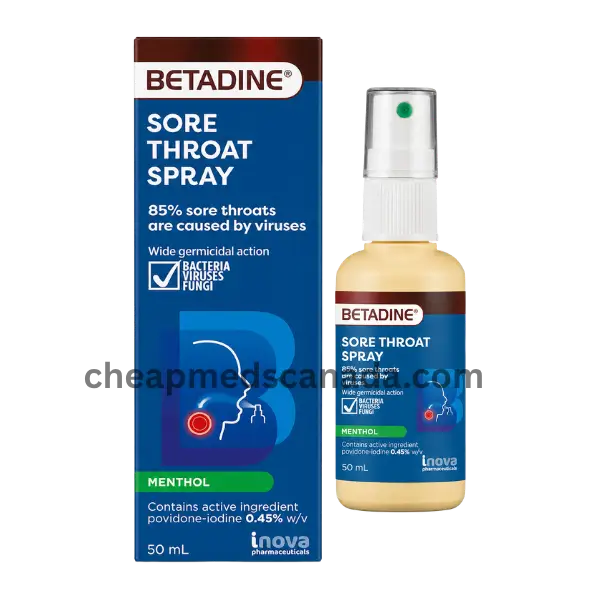
| Betadine Sore Throat Spray | Lower, oral-safe concentration | Mild throat irritation |
How It Works
Povidone acts as a carrier, slowly releasing free iodine onto the skin's surface. That free iodine then damages the outer structure and proteins of bacteria, fungi, and even some viruses on contact. It's a fairly blunt, non-selective mechanism rather than a targeted biological one — which is exactly why resistance isn't really a concern with it, unlike antibiotics.
The golden-brown colour is part of how it works, too. As it dries and the colour fades, that's roughly a visual sign the iodine has been released and done its job on the surface.
How to Use It
For a cut or scrape:
- Rinse the wound with clean water first to remove dirt or debris.
- Apply the solution directly — poured on, or with a clean cotton swab.
- Let it air-dry fully; don't wipe it off early.
- Cover with a clean bandage if the area is likely to get dirty again.
- Repeat once or twice daily until it's visibly healing.
For pre-procedure skin prep:
- Apply in a single, even coating over the area.
- Let it dry completely before the procedure.
- Avoid double-dipping a swab back into the solution to prevent contaminating the rest of it.
For a sore throat (spray only):
- Use only the number of sprays listed on the package.
- Aim toward the back of the throat.
- Avoid swallowing large amounts — it's meant to work locally.
- Wait a few minutes before eating or drinking.
Side Effects
Mild and common:
- Brief stinging or burning on application
- Temporary skin redness
- Skin staining (washes off within a day; fabric is more stubborn)
Moderate — worth mentioning to a doctor:
- Irritation that lasts beyond a day or two
- Skin that seems increasingly reactive with repeated use
Serious — stop and seek care:
- Signs of an allergic reaction: swelling, hives, difficulty breathing
- Blistering or worsening irritation
- New signs of infection at the site — warmth, pus, spreading redness
Who Should Be Cautious
- Thyroid conditions: Absorbed iodine can shift thyroid hormone levels, especially with repeated or large-area use.
- Pregnancy: Generally avoided from the second trimester onward, since absorbed iodine can cross the placenta and affect fetal thyroid development.
- Newborns and young children: Higher sensitivity to iodine absorption — a doctor's guidance is worth getting first.
- Kidney impairment: Iodine clearance depends on kidney function, so reduced function raises the risk of it building up.
- Large burns or extensive wounds: This is where the rare, documented cases of iodine toxicity have occurred — a supervision issue more than a reason to avoid a small home cut.
What Not to Combine It With
| Combined With | The Issue |
|---|---|
| Hydrogen peroxide | Can cancel out each other's antiseptic effect |
| Silver-based dressings | Reduces effectiveness of both |
| Another antiseptic, same area | Adds irritation without added benefit |
| Lithium | Iodine absorption can complicate thyroid monitoring during treatment |
When It's Not the Right Choice
- Deep puncture wounds or anything needing stitches
- Ongoing, slow-healing wounds without a doctor's guidance — daily use over larger areas raises how much iodine is absorbed
- Using the wound solution in the mouth or throat — it isn't formulated or safe for that
Is Betadine an antibiotic?
No. Betadine is an antiseptic, not an antibiotic. Its active ingredient, povidone-iodine, kills a wide range of bacteria, viruses, fungi, and other microorganisms by directly disrupting their cells rather than targeting specific bacteria like antibiotics do.
Does Betadine stain the skin permanently?
No. Betadine's brown color usually washes off the skin with soap and water within a day or so. However, it can leave more persistent stains on clothing, towels, and other fabrics.
Can I use Betadine wound solution for a sore throat?
No. Betadine wound solution is formulated for external use only and should not be swallowed or used as a gargle. If you need a throat antiseptic, use a Betadine product specifically intended for oral use.
Does a shellfish allergy mean I'm allergic to Betadine?
No. A shellfish allergy is caused by proteins found in shellfish, not iodine. Most people with shellfish allergies can use Betadine safely, but if you have had a previous reaction to povidone-iodine or iodine-containing products, speak with your doctor before using it.
Can I use Betadine on a wound every day for a long time?
Long-term use on large or slow-healing wounds should only be done under medical supervision. Prolonged use can increase iodine absorption into the body, so your doctor should monitor ongoing treatment if extended use is necessary.
Betadine (Povidone Iodine) is for external use only unless otherwise directed by a healthcare professional. Avoid use if you are allergic to iodine or any of its ingredients. Do not apply to large areas of damaged skin for extended periods without medical advice. Discontinue use and seek medical attention if irritation, allergic reactions, or worsening symptoms occur.

Reviews
There are no reviews yet.