
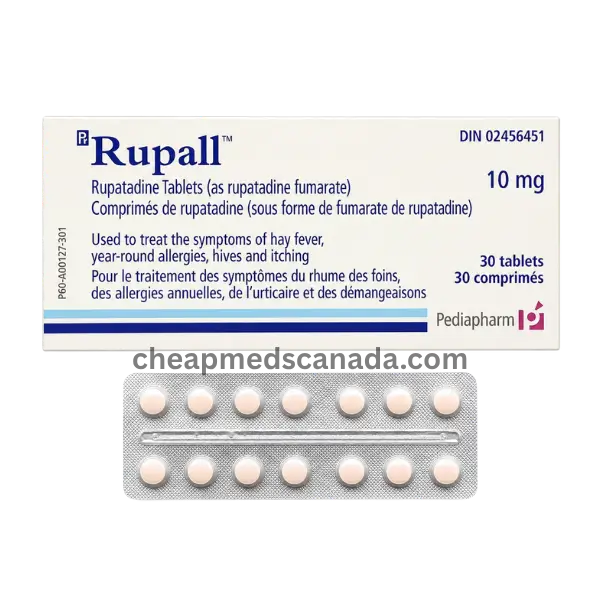
Description
If your doctor just handed you a prescription for Rupall 10 mg and you've never heard of it before, you're not alone. It doesn't sit on pharmacy shelves next to Reactine and Claritin. It doesn't get advertised during allergy season. Most people encounter it for the first time when over-the-counter options have let them down — and their doctor decides it's time for something that actually works.Rupall 10 mg — The Basics
Each Rupall 10 mg tablet contains exactly 10 mg of rupatadine (listed on the packaging as 12.8 mg of rupatadine fumarate — same thing, different salt form). The non-medicinal ingredients include lactose monohydrate, microcrystalline cellulose, magnesium stearate, pregelatinised maize starch, and the iron oxides that give the tablet its distinctive salmon colour. If you have lactose intolerance or a known sensitivity to any of these ingredients, flag it with your pharmacist before your first dose.Rupall 10 mg Uses — What It Treats
Rupall 10 mg is approved in Canada for two conditions. Both involve the immune system overreacting to something and causing symptoms that range from uncomfortable to genuinely disruptive.Allergic Rhinitis — Hay Fever and Year-Round Nasal Allergies
This is where most Rupall prescriptions are written. Allergic rhinitis splits into two categories: Seasonal allergic rhinitis: Shows up at predictable times — usually spring when tree pollen peaks, again through summer with grass pollen, and then ragweed season hits in late August and runs through October across much of Canada. If your nose starts running and your eyes start itching like clockwork every year around the same period, this is what you're dealing with. Perennial allergic rhinitis: Doesn't take a season off. Dust mites, pet dander, mould — these are year-round triggers. The symptoms are the same as seasonal rhinitis, but there's no annual break. Patients with perennial rhinitis often end up on a longer-term maintenance regimen rather than just treating during flare seasons. What Rupall 10 mg does for allergic rhinitis:- Clears up the runny nose and stops the sneezing
- Reduces nasal congestion and the stuffed-up feeling that comes with it
- Addresses eye symptoms — the itching, watering, and redness that accompany nasal allergies for a lot of people
- Onset is typically within 1 to 2 hours of the first dose, and the relief holds for a full 24 hours
Chronic Idiopathic Urticaria — Persistent Hives
The second approved Rupall 10 mg use is for chronic hives. "Idiopathic" just means no specific cause has been identified — which is frustrating for patients but more common than most people realize. These hives appear regularly, itch intensely, and don't have a clear trigger that can simply be avoided. Rupall helps by blocking the histamine response that drives the itch and the welt formation. For patients who've been on other antihistamines for hives with inconsistent results, the PAF-blocking component of rupatadine (explained below) can make a real difference in how well symptoms are controlled.Why Rupall Works Better for Some People Than OTC Options
Most standard antihistamines — cetirizine in Reactine, loratadine in Claritin, fexofenadine in Allegra — block histamine receptors (H1). That's their entire mechanism. When histamine attaches to those receptors, you get allergy symptoms. Block the receptor, histamine can't attach, symptoms ease. Rupall 10 mg does this too. But rupatadine is also a Platelet Activating Factor (PAF) antagonist — something the over-the-counter alternatives are not. PAF is a separate inflammatory compound that gets released during an allergic reaction. It amplifies the response, recruits more inflammatory cells, and keeps the reaction going longer. For patients whose allergies feel like they never quite settle down, PAF is often a significant driver. A medication that only blocks histamine leaves PAF unchecked. Rupall tackles both — which is why it performs better for some patients who got limited relief from simpler antihistamines.Rupall 10 mg Side Effects — What's Common, What's Not
The Side Effects Most People Experience
Clinical trials on rupatadine consistently show a good tolerance profile. The majority of people taking Rupall 10 mg don't report significant problems. When reactions do come up, these are the ones that appear most often: Headache — The most commonly reported side effect across studies. Usually mild and tends to ease after the first week or two of regular use. Drowsiness or fatigue — Rupatadine is classified as non-sedating, which means it crosses the blood-brain barrier less than older antihistamines. But "non-sedating" doesn't mean "zero sedation for everyone." Some people do feel tired, especially in the first few days. Until you know how Rupall 10 mg affects you personally, being cautious about driving or operating equipment on the first dose makes sense. Dry mouth — Fairly common at the start, less noticeable once the body adjusts. Nausea — Occasionally reported, more likely on an empty stomach for those with a sensitive digestive system. Dizziness — Usually mild and positional (most noticeable when standing up quickly). These are the Rupall 10 mg side effects that most patients encounter. In the majority of cases, they're mild and short-lived.The Side Effect That Needs More Attention — QT Prolongation
This is the one that gets discussed in more detail in the prescribing information, and it's worth understanding rather than just seeing it on a warning label and moving on. Rupatadine affects the heart's electrical conduction — specifically, it can prolong something called the QT interval, which is a measurement of how long the heart takes to complete one electrical cycle. For most healthy adults taking the standard 10 mg dose, this is not a practical concern. But for people who already have cardiac conditions, are on other medications that affect heart rhythm, or have electrolyte imbalances (low potassium or magnesium), the risk becomes more relevant. Signs to take seriously after starting Rupall 10 mg:- Fast heartbeat or palpitations you didn't have before
- Feeling like your heart is skipping or racing irregularly
- Dizziness severe enough to cause near-fainting
- Actual fainting
Less Common Rupall 10 mg Side Effects
Beyond the above, a smaller number of patients report:- Muscle pain or joint discomfort
- Fever or chills appearing without obvious cause
- Skin reactions at the site of urticaria treatment — itching or rash that spreads beyond the expected area
- Difficulty concentrating or mild cognitive "fog," particularly in the first few days
Rupall 10 mg and Alcohol
The combination matters. Alcohol independently causes drowsiness and impairs coordination — and rupatadine, even at its non-sedating classification, can add to that effect. On the day you take Rupall 10 mg, limiting or avoiding alcohol is the sensible call, especially if you're still figuring out how the medication affects you personally.Rupall 10 mg Price in Canada — What to Expect
Brand Name Pricing
Rupall 10 mg isn't cheap. As a prescription brand-name medication without universal provincial drug plan coverage, out-of-pocket costs can add up — especially for patients who need it year-round rather than just through allergy season.Generic Rupatadine Fumarate — The Cheaper Option
Generic rupatadine fumarate 10 mg is now available in Canada and is considered bioequivalent to brand-name Rupall — same active ingredient, same strength, same mechanism. Generics must meet Health Canada's bioequivalence standards, meaning they're designed to work the same way in the body. Generic rupatadine 10 mg pricing:- Generally 30 to 50% less than brand-name Rupall
- Available from both Canadian-manufactured and internationally sourced generic manufacturers
- Requires the same valid prescription as the brand-name version
Does Insurance Cover Rupall 10 mg?
This varies significantly by plan. Some private benefits plans cover Rupall under allergy medication or antihistamine categories. Provincial public drug plans have different formulary lists, and rupatadine is not universally covered across all provinces. Checking your plan's formulary directly — or asking your pharmacist to do a benefits check before you fill — saves the surprise at the counter.Buying Rupall 10 mg from Canada Online
For patients outside Canada looking to access Rupall at Canadian prices, it's worth knowing that Canadian pharmacy pricing is typically lower than US retail costs due to federal price regulation mechanisms that don't exist in the American drug market. A valid prescription is still required regardless of where it's filled.How to Take Rupall 10 mg
Dose: One tablet once daily. With or without food: Either works — meals don't meaningfully affect how it absorbs. Swallow whole: Don't crush or chew the tablet. Timing: Try to take it at the same time every day for consistent coverage. Many people find morning dosing easiest to remember. Grapefruit: Avoid it entirely while on Rupall 10 mg. Grapefruit blocks the liver enzyme that processes rupatadine, pushing blood levels higher than intended and increasing side effect risk. Missed dose: Take it when you remember, unless the next dose is coming up soon. If it is, skip the missed one. Never double up.Who Shouldn't Take Rupall 10 mg
A few situations where Rupall 10 mg is either contraindicated or requires careful discussion with a doctor first:- Known allergy to rupatadine or any tablet ingredient
- Existing heart rhythm problems — QT prolongation history, torsade de pointes, or any confirmed arrhythmia
- Taking medications that significantly inhibit CYP3A4 — ketoconazole, erythromycin, ritonavir, and similar drugs raise rupatadine levels substantially
- Pregnancy or breastfeeding — not recommended without clear medical direction
- Severe liver disease — rupatadine is metabolized in the liver; impaired function affects how the drug clears
- Hereditary galactose intolerance or lactase deficiency — the tablet contains lactose monohydrate
- Children under 12 years — the 10 mg tablet form is not appropriate; the oral solution (1 mg/mL) should be used instead
Is Rupall 10 mg stronger than Reactine?
Rupall and Reactine work differently rather than one being simply stronger than the other. Reactine (cetirizine) blocks H1 histamine receptors, while Rupall (rupatadine) blocks both H1 histamine receptors and platelet-activating factor (PAF) receptors. Depending on the nature of your allergy symptoms, some patients may find Rupall provides better symptom control.
Can I take Rupall 10 mg during allergy season and stop afterward?
Yes. For seasonal allergic rhinitis, Rupall is commonly taken throughout the allergy season and discontinued when symptoms have resolved. Patients with chronic allergies or chronic urticaria (hives) may require longer-term treatment as directed by their healthcare provider.
How long before Rupall 10 mg starts working?
Many people begin to experience symptom relief within 1 to 2 hours after taking their first dose. Continued daily use may provide more consistent control of allergy symptoms over the following days.
Can I take other allergy medications alongside Rupall 10 mg?
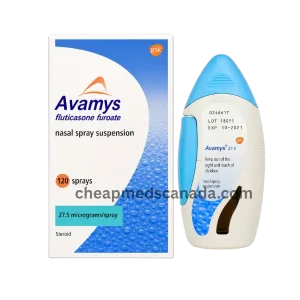
Rupall is often used together with nasal corticosteroid sprays such as fluticasone or mometasone for allergic rhinitis. However, taking multiple oral antihistamines at the same time is generally not recommended unless specifically advised by your doctor. Always consult a healthcare professional before combining allergy medications.
Is the generic version as good as brand-name Rupall?
Yes. Approved generic versions of rupatadine must meet Health Canada standards for bioequivalence, meaning they deliver the same active ingredient to the body in a comparable manner. While inactive ingredients may vary, the expected therapeutic effect should be equivalent to the brand-name product.
Rupall 10 mg is a prescription medication containing rupatadine. The information provided is intended for general informational and educational purposes only and is not a substitute for professional medical advice, diagnosis, or treatment. Use this medication only under the guidance of a healthcare professional. Do not exceed the prescribed dosage. If symptoms persist, worsen, or if you experience adverse effects, seek medical advice promptly. Keep out of reach of children.

Reviews
There are no reviews yet.