
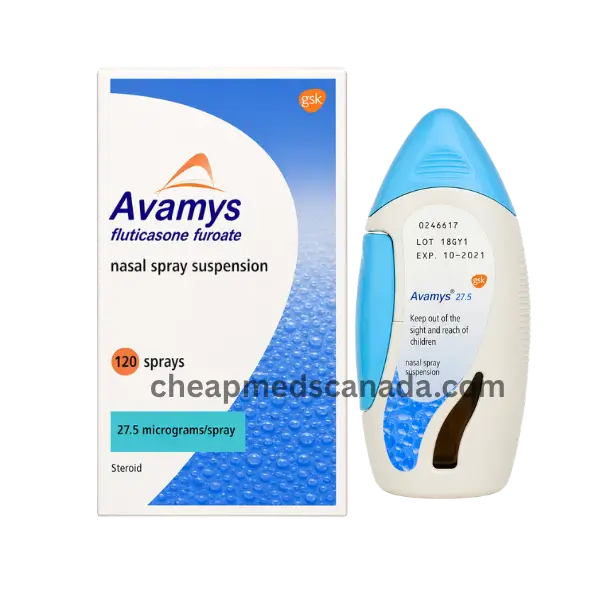

Description
What Avamys Treats — Seasonal and Year-Round Allergic Rhinitis
Health Canada has approved Avamys for allergic rhinitis in adults, adolescents, and children as young as 6 years of age. Two distinct patterns of this condition exist, and understanding which one applies to you shapes how you use the spray:
Seasonal Allergic Rhinitis (SAR) — also called hay fever
Symptoms appear during specific times of year tied to outdoor allergen calendars. In Canada, the main seasonal culprits are:
- Tree pollen (birch, maple, oak, alder) — March through May across most provinces
- Grass pollen — June through early July
- Ragweed — mid-August through late September, particularly heavy in Ontario and Quebec, one of the most potent allergenic plants in North America
For SAR patients, Avamys is typically used for the duration of the relevant season and discontinued when pollen counts drop. Starting the spray 3 to 7 days before the season begins — rather than waiting until symptoms are already severe — gives the medication time to establish its anti-inflammatory effect before allergen exposure peaks.
Perennial Allergic Rhinitis (PAR) — year-round symptoms
Driven by indoor allergens that are present regardless of season: house dust mites (living in mattresses, pillows, and upholstered furniture), cat and dog dander, cockroach particles, and indoor mould spores. PAR patients often don't recognise themselves as allergy sufferers — they assume their chronic morning congestion, postnasal drip, and persistent stuffiness are simply their normal state. PAR is often underdiagnosed and undertreated.
For PAR, Avamys is used continuously year-round at the minimum effective dose. The full anti-inflammatory effect accumulates over several days of consistent daily use and diminishes when the spray is stopped — so consistency matters far more with PAR than with seasonal use.
Product Details at a Glance
| Feature | Details |
|---|---|
| Each spray delivers | 27.5 mcg Fluticasone Furoate in 50 µL of suspension |
| Bottle size | 10 g net fill weight |
| Sprays per bottle | 120 actuations |
| Formulation | Unscented, alcohol-free, taste-free aqueous suspension |
| Preservative | Benzalkonium chloride 0.015% w/w |
| Other ingredients | Carboxymethylcellulose sodium, dextrose anhydrous, microcrystalline cellulose, polysorbate 80, purified water |
| Storage temperature | 4°C to 30°C — upright, cap on |
| Onset of action | As early as 8 hours (SAR); within 24 hours (PAR) |
| Full effect timeline | 3 to 7 days of consistent daily use |
Dosage Schedule — Adults, Teens, and Children
Avamys is always taken once daily — one of the practical advantages over older nasal steroids that required morning and evening dosing. The dose your physician prescribes depends on your age, symptom severity, and response to treatment.
Adults and adolescents 12 years and older:
Most patients begin at 2 sprays per nostril once daily — delivering a total daily dose of 110 mcg. Once symptoms are well controlled, the physician will step down to 1 spray per nostril once daily (55 mcg total) to maintain control at the lowest effective dose. The maximum recommended daily dose is 110 mcg.
Children 6 to 11 years:
The standard dose is 1 spray per nostril once daily (55 mcg total). If symptoms remain inadequately controlled under physician review, this may be increased to 2 sprays per nostril once daily under medical supervision. The principle of lowest effective dose is especially important in children due to the potential for growth effects with long-term corticosteroid use — your child's physician will monitor height regularly.
Children under 6 years:
The safety and effectiveness of Avamys has not been established for children under 6. It is not recommended for this age group.
Missing a dose: If you forget your daily dose, take it as soon as you remember — unless it is already close to the time for your next scheduled dose, in which case skip the missed dose and continue normally. Do not use a double dose to compensate.
How to Use the Avamys Spray Correctly
This section matters more than most patients realise. Studies of intranasal corticosteroid users consistently show that a significant proportion are using their sprays incorrectly — aiming at the wrong angle, inhaling too sharply, or skipping priming — all of which reduce how much medication actually reaches the nasal mucosa.
Priming — Do This Before Your First Use
The Avamys bottle contains a suspension that needs to be primed before the first dose, and re-primed if the spray has not been used for 5 or more consecutive days:
- Shake the bottle gently
- Point the nozzle away from your face and others
- Press the pump firmly 6 times into the air until a fine, even mist appears
- The device is now ready for use
Daily Application — The Correct Sequence
Step 1 — Blow your nose gently before spraying. Clearing excess mucus from the nasal passages allows the medication to contact the mucosal surface rather than pooling in congestion.
Step 2 — Shake the bottle for 2 to 3 seconds. Avamys is a suspension — the active ingredient settles between uses and must be remixed before each dose.
Step 3 — Remove the cap by pressing the blue side tabs.
Step 4 — Tilt your head slightly forward — looking down toward the floor, not tilting back. This directs the spray toward the back of the nasal cavity where the mucosa is most accessible.
Step 5 — Insert the nozzle gently into your right nostril, angling it slightly toward the outer wall of the nostril — away from the nasal septum (the central dividing wall between your nostrils). This is the single most important technique point. Repeatedly directing the spray at the septum is the primary cause of nosebleeds from nasal steroids.
Step 6 — Close your left nostril with a finger.
Step 7 — Breathe in slowly and gently through the right nostril while pressing the pump down once with a firm, steady motion.
Step 8 — Breathe out through your mouth.
Step 9 — Repeat steps 5 through 8 for the left nostril, now angling the nozzle toward the outer wall of the left nostril.
Step 10 — If two sprays per nostril are prescribed, repeat the entire sequence.
Step 11 — Replace the cap firmly.
Step 12 — Do not blow your nose for at least several minutes after using the spray.
The most common mistakes:
- Spraying directly at the septum → causes nosebleeds and wastes medication
- Inhaling too sharply → pushes medication into the throat rather than depositing it on the nasal wall
- Not shaking the bottle → active ingredient is unevenly distributed in the suspension
- Not priming after 5+ days of non-use → first dose may be inaccurate
Side Effects — Organised by Frequency and What to Do
Very Common — Affects More Than 1 in 10 People
Nosebleeds (epistaxis)
The most frequently reported side effect of Avamys. Clinical trials show nosebleeds occur in more than 10% of adult users — making this technically the most common adverse effect — but the vast majority are minor: a small streak of blood when blowing the nose, typically in the morning. Severe or heavy nosebleeds are uncommon.
Nosebleeds from Avamys are more likely to occur in patients who:
- Have been using the spray continuously for more than 6 weeks
- Are directing the spray at the nasal septum rather than the outer nasal wall
- Live in dry environments — particularly relevant during Canadian winters when indoor heating significantly reduces humidity
- Blow their nose forcefully immediately after applying the spray
What helps: Correct spray angle (away from septum), gentle blowing technique, nasal saline rinses using products like [Hydrasense] or [SALINEX] to maintain nasal moisture, and optionally a small amount of petroleum jelly applied to the inner nostril with a cotton swab. If nosebleeds are frequent, persistent, or heavier than minor spotting, contact your physician.
Common — Affects Up to 1 in 10 People
- Headache — typically mild; reported in clinical trials in both adult and pediatric populations; usually resolves without intervention
- Nasal burning or irritation — most noticeable in the first 1 to 2 weeks of use; typically settles as the nasal mucosa adjusts to the spray
- Nasal discomfort or pain (rhinalgia) — dull aching sensation around the nasal passages; uncommon but reported
- Throat irritation — caused by medication tracking down the back of the throat; adjusting head position during application (slightly forward rather than tilted back) reduces this
- Nasal ulceration — small sores on the nasal mucosa with longer-term use; report any persistent nasal pain or bleeding when blowing your nose to your doctor
Serious — Uncommon but Require Prompt Medical Attention
Nasal septal perforation: Rare, but possible with any long-term nasal corticosteroid use combined with consistently poor technique. A perforation — a small hole through the central wall of the nose — produces a characteristic whistling sound when breathing, plus crusting and unusual nosebleeds from both nostrils. If you notice any of these signs, stop the spray and see your doctor.
Eye complications: Long-term clinical trials of Avamys at 52 and 104 weeks showed that most patients had no clinically meaningful changes in intraocular pressure or lens clarity. However, all corticosteroids carry a class risk of promoting glaucoma or posterior subcapsular cataracts with extended use. Any new blurring of vision, eye pain, halos around lights, or redness should be reported to your doctor and ophthalmologist. Patients with a personal or family history of glaucoma should have regular eye examinations while on Avamys.
Candida (fungal) infection in the nose or throat: Less common than with inhaled corticosteroids (where the medication passes through the mouth), but possible. White patches, soreness, or altered taste warrant a visit to your physician.
Adrenal suppression — relevant for specific situations: Standard Avamys doses produce negligible systemic absorption and do not suppress the adrenal glands in typical patients. However, patients who use Avamys together with other corticosteroid products — an [inhaled corticosteroid like Alvesco or Flovent], a topical steroid skin cream, or an oral steroid like prednisone — have a cumulative steroid load. In these patients, or in those transitioning off long-term oral corticosteroids, adrenal function should be monitored by the physician.
Severe allergic reaction: Rare. Symptoms include sudden swelling of the face, lips, or throat; difficulty breathing; widespread hives; or collapse. This is a medical emergency — call 911 immediately.
Warnings — Read Before Starting Avamys
Active nasal infection, ulcers, or recent surgery: Avamys should not be used in patients with active fungal, bacterial, or viral infections of the nasal passages until those infections are treated. Similarly, patients who have had recent nasal surgery or significant nasal trauma should wait until healing is complete — corticosteroids impair wound healing, and the spray pressure could disrupt healing tissue. Discuss timing with your surgeon or physician.
Chickenpox and measles: While Avamys's systemic immunosuppression is minimal at therapeutic doses, patients who have never had chickenpox or measles and have not received vaccines for them should take care to avoid exposure while using nasal corticosteroids. If accidental exposure occurs, contact your doctor right away.
Liver disease: Fluticasone Furoate is extensively metabolised by the liver's CYP3A4 enzyme. Significant liver impairment slows this clearance, causing higher-than-expected drug exposure. Patients with moderate to severe hepatic disease should use Avamys cautiously under medical supervision.
Children and growth: Long-term use of any inhaled or intranasal corticosteroid in children carries a class warning about potential effects on growth velocity. The risk with Avamys at recommended doses is considered low based on available clinical data, but children on long-term treatment should have their height measured at regular intervals. The prescribing physician will use the minimum effective dose and reassess treatment regularly.
Drug Interactions — The Two That Matter Most
Ritonavir and HIV protease inhibitors: This is the most clinically significant interaction with Avamys. Ritonavir — an antiretroviral medication used in HIV treatment, present in combination drugs such as Kaletra, Norvir, and several fixed-dose regimens — is a potent inhibitor of CYP3A4, the enzyme that breaks down Fluticasone Furoate. When these two drugs are used together, systemic Fluticasone Furoate exposure can rise substantially above what is expected from a nasal spray, causing Cushing's syndrome features and adrenal suppression. Co-administration of Avamys with ritonavir is not recommended by Health Canada. Tell your physician and pharmacist if you are on any HIV medication before starting Avamys.
Other strong CYP3A4 inhibitors carrying similar interaction risk include: ketoconazole (antifungal), itraconazole, clarithromycin (antibiotic), and cobicistat-containing regimens.
Other corticosteroid products: Using Avamys alongside other corticosteroids — whether inhaled, topical, or oral — adds to the total steroid load your body is exposed to. While each individual product may be within safe limits, the combination may push total systemic exposure into a range where adrenal effects become possible. Always give your doctor and pharmacist a complete list of all medications, including any steroid-containing skin creams, asthma inhalers, or tablets.
Avamys vs. Flonase — What Is the Difference?
This is the most common question Canadian patients ask, because both products contain a form of Fluticasone and are used for allergic rhinitis.
The key distinction is the specific molecule:
- Avamys contains Fluticasone Furoate — a newer formulation with a different chemical structure
- Flonase (available OTC in Canada) contains Fluticasone Propionate — the older formulation
Fluticasone Furoate has a significantly higher glucocorticoid receptor binding affinity than Fluticasone Propionate — approximately 29 times higher. This translates to a more potent anti-inflammatory effect per microgram of drug deposited on the nasal mucosa. In practical terms, both medications are effective for allergic rhinitis, but clinical data suggests Fluticasone Furoate may offer advantages for patients with more severe or difficult-to-control symptoms.
Additionally, Avamys has the advantage of documented relief of ocular symptoms — the red, itchy, watery eyes associated with allergic rhinitis — which [Flonase Propionate] does not claim as strongly. This is believed to work through suppression of the naso-ocular reflex rather than direct eye contact.
The practical tradeoff: Flonase is available over the counter and is less expensive. Avamys requires a prescription. For patients with mild seasonal symptoms, [Flonase or Rhinocort (OTC budesonide)] may be sufficient. Avamys is typically the stronger choice when over-the-counter options have not provided adequate control.
How Avamys Compares to Oral Antihistamines for Allergic Rhinitis
Many Canadian patients start with an antihistamine — a completely reasonable first step for mild symptoms. Understanding the difference in what each class does helps patients and physicians choose the right tool:
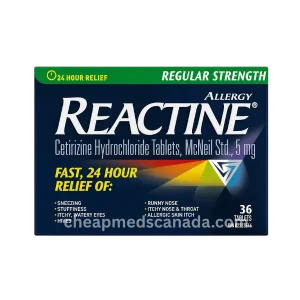
| Status | Avamys (Intranasal Corticosteroid) | Oral Antihistamines ([Reactine], [Claritin], [Allegra]) |
|---|---|---|
| Nasal congestion | Excellent — works well | Modest effect at best |
| Sneezing | Very effective | Very effective |
| Runny nose | Very effective | Effective |
| Nasal itching | Very effective | Very effective |
| Eye symptoms | Documented benefit | Effective |
| Onset of action | 8 to 24 hours; full effect in 3 to 7 days | 1 to 3 hours |
| Drowsiness risk | None | Varies — cetirizine more sedating than loratadine |
| Long-term use | Appropriate for continuous use | Generally safe long-term |
For mild, predominantly sneezing-and-itching symptoms, an antihistamine alone may be sufficient. For moderate to severe rhinitis — particularly when congestion is a significant component — intranasal corticosteroids like Avamys are more effective overall and are the first-line recommendation in Canadian allergy clinical guidelines.
Many patients use both: Avamys daily for baseline control, plus an antihistamine on particularly high pollen-count days for additional relief.
Storage, Bottle Care, and Disposal
Storage temperature: Between 4°C and 30°C — store at room temperature. Do not refrigerate; do not allow to freeze.
Store upright with the cap in place at all times when not in use.
Shake before every use — Avamys is a suspension that settles between doses.
Keep out of reach of children — prescription medication.
Do not use after the expiry date printed on the box and bottle.
Re-prime after 5 or more days of non-use — 6 sprays into the air away from your face.
Disposal: Return unused or expired Avamys bottles to a pharmacy medication return program rather than household waste. These programs are available at Shoppers Drug Mart, Rexall, and most independent pharmacy locations across Ontario, British Columbia, Alberta, and other Canadian provinces.
Can Avamys help with my eye symptoms, or do I need a separate eye drop?
Avamys may help reduce allergy-related eye symptoms such as itching, redness, and watering in addition to nasal symptoms. Some people achieve adequate relief with Avamys alone, while others may require additional allergy eye drops if symptoms persist. Consult your healthcare provider if eye symptoms remain bothersome.
I used Avamys for two days and it is not helping. Should I stop?
No. Avamys works by gradually reducing inflammation and may take several days of consistent daily use before noticeable improvement occurs. Continue using it as directed and allow sufficient time for the medication to reach its full effect. If symptoms do not improve after a few weeks, speak with your healthcare provider.
Is Avamys a steroid? Will it affect my whole body?
Yes, Avamys contains fluticasone furoate, a corticosteroid designed for use inside the nose. When used at recommended doses, very little medication is absorbed into the bloodstream, making systemic effects unlikely. It works primarily at the site of application to reduce nasal inflammation.
My pharmacist mentioned benzalkonium chloride as a preservative in Avamys — is that a concern?
Benzalkonium chloride is a commonly used preservative found in many nasal sprays. Most people tolerate it well, but some individuals with sensitive nasal passages may experience mild irritation. If you have a history of sensitivity to preservatives, discuss alternative options with your healthcare provider.
Can I use Avamys alongside my antihistamine medication?
Yes. Avamys is often used together with oral antihistamines for the management of seasonal or year-round allergies. Because they work in different ways, the combination may provide better symptom control for some patients. Always follow your healthcare provider's recommendations.
How do I know when my Avamys bottle is running out?
Each Avamys bottle contains 120 sprays. Depending on your prescribed dose, the bottle may last several weeks. Keeping track of your start date and daily usage can help you estimate when a refill is needed. Using the spray beyond its intended number of doses may result in inaccurate dosing.
Avamys Nasal Spray contains fluticasone furoate and should be used only as directed by a healthcare professional. Follow the prescribed dosage instructions and avoid exceeding the recommended dose. Inform your healthcare provider about any existing medical conditions or medications you are taking. If symptoms persist, worsen, or you experience unexpected side effects, seek medical advice promptly.
Reviews
There are no reviews yet.