
Description
Pentasa (Mesalamine/Mesalazine)
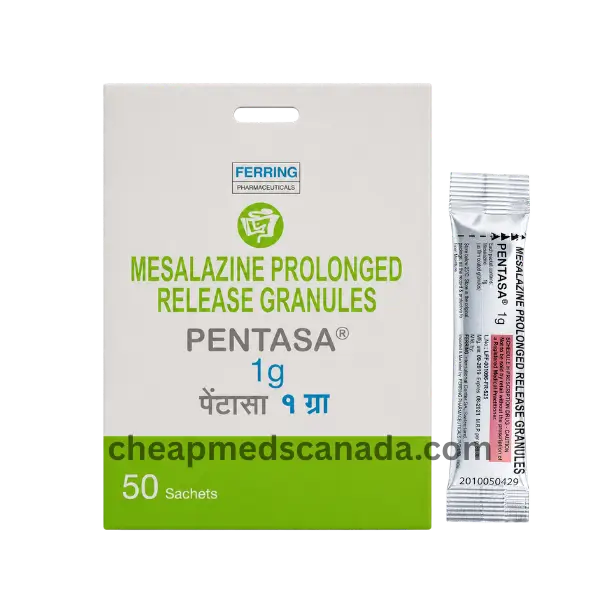
Pentasa is a prescription drug used to treat ulcerative colitis, and in some countries, Crohn's disease affecting the distal ileum. It belongs to a class of medications called aminosalicylates. The active ingredient, mesalamine (also called mesalazine), works directly in the lining of the colon to reduce the inflammation, ulcers, and irritation that drive symptoms like bloody diarrhea, cramping, and urgency.
Unlike some anti-inflammatory drugs that work throughout the whole body, Pentasa is built to act locally — right where the disease actually is.
Pentasa 1g: What This Strength Actually Means
Pentasa comes in more than one form and strength, and the 1g granule sachet is one of the more commonly prescribed options, particularly for once-or-twice-daily dosing regimens. The granules are taken with water — swallowed whole, not chewed or crushed, since the coating on each granule is what allows the medication to survive the stomach and upper intestine, releasing gradually once it reaches the colon where it's actually needed.
Dosing varies depending on whether you're managing an active flare or maintaining remission, and your doctor sets the specific regimen based on your situation — active disease generally calls for a higher total daily dose than long-term maintenance therapy does.
Pentasa Suppository: A Different Route for a Different Target
Not everyone with ulcerative colitis needs an oral medication — for disease limited to the rectum or lower colon (proctitis or left-sided colitis), a Pentasa suppository delivers mesalamine directly to the site of inflammation, bypassing the rest of the digestive tract entirely.
The suppository is generally held in the rectum for as long as comfortably possible — typically one to three hours or more — to allow adequate absorption into the inflamed tissue. For some patients, rectal treatment (suppository or enema) has actually shown better results specifically for distal disease compared to oral tablets or granules alone, which is part of why doctors sometimes combine both forms — oral for broader colon involvement, rectal for the lower segment specifically.
How Pentasa Works
The inflammation behind ulcerative colitis is driven partly by overactive enzymes — cyclooxygenase and lipoxygenase — that produce excess prostaglandins, chemicals that trigger and sustain inflammation in the colon lining. Mesalamine is believed to work by blocking this enzyme activity, which reduces prostaglandin production and, in turn, calms the inflammatory response. The exact mechanism isn't fully mapped out even now, but this local anti-inflammatory action is the accepted explanation for why it works.
Pentasa Side Effects
Common:
- Headache
- Nausea, stomach pain, or diarrhea
- Gas or bloating
- Weakness or fatigue
Less common, worth monitoring:
- Joint pain
- Back pain
- Rash
Serious — stop and contact your doctor immediately:
- Severe stomach pain or cramping
- Bloody diarrhea, sometimes with fever, headache, and skin rash — this specific combination can signal a rare but recognized reaction called mesalamine-induced acute intolerance syndrome, which can look like a flare of the disease itself but actually requires stopping the drug rather than increasing the dose
- Signs of kidney problems — changes in how much you're urinating, swelling, unusual fatigue
- Signs of a severe allergic reaction — difficulty breathing, swelling of the face or throat, widespread rash
This isn't a complete list. If something feels wrong that isn't mentioned here, contact your doctor regardless.
Before You Start
Don't take Pentasa if you're allergic to mesalamine, aspirin, sulfasalazine, or other salicylate-containing products.
Tell your doctor about your medical history before starting, particularly if you have:
- Kidney disease, or a history of kidney stones
- Liver disease
- A known allergy to sulfa drugs
- Pyloric stenosis or any condition narrowing the outlet of your stomach, which can affect how the granules pass through
- Pregnancy, or plans to become pregnant
- Breastfeeding, or plans to breastfeed
Kidney function is generally checked before starting Pentasa and periodically afterward, since rare cases of kidney impairment have been linked to mesalamine use — staying well-hydrated during treatment is a simple, meaningful precaution.
Is Pentasa the same as mesalamine?
Yes. Pentasa is a brand name for mesalamine (also known as mesalazine in some countries). Other mesalamine products are available, but they may differ in how the medication is delivered, the areas of the intestine they treat, and the recommended dosing schedule.
What is the difference between Pentasa granules and Pentasa suppositories?
Pentasa granules are taken by mouth and work throughout the digestive tract to treat inflammation. Pentasa suppositories are inserted into the rectum and are designed to treat inflammation affecting the rectum or lower part of the colon.
Can I take Pentasa long-term?
Yes. Pentasa is commonly prescribed as long-term maintenance therapy to help keep ulcerative colitis or Crohn's disease in remission. Your doctor will determine how long you should continue treatment based on your condition and response to therapy.
What should I do if my symptoms get worse after starting Pentasa?
If your symptoms suddenly worsen after starting Pentasa, contact your doctor promptly. Although uncommon, some people may experience a reaction to mesalamine that can mimic a disease flare. Do not increase or stop your medication unless advised by your healthcare provider.
Pentasa 1g is a prescription medication and should only be used under the supervision of a qualified healthcare professional. Take exactly as prescribed and do not change or stop your treatment without consulting your doctor. Common side effects may include headache, nausea, abdominal pain, or diarrhea. Seek immediate medical attention if you experience severe allergic reactions or worsening symptoms. This information is provided for educational purposes only and is not a substitute for professional medical advice, diagnosis, or treatment.


Reviews
There are no reviews yet.