
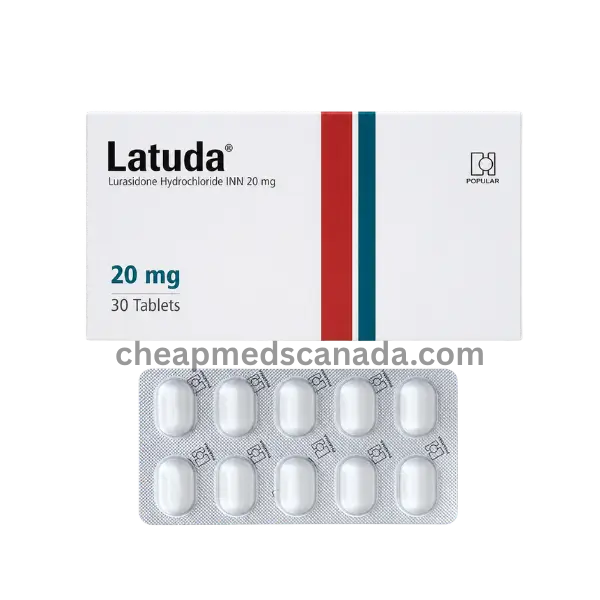
Description
What Latuda 20 mg Is Used For
Doctors prescribe Latuda 20 mg as an atypical antipsychotic, mainly for two things: schizophrenia (in adults, and in adolescents aged 13 to 17), and depressive episodes that come with Bipolar I Disorder — sometimes on its own, sometimes paired with lithium or valproate. For bipolar depression specifically, it's approved for younger patients too, ages 10 to 17.
Therapeutic Class
It falls under atypical antipsychotics, sometimes called atypical neuroleptics.
How It Works
The short version: lurasidone blocks two specific brain receptors — dopamine D2 and serotonin 5-HT2A — and that combination is thought to be behind most of its therapeutic effect. It also binds to serotonin 5-HT7 and 5-HT1A receptors, which researchers believe plays a role in how it affects mood specifically, beyond just the psychotic symptoms.
Dosage and How to Take It
For schizophrenia: doctors usually start patients at 40 mg once a day, with the dose ranging anywhere from 40 mg up to 160 mg daily depending on response.
For bipolar depression: the starting point is lower, 20 mg once daily, with a range up to 120 mg.
Here's the part that's easy to get wrong — take it with food. Not a small snack, either; you need roughly 350 calories with the dose. Skip the food, and absorption drops hard — peak levels in your blood end up around a third of what they'd be otherwise. That's a big enough difference that it can genuinely affect how well the medication works.
What It Interacts With
A few things change how lurasidone behaves in your system:
- Moderate CYP3A4 inhibitors — diltiazem, atazanavir, erythromycin, fluconazole, verapamil, and similar drugs — mean the dose usually gets cut in half.
- Moderate CYP3A4 inducers can do the opposite, sometimes requiring a higher dose to keep the same effect.
- Grapefruit and grapefruit juice should just be avoided altogether — they interfere with the same enzyme pathway and can throw off lurasidone levels.
- Strong CYP3A4 inhibitors like ketoconazole, and strong inducers like rifampin, aren't a "use with caution" situation — they're flat-out contraindicated.
Who Shouldn't Take It
- Anyone with a known hypersensitivity to lurasidone or any ingredient in the tablet
- Anyone currently on a strong CYP3A4 inhibitor
- Anyone currently on a strong CYP3A4 inducer
- It's not approved or appropriate for dementia-related psychosis
Side Effects
Most people who notice something will run into drowsiness, restlessness (akathisia), movement-related symptoms (extrapyramidal effects), nausea, or tremor — these are the common ones.
Less often, people report stomach pain, blurry vision, diarrhea, dizziness, or trouble sleeping.
Then there's the serious end of things — neuroleptic malignant syndrome, tardive dyskinesia, a dangerous drop in white blood cells, stroke-related events in elderly dementia patients, and new or worsening thoughts of suicide. These are rare, but they're exactly why regular follow-up with a doctor matters.
Boxed Warning
Two warnings carry the FDA's strongest label:
Elderly patients with dementia-related psychosis face a higher risk of death when treated with this drug, largely tied to an increased rate of stroke and similar cerebrovascular events — some of which have been fatal. Latuda isn't approved for this use.
Separately, there's an increased risk of suicidal thoughts and behavior, and this hits hardest in children, teenagers, and young adults being treated for depression. That risk is at its peak early in treatment and right after any dose adjustment, which is exactly why closer monitoring during those windows isn't optional — it's a real safety measure.
This part deals with a genuinely sensitive subject. If you're having thoughts of suicide or self-harm right now, please talk to someone — a doctor, a crisis line, or a person you trust. Support is available.
Precautions
- Neuroleptic malignant syndrome — if this shows up, stop the medication right away and get close monitoring going.
- Tardive dyskinesia — involuntary movements that can become permanent; stopping the drug may be necessary depending on severity.
- Metabolic shifts — atypical antipsychotics as a class have been tied to blood sugar changes, cholesterol changes, and weight gain.
- Blood sugar — watch for excessive thirst, frequent urination, increased hunger, or unusual weakness, and check glucose regularly if you're already at risk for diabetes.
- Weight — worth tracking over the course of treatment.
- Prolactin — levels can rise in some patients.
- White blood cells — anyone with a history of low counts should get regular bloodwork; a significant drop may mean stopping the medication.
- Blood pressure on standing — dizziness, a racing or slowed heart rate, and fainting can happen, especially early on. Doctors often start cautiously — lower dose, slower increases — in anyone with heart or blood vessel issues, or anyone who's never been on an antipsychotic before.
Pregnancy and Breastfeeding
Only use during pregnancy if the benefit clearly outweighs the potential risk to the baby. Breastfeeding isn't recommended while taking this medication.
Dosing in Specific Situations
Kidney impairment (moderate to severe): start at 20 mg/day, don't exceed 80 mg/day.
Liver impairment, moderate: start at 20 mg/day, cap at 80 mg/day.
Liver impairment, severe: start at 20 mg/day, cap at 40 mg/day.
Storage
Keep it away from light and moisture, store below 30°C, and keep it well out of reach of kids.
What is Latuda used to treat?
Latuda is prescribed to treat schizophrenia in adults and adolescents, as well as depressive episodes associated with Bipolar I Disorder in adults. For bipolar depression, it may be used alone or in combination with lithium or valproate.
How should I take Latuda?
The dose depends on the condition being treated and your doctor's recommendation. Latuda should always be taken with a meal of at least 350 calories, as taking it without food can significantly reduce how much of the medication your body absorbs.
What are the most common side effects of Latuda?
Common side effects include drowsiness, restlessness, nausea, tremor, and movement-related symptoms such as muscle stiffness or shakiness. Contact your doctor if these effects become severe or persistent.
Who should not take Latuda?
Latuda should not be used by anyone who is allergic to lurasidone or who is taking strong CYP3A4 inhibitors or inducers. It is also not approved for treating dementia-related psychosis in older adults.
What should be monitored while taking Latuda?
Your doctor may monitor for movement disorders, changes in blood sugar and cholesterol, weight gain, blood pressure changes when standing, blood cell counts, and rare but serious reactions such as neuroleptic malignant syndrome. Regular follow-up appointments help ensure the medication remains safe and effective.
Can I take Latuda during pregnancy or while breastfeeding?
If you are pregnant, planning to become pregnant, or breastfeeding, speak with your doctor before taking Latuda. It should only be used during pregnancy if the potential benefits outweigh the risks, and breastfeeding is generally not recommended while using this medication.
Latuda 20 mg should be used only under the supervision of a qualified healthcare professional. Do not stop taking this medication without consulting your doctor. Seek immediate medical attention if you experience severe side effects, worsening mood, suicidal thoughts, or signs of an allergic reaction.




Reviews
There are no reviews yet.