
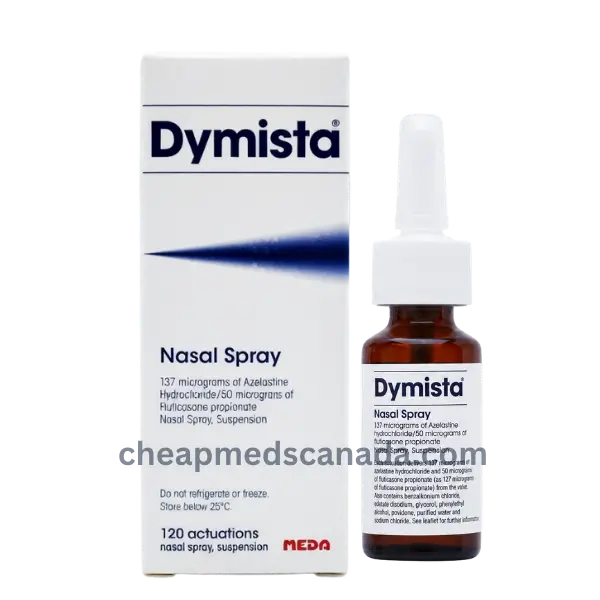
Description
Dymista Nasal Spray: A Seasonal Allergy Almanac
Allergic rhinitis doesn't hit the same way in January as it does in May, and the way Dymista fits into a routine shifts along with it. Rather than a single static dosing instruction, here's how it actually plays out across a typical allergy year — from the first pollen count of spring to the quiet stretch of winter.
Pre-Season: Before Symptoms Start
For anyone whose allergy pattern is predictable — the same trees, grasses, or ragweed causing trouble at roughly the same time every year — starting Dymista a week or two before symptoms typically begin is worth discussing with a doctor. The fluticasone component builds its full anti-inflammatory effect gradually, so nasal tissue that's already primed and less inflamed when pollen counts spike tends to respond better than tissue playing catch-up mid-flare.
What this stage looks like practically:
- Checking regional pollen forecasts for the specific triggers that affect you
- Priming a fresh bottle if last season's has been sitting untouched (6 sprays until a fine mist appears)
- Starting the standard dose — one spray per nostril, twice daily — before symptoms are in full swing
Early Season: The First Two Weeks
This is where patience matters most and where people are most likely to give up too soon. The antihistamine component works within about 30 minutes, so sneezing and itching often ease quickly. But congestion — the symptom most people care about most — depends on the steroid component, and that typically needs several days of consistent use to show its full effect.
A realistic timeline:
- Day 1–2: Noticeable reduction in itching, sneezing, and watery eyes; congestion may still feel present
- Day 3–7: Congestion gradually easing as the anti-inflammatory effect builds
- Week 2: Full effect typically established, assuming twice-daily use hasn't been interrupted
Stopping after day 3 or 4 because "it's not doing much for the stuffiness yet" is the single most common reason people conclude Dymista doesn't work for them, when in reality the slower-acting half of the medication just hasn't caught up yet.
Peak Season: When Multiple Triggers Overlap
Late spring through midsummer, in many regions, brings overlapping tree, grass, and early weed pollens — meaning symptoms can feel worse even on a stable dose that was working fine a few weeks earlier. This isn't usually a sign the medication has stopped working; it's a sign the allergen load has gone up.
Worth knowing during peak weeks:
- The dose doesn't need to be increased beyond one spray per nostril, twice daily, without medical guidance — Dymista isn't typically adjusted upward for worse pollen days
- Pairing with non-medication steps — keeping windows closed on high-count days, showering after time outdoors, using recirculated air in the car — tends to matter more during peak weeks than any dosing change
- If symptoms are genuinely unmanageable even with consistent use, that's a reason to check in with a doctor about whether something else is contributing, rather than self-adjusting the dose
Late Season: Tapering as Pollen Counts Drop
As the specific trigger causing symptoms fades — first tree pollen, then grass, then ragweed, depending on the region and time of year — some people wonder whether to stop right away or ease off gradually.
- For seasonal-only allergy sufferers, continuing through the tail end of the season, even as symptoms lighten, tends to prevent the "one bad pollen day" flare-up that comes from stopping too early
- There's no medical requirement to taper the dose itself before stopping — Dymista can generally be discontinued once the season has clearly passed, unlike some medications that need gradual withdrawal
- Anyone with year-round or multi-season symptoms (dust, pet dander, mold) may be on a different, more continuous plan — worth confirming with a prescriber rather than assuming a single "season" applies
Off-Season: Storage and the Re-Priming Reset
A bottle that sits unused for weeks or months between allergy seasons needs a small reset before going back into daily use.
- Store upright, at room temperature, away from freezing conditions
- If Dymista hasn't been used for 14 days or longer, it needs re-priming — at least one spray released into the air until a fine mist appears — before the next nasal dose
- A bottle nearing the end of its 120-spray count from the prior season may not have enough accurate doses left to reliably carry into a new season; starting fresh is usually more predictable than stretching out the last few sprays
Off-Season Planning: Getting Ahead of Next Year
For people who go through this cycle every year, the end of one season is often the easiest time to plan for the next:
- Noting which week symptoms typically start is more useful for next year's timing than trying to remember it after the fact
- Setting up an automatic refill ahead of the usual start date avoids the scramble of trying to get a new prescription filled once symptoms have already begun
- If a particular season was noticeably worse than usual, that's worth mentioning at the next appointment — allergy patterns do shift over time, and dosing or additional treatment options can shift with them
A Note for Mixed and Overlapping Sensitivities
Not everyone's allergy year fits neatly into a single spring-to-fall window. Someone sensitive to both tree pollen and ragweed, for instance, may effectively face two separate "early season" periods months apart, each with its own ramp-up period for the steroid component to take effect. In that situation, treating each trigger window as its own mini-cycle — rather than assuming one long continuous season — tends to set more realistic expectations for when symptoms will ease. A symptom diary noting which weeks feel worse from year to year can make this pattern much easier to spot than trying to recall it from memory alone, and it's genuinely useful information to bring to a follow-up appointment.
Ordering Through CheapMedsCanada
| Bottle Size | Sprays Provided | Approx. Season Coverage |
|---|---|---|
| 23g bottle | 120 metered sprays | About 30 days at standard twice-daily dosing |
- Orders ship in discreet, unmarked packaging
- Setting up a refill ahead of a predictable allergy season start date helps avoid a mid-flare gap in supply
- Our [Allergies or Hay Fever] page covers related options for symptoms that don't fully resolve on a single medication
Should I start Dymista before allergy season begins or wait until symptoms appear?
If your allergy season is predictable, starting Dymista one to two weeks before exposure to your usual allergens may provide better symptom control than waiting until symptoms begin. Speak with your healthcare provider about the best timing for your specific allergies.
Why does Dymista seem less effective during peak pollen season?
During periods of very high pollen exposure, your symptoms may become more noticeable because of the increased allergen load rather than the medication becoming less effective. Do not increase your dose unless your healthcare provider advises you to do so.
Do I need to taper off Dymista when allergy season ends?
No. Dymista does not require a gradual dose reduction. It can generally be stopped once your allergy season has ended or when your healthcare provider recommends discontinuing treatment.
What should I do if I haven't used Dymista for a couple of weeks?
If you have not used Dymista for 14 days or longer, re-prime the spray before using it again by spraying it into the air until a fine mist appears, following the instructions in the product leaflet.
Can Dymista be used for year-round allergies?
Yes. Dymista may be prescribed for both seasonal allergic rhinitis and perennial allergies caused by triggers such as dust mites, pet dander, or mold. Your healthcare provider will determine how long you should continue treatment based on your symptoms.
Dymista Nasal Spray is a prescription medication and should be used only as directed by a qualified healthcare professional. This information is provided for educational purposes only and is not a substitute for professional medical advice, diagnosis, or treatment. Always consult your healthcare provider before starting or changing treatment.

Reviews
There are no reviews yet.