

Description
Acne doesn't care about your age. Teenagers deal with it, sure — but so do plenty of adults in their thirties who thought they were past this phase years ago. If you've already tried the drugstore aisle and your skin still won't cooperate, there's a good chance your dermatologist has brought up Biacna at some point.
What is it, Exactly?
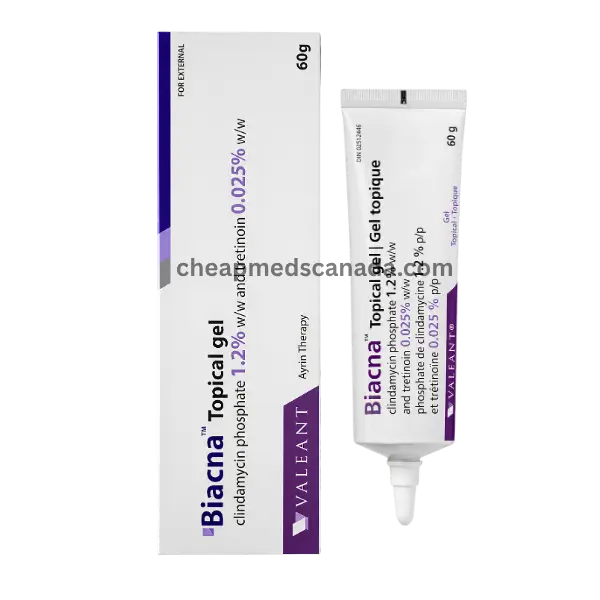
Biacna Topical Gel is a prescription product that combines two ingredients — Clindamycin Phosphate and Tretinoin — into one tube. Made by Bausch Health, sold in Canada at a 1.2%/0.025% strength, 60 grams per tube. Nothing flashy about the packaging. The formula, though, is where things get interesting.
Why Two Ingredients Instead of One?
Here's the thing most single-ingredient acne products miss: acne isn't caused by just one problem. There's bacteria involved (specifically P. acnes), and there's also the issue of dead skin cells clogging up your pores faster than your skin can shed them. Treat only one of those, and you're basically fighting half the battle.
Clindamycin handles the bacterial side. It's an antibiotic, so it goes after the bacteria sitting in your pores causing those angry, inflamed breakouts — the kind that hurt to touch.
Tretinoin does something different. It's a retinoid (vitamin A, basically), and its job is speeding up cell turnover. Skin sheds faster, pores stay clearer, and — this is the part people don't expect — you start getting fewer new breakouts over time, not just less redness on the ones you already have.
Put those two together in one gel and you're not just treating today's acne. You're working against tomorrow's too. That's really the whole logic behind combination gels, and it's why a lot of Canadian dermatologists reach for Biacna instead of writing two separate prescriptions.
Biacna vs. Going It Alone With a Single Ingredient
Patients ask this a lot — why not just use a Tretinoin cream and skip the antibiotic? Or vice versa? Fair question. Here's how they actually stack up:
| Status | Biacna (Combo) | Tretinoin Alone | Clindamycin Alone |
|---|---|---|---|
| Fights acne bacteria | Yes | No | Yes |
| Speeds up cell turnover | Yes | Yes | No |
| Helps prevent future breakouts | Yes, both mechanisms | Partially | Partially |
| Time to see real change | Roughly 4–8 weeks | Often slower, 8–12 weeks | Faster initial effect, less long-term prevention |
| Daily routine | One product | One product | One product |
Not saying single-ingredient treatments don't work for anyone — they do, for milder cases. But for moderate-to-severe acne, most dermatologists in Canada lean toward the combo approach because it's covering more ground at once.
Actually Using the Stuff (Without Wrecking Your Skin)
This part matters more than people think. Tretinoin especially can be unforgiving if you rush it.
Start with a clean face — gentle cleanser, nothing harsh, pat dry instead of rubbing. Then wait. Seriously, give it 20-30 minutes before applying anything. Damp or even slightly moist skin absorbs more product than it should, and that's a fast track to irritation.
A pea-sized amount covers the whole face. That's it. People assume more product equals faster results — it doesn't. It just means more peeling, more redness, more "why does my face hurt" texts to your pharmacist.
Keep it away from your eyes, your lips, the corners of your nose. If it gets in those areas, rinse with water right away.
Moisturize after, especially in the first few weeks. Your skin is going to feel drier than usual — that's expected, not a sign something's wrong.
And sunscreen — non-negotiable. Tretinoin makes skin noticeably more sun-sensitive, and with how intense UV gets across Canada in summer (Toronto to Vancouver, doesn't matter), skipping SPF basically undoes a chunk of your progress.
One more thing: don't panic if your skin looks worse in week two or three. That's called purging, it's normal, and it usually means the gel is doing its job pushing congestion to the surface before clearing it out.
What Side Effects Actually Look Like
Pretty normal, usually fades in 2-4 weeks:
- Dryness, light peeling, flaking
- Mild redness where you applied it
- A bit of stinging the first handful of uses
Stop and call your doctor if you notice:
- Severe burning, blistering, or skin that's crusting over
- Diarrhea that's watery or has blood in it (rare, but tied to the antibiotic component — take it seriously)
- Swelling around your face, lips, or throat
That list isn't exhaustive. If something feels wrong and isn't on here, your pharmacist is a better resource than searching symptoms online at 1am.
When Biacna Isn't the Right Fit
Skip this one if any of the following apply:
- You're allergic to clindamycin, lincomycin, or tretinoin
- You've had Crohn's disease, ulcerative colitis, or antibiotic-related colitis before
- You're pregnant, trying to be, or breastfeeding — Tretinoin carries documented risk here
- The skin you'd be treating is sunburned, windburned, or broken
- You're under 12
Also worth mentioning to your doctor: any other topical products you're using, especially ones with erythromycin. Combining them with Biacna doesn't add benefit — it mostly just adds irritation.
Getting Biacna Through a Canadian Pharmacy
Biacna requires a prescription in Canada — it's regulated as a combination retinoid-antibiotic product, so this isn't something you're picking up off a shelf. Coverage depends heavily on your province and whether your private plan considers dermatological treatment a priority (some don't, frustratingly).
If you're paying out of pocket or your coverage is thin, ordering through a licensed Canadian pharmacy can bring the per-tube cost down noticeably, while you're still getting the same Bausch Health product you'd pick up locally.
How fast will I see a difference with Biacna?
Most people begin to notice improvement in active acne breakouts within 4 to 8 weeks of regular use. More noticeable changes in overall skin texture may take several months, and results can vary from person to person.
Can I pair Biacna with other skincare products?
Yes, but it is best to use gentle skincare products while using Biacna. Avoid combining it with harsh exfoliants, alcohol-based toners, or other retinoid treatments unless directed by your healthcare provider, as these combinations may increase skin irritation.
Is it normal for my acne to get worse before it gets better?
Yes. Some users experience a temporary increase in breakouts during the first few weeks of treatment, often referred to as "purging." This can occur as the medication helps clear clogged pores and is usually temporary.
Is Biacna suitable for teenagers?
Yes. Biacna is approved for use in individuals 12 years of age and older and is commonly prescribed for adolescents with acne that has not responded adequately to over-the-counter treatments.
Will Biacna help with acne scars?
Biacna is primarily intended to treat active acne and help prevent future breakouts. While some improvement in skin texture may occur over time, it is not specifically designed to treat acne scars. Speak with a dermatologist about dedicated scar treatment options if scarring is a primary concern.
Is Biacna just Tretinoin under a different name?
No. Biacna contains both tretinoin and clindamycin. Tretinoin helps improve skin cell turnover and prevent clogged pores, while clindamycin is an antibiotic that helps reduce acne-causing bacteria. This combination makes Biacna different from products that contain tretinoin alone.
Biacna Topical Gel is a prescription medication containing clindamycin and tretinoin and should be used only under the guidance of a qualified healthcare professional. The information provided is for educational purposes only and is not a substitute for medical advice, diagnosis, or treatment. Follow your healthcare provider's instructions carefully and consult them if you experience irritation, side effects, or have concerns about your treatment.
Reviews
There are no reviews yet.