
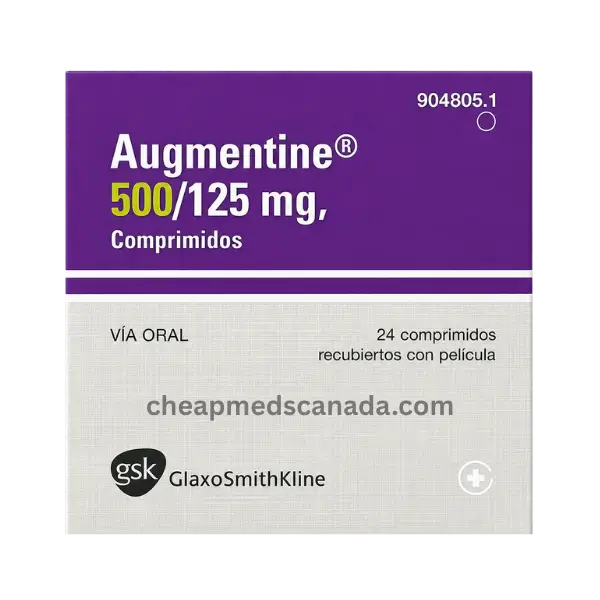

Description
Why Two Ingredients Instead of One
Amoxicillin on its own is a well-established penicillin antibiotic, but many bacteria have evolved an enzyme called beta-lactamase that breaks the amoxicillin molecule apart before it can work. Clavulanate potassium doesn't fight infection by itself — its job is to block that enzyme, protecting the amoxicillin long enough to do its work. This is why Augmentin covers a noticeably wider range of bacteria than amoxicillin alone, including strains that have specifically developed resistance to it. When a prescriber suspects a resistant organism, or when a first course of plain amoxicillin hasn't cleared the infection, Augmentin is often the next logical step.
The combination has been used clinically for decades, and the ratio in the 500/125 tablet — four parts amoxicillin to one part clavulanate — reflects years of dose-optimization work. Earlier formulations experimented with higher clavulanate doses, but that mainly increased nausea without improving how well the infection cleared, which is part of why manufacturers settled on today's ratios across the different tablet strengths.
What Augmentin 500/125 Treats
Augmentin is prescribed for bacterial infections in several body systems, including:
- Respiratory tract infections — bacterial sinusitis, community-acquired pneumonia, and infections involving H. influenzae or M. catarrhalis
- Ear infections — particularly recurrent or treatment-resistant otitis media
- Skin and soft tissue infections — including those caused by beta-lactamase-producing Staphylococcus aureus strains
- Urinary tract infections — for select resistant organisms
- Dental and oral infections — commonly prescribed following extractions or for abscesses with a bacterial component
It will not work against viral illness — colds, flu, and most sore throats are viral, and taking Augmentin for them does nothing but expose your gut flora to an antibiotic unnecessarily. It's also worth noting that when lab results confirm an infection is sensitive to plain amoxicillin alone, prescribers are generally advised to step down to amoxicillin rather than continue the combination, since using the broader-spectrum drug when it isn't needed contributes to resistance over time without adding any benefit for that particular infection.
Dosing Reference
| Infection severity | Typical adult dose |
|---|---|
| Mild to moderate | 500 mg/125 mg every 12 hours |
| More severe or respiratory | 875 mg/125 mg every 12 hours, or 500 mg/125 mg every 8 hours |
| Reduced kidney function | Dose and interval adjusted by prescriber based on creatinine clearance |
A few dosing rules matter more than they might seem:
- Two 250 mg/125 mg tablets are not interchangeable with one 500 mg/125 mg tablet — the clavulanate content would double, which increases gastrointestinal side effects without adding antibacterial benefit
- The course should be finished completely, even once symptoms improve, since stopping early is one of the main drivers of antibiotic-resistant bacteria
- Doses are best spaced evenly across the day (roughly every 12 hours) to keep drug levels steady between doses
How to Take It
Augmentin can technically be taken with or without food, but clavulanate absorption improves when the tablet is taken at the start of a meal, and doing so meaningfully reduces stomach upset. If a dose is missed, take it as soon as remembered unless it's close to the next scheduled dose — don't double up to make up for a missed one.
Side Effects
Common (usually mild and temporary):
- Diarrhea
- Nausea
- Skin rash
- Vomiting
Less common:
- Vaginal yeast infection (from disruption of normal bacterial balance)
- Headache
- Abdominal discomfort
Rare but serious — seek medical attention:
- Severe or persistent diarrhea, which can indicate C. difficile colitis, a complication that can occur during or even weeks after antibiotic use
- Signs of an allergic reaction — hives, facial swelling, difficulty breathing
- Yellowing of the skin or eyes, or unusual fatigue, which can signal liver involvement (clavulanate has a rare association with drug-induced liver injury, more often in older adults or with prolonged courses)
- Severe skin reactions such as blistering or peeling
Who Should Be Cautious or Avoid Augmentin
- Anyone with a history of penicillin allergy or a prior allergic reaction to amoxicillin/clavulanate
- Anyone with a history of liver problems related to a previous course of Augmentin
- Patients with significant kidney impairment, who need dose adjustment rather than the standard schedule
- Patients with infectious mononucleosis, where amoxicillin-class antibiotics are associated with a higher rate of rash
Always tell your pharmacist about other medications you're taking. Augmentin can affect the metabolism of drugs like warfarin (increasing bleeding risk), reduce the effectiveness of some hormonal birth control methods, and interact with methotrexate and allopurinol. This is especially relevant if you're managing a chronic condition alongside a short antibiotic course — a quick medication review at pickup can catch an interaction before it becomes a problem, rather than after.
Clavulin vs. Generic Amoxicillin/Clavulanate
Clavulin is the Canadian brand name for the same amoxicillin/clavulanate combination sold as Augmentin in the United States. Generic amoxicillin/clavulanate potassium tablets contain the identical active ingredients in the identical 500 mg/125 mg ratio and are held to the same bioequivalence standards. The clinical outcome — bacterial coverage, dosing schedule, and expected side effect profile — does not differ between brand and generic; the main distinction is cost and, occasionally, tablet coating or inactive filler ingredients for patients with specific sensitivities. Pharmacists can typically substitute between brand and generic automatically unless your prescriber has specifically indicated otherwise on the prescription.
How quickly does Augmentin start working?
Many people begin to notice symptom improvement within 48 to 72 hours of starting Augmentin. If your symptoms have not improved after three days or become worse, contact your healthcare provider rather than waiting until you finish the full course.
Can I drink alcohol while taking Augmentin?
There is no known dangerous interaction between alcohol and Augmentin. However, alcohol may worsen common side effects such as nausea, stomach upset, and diarrhea, and it may slow your recovery from infection.
Is Augmentin safe to use during pregnancy?
Augmentin is generally considered safe for use during pregnancy when needed to treat a bacterial infection. Your healthcare provider will determine whether the benefits of treatment outweigh any potential risks in your individual situation.
Why does Augmentin cause more stomach upset than amoxicillin alone?
The clavulanate component of Augmentin is more likely to cause gastrointestinal side effects than amoxicillin by itself. Taking Augmentin with food can help reduce stomach upset and improve tolerability.
Can children take Augmentin 500 mg/125 mg tablets?
The 500 mg/125 mg tablet is generally intended for adults. Children are usually prescribed a liquid suspension with the dose calculated according to their weight and age by a healthcare professional.
Does Augmentin affect birth control pills?
Most evidence suggests Augmentin is unlikely to significantly reduce the effectiveness of hormonal contraceptives. However, some healthcare providers recommend using a backup method, such as condoms, during treatment and for a short time afterward as an extra precaution.
Augmentin 500mg/125mg combines amoxicillin and clavulanic acid to help treat a wide range of bacterial infections. It works against susceptible bacteria affecting the respiratory tract, urinary tract, skin, and other areas of the body.


Reviews
There are no reviews yet.