
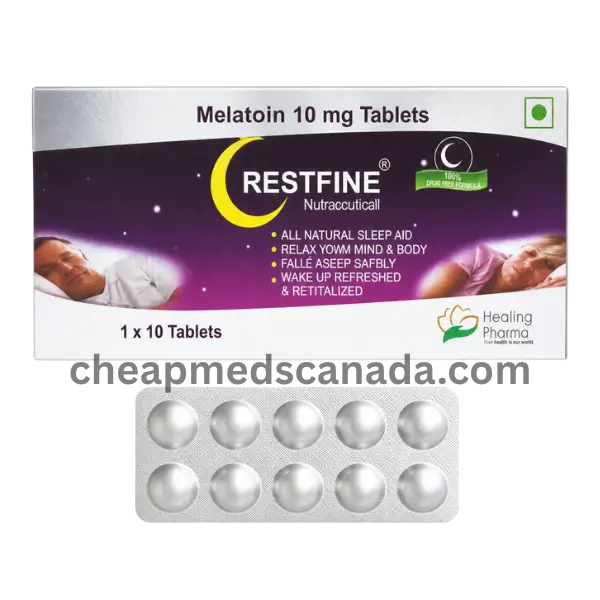
Description
Walk into any pharmacy and you'll find melatonin bottles ranging from 0.5mg all the way up to 10mg and 20mg — sitting on the same shelf, with no real explanation of why the difference matters. Most people just grab whatever bottle looks "stronger" and assume more melatonin means better sleep.
That assumption is wrong. And the research backing that up is more interesting than you'd expect.
This article breaks down what melatonin actually does, why 10mg has become so common despite most sleep specialists recommending far less, and how to figure out what dose — if any — makes sense for you.
Myth vs Fact: Let's Clear the Air First
MYTH: "More melatonin = falling asleep faster." FACT: A landmark MIT study published in the Journal of Clinical Endocrinology & Metabolism compared doses of 0.1mg, 0.3mg, and 3mg. The 0.3mg dose was just as effective at reducing the time it took to fall asleep as the 3mg dose — with fewer next-day side effects. Higher doses did not perform better.
MYTH: "Melatonin is a sedative, like a sleeping pill." FACT: Melatonin is a hormone — specifically, the hormone your brain releases naturally in the evening as part of your circadian rhythm. It does not knock you out the way a sedative does. It signals to your body that it is time to wind down. Taking 10mg does not work ten times "harder" than 1mg — it just floods your system with far more of the hormone than your body would naturally produce.
MYTH: "Since it's natural and sold without a prescription, any dose is fine." FACT: Being available without a prescription does not mean unregulated doses are risk-free. The FDA does not review supplement products for safety or effectiveness the way it reviews medications. Studies on doses above 5mg show increased rates of next-day grogginess, headaches, and vivid dreams — even though serious adverse effects remain rare.
What Melatonin Actually Is (And Why Your Body Already Makes It)
Your brain has a small gland called the pineal gland, and every evening — when light levels drop — it begins releasing melatonin into your bloodstream. This is your body's internal signal that night has arrived and sleep should follow.
Natural nighttime melatonin levels in the blood are remarkably small — typically rising to around 45 picograms per milliliter during the night, from a daytime baseline near 10 picograms per milliliter. To put that in perspective, even a 1mg supplement pushes blood melatonin levels far beyond what your body produces on its own. A 10mg dose is roughly 10 to 20 times higher than what a 1mg dose already achieves — and 1mg is already a significant overshoot of natural levels.
This does not automatically mean 10mg is dangerous. But it does mean you are not "topping up" your natural melatonin in any proportional sense — you are delivering a dose far outside your body's normal range.
Why Does 10mg Even Exist on Store Shelves?
A few reasons, none of which are really about "better sleep":
Manufacturing and Cost: It is often cheaper and simpler for supplement companies to produce one standard tablet size and market it across age groups, rather than producing multiple lower-strength versions.
Consumer Psychology: "10mg" sounds stronger and more effective than "0.5mg" to someone standing in a pharmacy aisle with no other information. Higher numbers sell.
Some Genuine Use Cases: Doses around 10mg daily have been used in clinical research — though largely for purposes unrelated to sleep onset, such as studying melatonin's antioxidant properties in inflammatory conditions. These studies were conducted under medical supervision with specific health goals in mind — not as a general sleep aid recommendation.
None of this means 10mg is inherently harmful for everyone. But it does mean the dose was not selected based on what works best for normal sleep difficulties.
Who Takes 10mg — And What Actually Happens
The Occasional User (Jet Lag, One Bad Night)
For someone using 10mg melatonin once, occasionally, for jet lag or a particularly stressful night — the research suggests the risk of serious problems is low. The most common outcome reported is feeling groggy or "hungover" the following morning.
The Nightly User
This is where the picture changes. Taking 10mg every single night is a different situation than an occasional dose.
A study published in Sleep Medicine, looking specifically at doses above 5mg, found:
- Daytime drowsiness: Reported by up to 15% of users
- Headaches: Reported by approximately 8% of users
- Vivid dreams or nightmares: Reported by approximately 12% of users
None of these are dangerous in the traditional sense — but they are not nothing either. If you are taking 10mg nightly and waking up groggy, getting headaches you did not have before, or experiencing unusually vivid or disturbing dreams, the dose itself may be the cause.
Older Adults
A review focused specifically on adults over 65 found that doses exceeding 10mg per day were associated with higher rates of minor side effects — drowsiness, headache, dizziness — though not an increase in serious adverse events. Given that older adults often metabolize medications and supplements more slowly, lower starting doses are generally a more sensible approach.
The Step-Down Approach — What Sleep Specialists Actually Recommend
If you have been taking 10mg and wondering whether it is actually necessary, here is the approach most sleep specialists suggest:
Start low: Most adults are advised to begin with 0.5mg to 1mg, taken 30 to 60 minutes before bedtime.
Give it time: Melatonin works on your circadian rhythm, not as an instant knockout. Some effects build over several nights of consistent timing.
Step up only if needed — slowly: If 1mg genuinely is not enough after a fair trial, moving to 2mg or 3mg is a more measured step than jumping to 10mg.
5mg is generally considered the practical ceiling: Research consistently shows that doses above this point do not meaningfully improve sleep onset for most people — they simply increase the chance of side effects.
If you find that even 3mg or 5mg is not addressing your sleep issues, that is usually a sign the underlying problem is not a melatonin deficiency at all — and a doctor's input becomes far more valuable than increasing the dose further.
How and When to Take It
- Take 30 to 60 minutes before your intended bedtime
- Can be taken with or without food, though some people find it works better on an empty stomach
- Only take melatonin if you have at least 6 to 8 hours available for sleep afterward — taking it and then having to wake up early can leave you feeling groggy regardless of dose
- Be consistent with timing — circadian rhythm responds to patterns, not single doses
Drug and Substance Interactions
Melatonin is not as "harmless to combine" as its over-the-counter status might suggest. Tell your doctor if you are taking:
- Blood thinners (such as warfarin) — melatonin may have mild effects on blood clotting
- Blood pressure medications — melatonin can interact with how these medications work
- Diabetes medications — melatonin may affect blood sugar levels
- Immunosuppressants — melatonin can influence immune system activity
- Other sedatives, sleep aids, or anti-anxiety medications — combining can increase drowsiness beyond what either substance produces alone
- Alcohol — significantly increases drowsiness and impairs the quality of sleep melatonin is meant to support
Always inform your doctor or pharmacist about melatonin use the same way you would any other supplement — "natural" does not mean "no interactions."
When 10mg Might Genuinely Be Used Under Medical Guidance
There are situations where a doctor might specifically recommend a higher dose — but this is different from self-selecting 10mg off a shelf:
- Certain circadian rhythm disorders in specific patient populations
- Specific research-backed protocols for particular medical conditions
- Cases where lower doses have been properly trialed and genuinely shown no effect, under medical supervision
The key distinction: in these cases, the dose is part of a monitored plan — not a starting point chosen because it was the only bottle available at the store.
When to See a Doctor Instead of Adjusting the Dose Yourself
Melatonin at any dose is not a fix for underlying sleep disorders. See a doctor if:
- Sleep problems persist for more than a few weeks despite consistent melatonin use
- You experience significant daytime impairment — falling asleep during the day, difficulty concentrating
- You snore loudly, gasp during sleep, or a partner has noticed pauses in your breathing (possible sleep apnea)
- You rely on melatonin nightly for months without any improvement
- You are experiencing new or worsening headaches, mood changes, or vivid nightmares since starting melatonin
I've been taking 10mg for months and it still works fine — should I be worried?
If you are not experiencing side effects and the dose is working, the immediate risk appears low based on current research. However, "working" and "optimal" are different things. Many people find that a much lower dose works just as well with less grogginess. It may be worth discussing a step-down trial with your doctor, particularly if you experience any morning grogginess you have simply gotten used to.
Can I just stop taking 10mg suddenly, or do I need to taper?
Melatonin is not associated with the kind of dependence or withdrawal seen with sedative medications. Most people can stop without a tapering process. However, if you stop and notice sleep difficulties return immediately, that may indicate the underlying sleep issue was never actually resolved and was only being managed temporarily.
Is melatonin safe for children at 10mg?
This dose is generally considered too high for children. Children's melatonin needs, if used at all, should be guided by a pediatrician. Doses for children are typically much lower than adult amounts, and melatonin use should not be considered a default solution without medical supervision.
Does taking melatonin every night stop my body from making its own?
Current research has not shown that typical supplemental use suppresses the body's natural melatonin production in a clinically significant way for most people. However, research in this area is still evolving, which is one reason lower doses used only when needed are often considered a more cautious approach.
Why do I feel groggy after 10mg but a friend takes the same dose with no issue?
Individual metabolism varies significantly. Factors such as age, body weight, liver function, and genetics can affect how quickly melatonin is processed. This variability is why the same dose may work well for one person while causing next-day grogginess in another.
Melatonin 10mg is intended to support healthy sleep patterns and is not a substitute for professional medical advice, diagnosis, or treatment. Consult your healthcare provider before use. Keep out of reach of children.
Reviews
There are no reviews yet.