
Description
What Is Jubbonti?
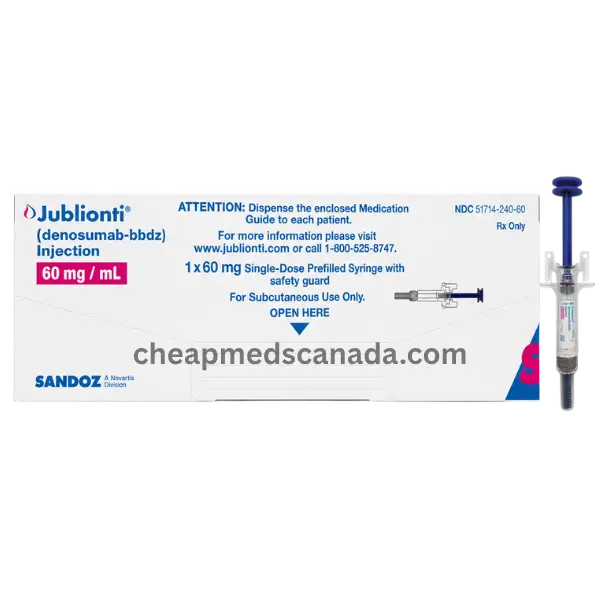
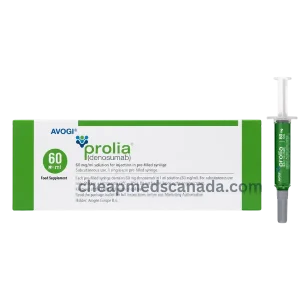
Jubbonti is a prescription injection used to treat osteoporosis and prevent bone fractures in adults. It contains Denosumab 60 mg — the same active ingredient found in Prolia — and is approved by both Health Canada and the FDA as an interchangeable biosimilar. That means it works identically to Prolia in terms of safety, effectiveness, and dosing, but comes at a more affordable cost.
Manufactured by Sandoz Canada Inc., Jubbonti is given once every six months as a subcutaneous (under the skin) injection. It's now the preferred form of denosumab covered by most provincial drug plans across Canada, with several provinces phasing out Prolia coverage in favour of Jubbonti.
What Does Jubbonti Treat?
Jubbonti is approved for adults in the following situations:
- Postmenopausal women with osteoporosis at high risk of fracture — including those who have already had an osteoporotic fracture or who haven't responded to other treatments
- Men with osteoporosis at high fracture risk
- Men on androgen deprivation therapy (ADT) for prostate cancer — ADT causes significant bone loss that Jubbonti helps prevent
- Women on aromatase inhibitor therapy for breast cancer — which also accelerates bone thinning
- Adults on long-term corticosteroid therapy (such as prednisone) who are at risk for steroid-induced bone loss
How It Works
Your bones are constantly being broken down and rebuilt. In osteoporosis, breakdown wins — and a protein called RANKL is largely responsible for triggering that excess bone loss. Jubbonti is a monoclonal antibody that binds to RANKL and blocks it, slowing bone breakdown and giving your body the chance to maintain or rebuild bone density. Clinical data shows denosumab reduces the risk of vertebral fractures by up to 68%, hip fractures by 40%, and non-vertebral fractures by approximately 20%.
Dosage and How to Take It
- Dose: 60 mg injected under the skin once every 6 months
- Location: Upper arm, thigh, or abdomen — given by a healthcare provider or self-injected at home after training
- Important: All patients must take adequate calcium (1,000 mg/day) and vitamin D (400 IU/day minimum) throughout treatment to prevent dangerously low calcium levels
Side Effects to Know
Common: Back pain, joint pain, urinary tract infections, upper respiratory infections, constipation, fatigue, and mild skin reactions at the injection site.
Serious — contact your doctor immediately for:
- Muscle cramps, tingling, or numbness — signs of low calcium (hypocalcemia), which carries a boxed warning for patients with advanced kidney disease
- Jaw pain or swelling — possible osteonecrosis of the jaw
- Unusual thigh or hip pain — possible atypical femoral fracture
- Signs of serious infection — fever, chills, spreading redness or swelling
- Allergic reaction — hives, swelling of the face or throat, difficulty breathing
Important Warning — Do Not Stop Without a Plan
Stopping Jubbonti suddenly can cause a rapid rebound increase in bone loss — and in some patients, multiple vertebral fractures have occurred in the months after discontinuation. If you and your doctor decide to stop treatment, a transition to another bone-protecting medication (usually a bisphosphonate) is typically recommended. Never stop Jubbonti without speaking to your prescriber first.
Who Should Not Use Jubbonti
- Patients with uncorrected low calcium (hypocalcemia) — must be treated before starting
- Pregnant women — denosumab can harm the fetus
- Anyone with a known allergy to denosumab or any ingredient in the formulation
- Patients also receiving Prolia, Xgeva, or Wyost — do not combine denosumab products
Storage
Keep refrigerated between 2°C and 8°C. Do not freeze. Before injection, let the syringe sit at room temperature for 15–30 minutes. Do not shake. Keep in original packaging away from light.
Is Jubbonti the same as Prolia?
Yes. Jubbonti contains the same active ingredient, denosumab 60 mg, as Prolia and is approved by Health Canada as a biosimilar. It provides the same clinical benefits, with the main difference being the manufacturer.
How often do I need a Jubbonti injection?
Jubbonti is given once every six months to help protect your bones. It is important to receive each dose on schedule, as delaying or missing an injection may reduce the medication's effectiveness.
Do I need to take calcium and vitamin D while using Jubbonti?
Yes. Most people taking Jubbonti are advised to take calcium and vitamin D supplements to help maintain healthy calcium levels and reduce the risk of hypocalcemia. Your doctor will recommend the right amount based on your individual needs.
What happens if I stop taking Jubbonti?
Do not stop Jubbonti without speaking to your doctor. Stopping treatment suddenly can lead to rapid bone loss and increase the risk of fractures. If treatment needs to be discontinued, your doctor may recommend another osteoporosis medication to help protect your bones.
Is Jubbonti covered by provincial drug plans in Canada?
Coverage varies by province and insurance plan. Many Canadian drug plans include Jubbonti, but eligibility requirements may differ. Check with your provincial drug plan, private insurer, or pharmacist to confirm your coverage.
Jubbonti contains denosumab, a monoclonal antibody used to treat osteoporosis and bone loss in adults at high risk of fractures. It helps increase bone strength, reduce bone breakdown, and lower the risk of fractures when administered every six months as prescribed.
Reviews
There are no reviews yet.