
Description
What to Expect
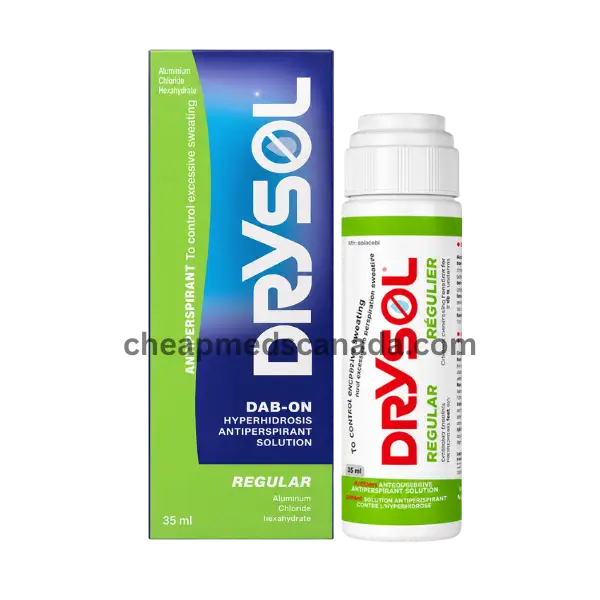
Drysol is one of the most effective non-prescription options for hyperhidrosis (excessive sweating), but it's also one of the most commonly misused — most people who say "it didn't work for me" applied it wrong, not because the product failed. Here's what's actually in it, why application timing matters more than the product itself, and how to use it in a way that gets the results it's capable of.
What Drysol Treats
Drysol is used for hyperhidrosis — excessive sweating beyond what's needed for normal body temperature regulation, most commonly affecting the underarms (axillary hyperhidrosis), though it's also used on palms and soles in some cases. It's typically reached for after standard antiperspirants have failed to control symptoms, which is the more common real-world starting point than most product pages acknowledge.
How Aluminum Chloride Actually Works
Drysol's active ingredient, aluminum chloride hexahydrate, works mechanically rather than through absorption into the bloodstream. When applied to skin, it reacts with moisture to form a gel-like plug within the sweat duct itself. This plug causes the surrounding keratin cells to swell, physically obstructing the duct opening. With consistent use over time, the sweat glands feeding those blocked ducts can undergo a degree of atrophy from disuse, which is why sweating reduction often becomes more durable and requires less frequent reapplication after the first few weeks — it's not simply plugging pores each time, it's gradually retraining the glands themselves.
Drysol Strengths: 12% vs 20%
| Status | 12% (Regular) | 20% (Extra Strength) |
|---|---|---|
| Typical starting point | First-time users, sensitive skin | Cases where 12% hasn't been sufficient |
| Irritation risk | Lower | Higher — more likely to cause stinging or burning |
| Best used for | Mild to moderate underarm sweating | Moderate to severe hyperhidrosis, including palms/soles under guidance |
| Format options | Dab-On applicator | Solution or Dab-O-Matic roll-on applicator |
Starting with the 12% strength and moving up only if needed is generally the more comfortable path — jumping straight to 20% doesn't accelerate results proportionally, but it does meaningfully increase the chance of skin irritation.
The Application Technique That Actually Determines Results
This is the single most overlooked part of using Drysol correctly, and it's the reason so many people conclude the product doesn't work.
- Apply at night, not in the morning. Sweat glands are naturally least active during sleep, which gives the aluminum chloride time to form its duct-blocking gel without being washed away or diluted by active sweating. Morning application, when glands are most active, significantly undermines effectiveness.
- Skin must be completely dry. Even slightly damp skin dilutes the solution and reduces how effectively it can penetrate the duct. A cool (not hot) hair dryer setting is a reliable way to ensure the area is fully dry before application.
- Wait at least 2 hours after bathing or showering. Residual moisture and open pores from heat exposure both interfere with proper gel formation.
- Wash it off in the morning. Leaving it on all day isn't necessary once it's had its overnight working window, and prolonged wear increases irritation risk without adding benefit.
- For resistant cases, some dermatologists recommend covering the area with plastic wrap overnight to increase penetration through occlusion — this should only be tried after confirming with a doctor or pharmacist, since it also raises irritation risk.
- Never apply to broken, irritated, or recently shaved skin. Shaving creates micro-abrasions that dramatically increase stinging and irritation when aluminum chloride is applied on top.
What to Expect, and When
Noticeable sweat reduction is typically reported within about 3 days of consistent nightly application. Once sweating is under control, frequency can usually be reduced to once or twice a week for maintenance rather than continuing nightly use indefinitely — nightly application beyond that point mostly just adds irritation risk without added benefit.
Side Effects
Common, usually mild:
- Burning or stinging on application
- Itching
- Prickling sensation
These often improve as skin adjusts over the first week or two, and are more likely with the 20% strength or on already-sensitive skin.
Serious effects requiring medical attention:
- Signs of allergic reaction — rash, hives, swelling of the face, lips, tongue, or throat, difficulty breathing or swallowing
- Severe skin irritation that doesn't improve or worsens over time
Important Warnings
- Drysol can stain clothing and fabric — allow it to fully dry and avoid contact with clothing immediately after application
- It can be harmful to certain metals — avoid contact with jewelry
- Do not use other deodorants or antiperspirants at the same time as Drysol; combining products increases irritation risk without added benefit
- Harmful if swallowed — contact a doctor or poison control centre immediately if this happens
- Pregnant or breastfeeding women should discuss use with a doctor before starting, since risk-benefit hasn't been fully established in these groups
Drysol vs Other Hyperhidrosis Options
Drysol is usually the first step tried after over-the-counter antiperspirants fail, but it's not the only option if it's insufficient. Qbrexza (glycopyrronium) is a prescription wipe that works through a different anticholinergic mechanism rather than physically blocking ducts. Botox injections work by blocking the nerve signals that trigger sweat gland activity and are typically reserved for more severe cases. Iontophoresis (a device-based treatment using mild electrical current, mainly for palms and soles) and oral anticholinergics are other options a doctor may discuss if topical aluminum chloride alone isn't managing symptoms adequately.
Getting Drysol in Canada
Drysol is available in Canada as an over-the-counter product, though it's often listed as a prescription item through some pharmacies depending on strength and format. It's manufactured by Seaford Pharmaceuticals, with no generic alternative currently on the market. A licensed Canadian pharmacy can clarify strength availability and confirm whether a prescription is needed for your specific product format.
Why does Drysol 20% sting more than the lower-strength version?
Drysol 20% contains a higher concentration of aluminum chloride, which makes it more effective at reducing excessive sweating but also more likely to cause temporary stinging, burning, or skin irritation. Many people begin with a lower strength before moving to 20% if needed.
Can I use Drysol on my palms or the soles of my feet?
Yes. Drysol can be used on the palms and soles to help control excessive sweating. However, these areas may be more prone to irritation, so follow your doctor's instructions and consider starting with less frequent applications.
Can Drysol become less effective over time?
Most people continue to benefit from Drysol with regular maintenance use. If sweating gradually returns, your doctor may recommend adjusting how often you apply it rather than stopping the treatment.
Can I shave before applying Drysol?
No. Avoid applying Drysol to freshly shaved skin. Wait at least 24 hours after shaving before using the product to reduce the risk of burning, stinging, and skin irritation.
How often should I use Drysol once my sweating is under control?
After your symptoms improve, many people only need to apply Drysol once or twice a week to maintain results. Your doctor can recommend the best maintenance schedule based on your condition.
Drysol is for external use only and should be applied exactly as directed by a healthcare professional or the product instructions. Avoid applying to broken, irritated, or recently shaved skin. Discontinue use and seek medical advice if severe irritation, rash, or allergic reactions occur.
Reviews
There are no reviews yet.