
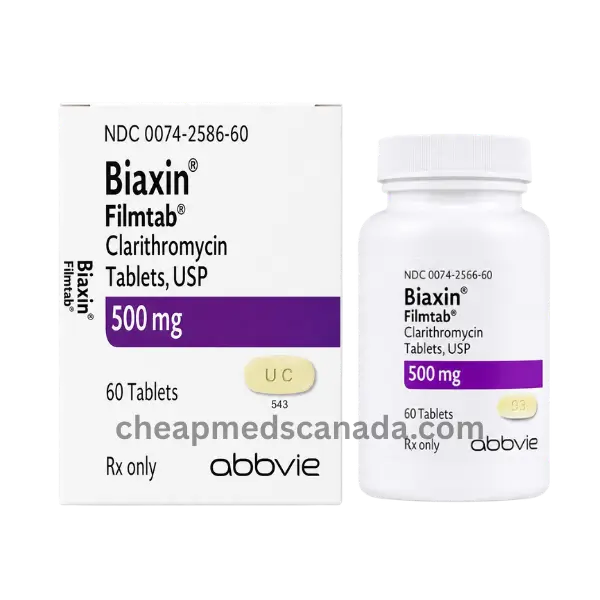

Description
Biaxin 500 mg (Clarithromycin): The Interactions That Actually Matter Most
Most antibiotics get a standard drug-info page. Biaxin genuinely needs a different approach, because its defining clinical feature isn't really its side effect list — it's how aggressively it interferes with other medications. Clarithromycin is a strong inhibitor of an enzyme called CYP3A4, which processes a huge share of commonly prescribed drugs. Here's Biaxin organized around exactly that: what it's for, and then — in order of how dangerous the combination actually is — what it shouldn't be mixed with.
Quick Reference
| Detail | Information |
|---|---|
| Generic name | Clarithromycin |
| Drug class | Macrolide antibiotic |
| Strengths | 250mg, 500mg |
| Manufacturer | Abbott (brand: Biaxin/Klacid); generics widely available |
| Used for | Bacterial infections — respiratory, skin, H. pylori (with other medications) |
| Not used for | Viral infections (colds, flu) |
What It's Actually For
Biaxin treats bacterial infections by stopping bacteria from producing the proteins they need to grow and multiply. It's commonly prescribed for strep throat, pneumonia, skin infections, and — combined with other medications — as part of treatment for H. pylori-related stomach ulcers. It has no effect on viruses, which is worth being clear about since it's sometimes requested for colds or flu where it genuinely won't help.
Tier One: Contraindicated — Never Combine These
These aren't "use with caution" situations. They're combinations considered dangerous enough that guidelines list them as flatly contraindicated.
- Simvastatin or lovastatin. Clarithromycin dramatically raises blood levels of these two specific statins, sharply increasing the risk of rhabdomyolysis — severe muscle breakdown that can lead to kidney damage.
- Ergotamine or dihydroergotamine (migraine medications). The combination can cause severe vasospasm, restricting blood flow to extremities and other tissues.
- Pimozide (an antipsychotic). Combined with clarithromycin's QT-prolonging effect, this carries a heightened risk of dangerous heart rhythm disturbances.
- Lomitapide (a cholesterol medication). Can cause a dramatic spike in liver enzymes.
- Lurasidone (an antipsychotic). Clarithromycin significantly raises lurasidone levels, increasing the risk of serious side effects.
- Colchicine, specifically in anyone with reduced kidney or liver function. This deserves its own callout below — it's one of the most consequential interactions on this list.
Tier Two: The Colchicine Warning Deserves Its Own Section
This combination has resulted in documented deaths, most often in elderly patients or those with existing kidney impairment, which is why it's treated with particular seriousness. Clarithromycin blocks the pathway that normally clears colchicine from the body, allowing it to build up to toxic levels. In patients with normal kidney and liver function, co-administration may sometimes be managed with a reduced colchicine dose under close medical supervision — but in anyone with renal or hepatic impairment, the combination is specifically contraindicated, not just cautioned against.
Tier Three: Requires Dose Adjustment or Close Monitoring
- Atorvastatin and other CYP3A4-metabolized statins. Less severe than the simvastatin/lovastatin contraindication, but still raises rhabdomyolysis risk — often managed with a temporary statin pause during antibiotic treatment rather than an outright ban.
- Calcium channel blockers (amlodipine, diltiazem, verapamil, nifedipine). Can cause hypotension and, particularly in patients over 65, acute kidney injury.
- Disopyramide (a heart rhythm medication). Combined risk of both dangerously low blood sugar and cardiac arrhythmias, including torsades de pointes.
- Warfarin. Can intensify blood-thinning effects, raising bleeding risk — closer INR monitoring is standard practice during concurrent use.
- Digoxin. Clarithromycin can raise digoxin levels into a toxic range.
- Certain benzodiazepines (midazolam, triazolam, alprazolam). Levels can rise substantially, increasing sedation risk.
Tier Four: Reduces Clarithromycin's Own Effectiveness
Some medications work the other direction — they speed up clarithromycin's breakdown, potentially making the antibiotic less effective against the infection it's meant to treat.
- Rifampin, rifabutin, rifapentine
- Efavirenz, nevirapine
- Certain anti-seizure medications (phenytoin, carbamazepine)
The QT Prolongation Issue
Independent of specific drug interactions, clarithromycin itself carries a documented risk of QT interval prolongation — a change in the heart's electrical rhythm that can, in rare cases, lead to a dangerous arrhythmia called torsades de pointes. This risk climbs when combined with other QT-prolonging medications, in patients with existing heart rhythm disorders, uncorrected low potassium or magnesium, or a personal or family history of long QT syndrome. This is exactly why a doctor reviewing your full medication list — not just checking for allergies — matters before starting Biaxin.
Side Effects, Sorted by Urgency
Common:
- Stomach pain, nausea, vomiting, or diarrhea
- An unusual or unpleasant taste in the mouth
Moderate — contact your doctor:
- Severe stomach pain
- Watery or bloody diarrhea (can indicate a specific type of antibiotic-associated colitis)
Serious — seek immediate care:
- Fast or pounding heartbeat, fluttering in the chest, shortness of breath, dizziness (possible arrhythmia)
- Signs of liver problems — loss of appetite, upper stomach pain, jaundice, clay-coloured stools, dark urine
- Signs of kidney problems — little or no urination, swelling in feet or ankles, fatigue or shortness of breath
- Symptoms of a heart attack or stroke
- Signs of a severe allergic reaction
Who Needs a Careful Conversation Before Starting
- Existing heart rhythm disorder or long QT syndrome
- Coronary artery disease
- Myasthenia gravis — macrolide antibiotics can worsen this condition
- Liver or kidney disease
- Diabetes
- Electrolyte imbalances (particularly low potassium or magnesium)
- Pregnancy — not recommended except when no suitable alternative exists, based on available data
- Breastfeeding — worth a specific discussion with your doctor
Do I need to stop my statin while taking Biaxin?
It depends on which statin you are taking. Simvastatin and lovastatin should not be used with Biaxin due to the risk of serious side effects. Other statins, such as atorvastatin, may require dose adjustments or temporary interruption. Always speak with your doctor or pharmacist before making any changes to your medication.
Why is it important to finish the full course of Biaxin?
Even if you start feeling better after a few days, it is important to complete the full course as prescribed. Stopping treatment too early may allow bacteria to survive, increasing the risk of the infection returning and contributing to antibiotic resistance.
Can I eat grapefruit while taking Biaxin?
Grapefruit is not known to have a major direct interaction with Biaxin, but it can affect the way many other medications are processed. Tell your doctor or pharmacist about all the medicines and supplements you take so they can advise you appropriately.
Can Biaxin treat a cold or the flu?
No. Biaxin is an antibiotic that works only against bacterial infections. It is not effective for viral illnesses such as the common cold or influenza, and unnecessary use may contribute to antibiotic resistance.
Biaxin 500 mg should be used only as prescribed by a qualified healthcare professional. Complete the full course of treatment, even if symptoms improve. Do not use it for viral infections such as the common cold or flu. Seek medical attention if you experience severe allergic reactions, persistent diarrhea, or serious side effects.
Reviews
There are no reviews yet.