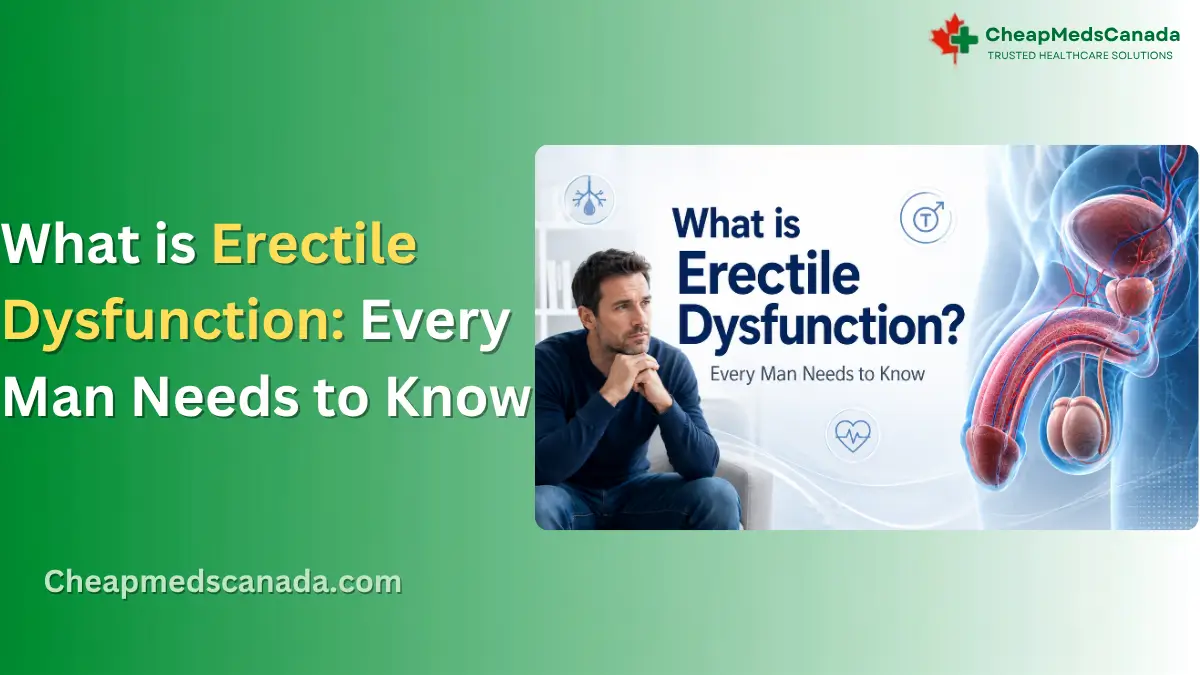
Erectile dysfunction is something millions of men deal with, yet most of them never bring it up with their doctor. That silence makes it harder to get help and easier for the problem to get worse. If you're reading this, you're already doing the right thing — understanding what ED actually is, what causes it, and what can be done about it.
Erectile dysfunction, commonly called ED, is the inability to get or keep an erection firm enough for sexual intercourse. It's not just about occasional difficulty — most men experience that at some point. ED is when the problem happens regularly and consistently interferes with sexual activity.
It's the most common sexual health condition men report to their doctors, and it becomes more frequent with age. Estimates suggest it affects more than 50% of men between the ages of 40 and 70. But that number is likely even higher, because many men never seek help for it out of embarrassment.
ED is not a normal part of aging. It is a medical condition with real causes, and in most cases, real solutions.
The symptoms of ED are fairly straightforward, but they can show up in different ways:
You may find you can only sometimes get an erection before sex, but not reliably. You might be able to get one but struggle to keep it firm long enough during intercourse. In some cases, there may be a complete inability to get an erection at all. Some men find they need an unusually high amount of stimulation just to maintain one.
If any of these are happening to you on a regular basis, it's worth speaking with a healthcare provider.
This is an important question, because the cause shapes the treatment. ED rarely has just one cause — it usually involves a combination of physical, psychological, and sometimes lifestyle factors working against each other.
Conditions that affect blood flow: Are the most common underlying cause. Your penis needs adequate blood flow to become and stay erect. High blood pressure, high cholesterol, diabetes, atherosclerosis (narrowing of the arteries), and vascular disease all restrict that blood flow. This is why ED is considered an early warning sign for cardiovascular disease — the small blood vessels in the penis are often among the first in the body to show the effects of circulatory problems.
Nerve-related causes: Also play a significant role. Your nervous system sends the signals that initiate an erection. Stroke, multiple sclerosis, spinal cord injuries, and nerve damage from pelvic surgery or radiation therapy can all interfere with those signals.
Hormonal issues: Particularly low testosterone, can reduce sexual desire and contribute to difficulty getting erections. Thyroid problems can also be a factor in some men.
Certain medications: Are a commonly overlooked cause. Antidepressants, blood pressure medications, diuretics, antihistamines, sedatives, prostate cancer drugs, and several others list ED as a known side effect. If you started a new medication around the same time your symptoms began, it's worth mentioning to your doctor.
Psychological and emotional factors: Are just as real and just as common. Anxiety, depression, chronic stress, low self-esteem, and relationship difficulties can all directly interfere with the ability to get or maintain an erection. Performance anxiety is especially significant — once a man has had one difficult experience, the fear of it happening again can itself become the reason it keeps happening. It becomes a self-reinforcing cycle that's hard to break without addressing it directly.
Lifestyle and substance use: round out the picture. Heavy alcohol use, smoking, recreational drugs, obesity, and physical inactivity all contribute to ED in well-documented ways. These are also the factors most within a man's control to change.
Understanding this helps make sense of why ED happens.
When a man is sexually stimulated — whether physically or mentally — the brain sends signals through the nervous system that tell the blood vessels in the penis to relax and expand. Blood rushes into the erectile tissue, causing the penis to become firm. A series of internal valves then hold that blood in place, maintaining the erection.
For this to work properly, three systems need to be functioning together: the circulatory system (delivering blood), the nervous system (sending and receiving signals), and the endocrine system (providing hormonal support, particularly through testosterone). The mind also plays a direct role — anxiety, distraction, or emotional conflict can short-circuit the process even when everything else is working fine.
Disrupt any part of this chain, and ED is the result.
Yes — and this is one of the most important things men should understand about ED.
The blood vessels that supply the penis are among the smallest in the body. When cardiovascular disease begins to develop — through conditions like atherosclerosis, high blood pressure, or high cholesterol — these smaller vessels often show restriction before the larger arteries near the heart do. This means ED can appear years before a more serious cardiac event.
Doctors and researchers now treat new-onset ED in a man under 60 as a potential cardiovascular red flag. A proper medical evaluation for ED isn't just about sexual health — it's often one of the most valuable checks a man can do for his heart.
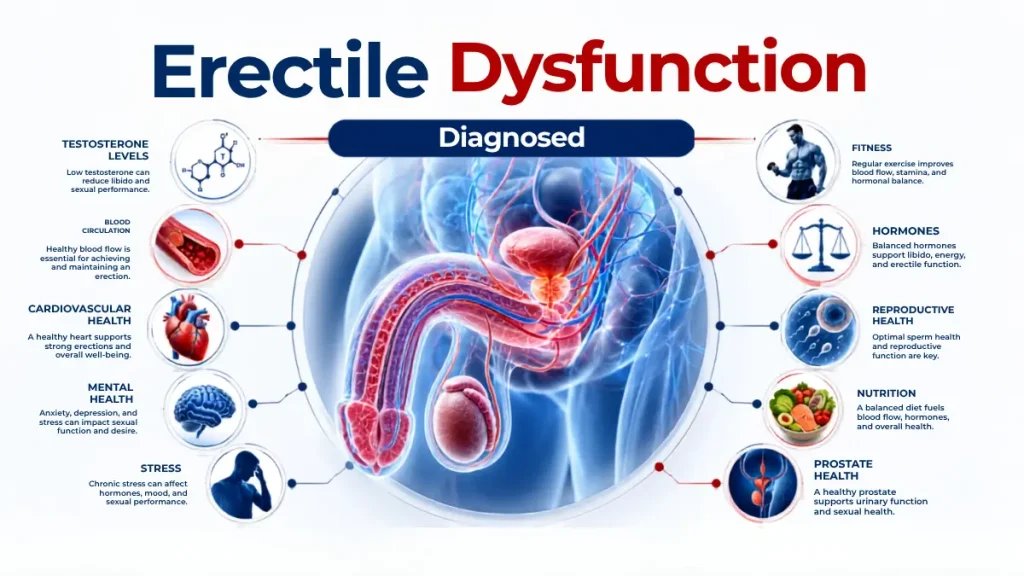
A doctor — usually a primary care physician or a urologist — will review your medical history, ask detailed questions, and perform a physical examination. The questions may feel personal, but answering them honestly is important for getting an accurate diagnosis.
Your doctor will want to know about your current medications, any history of depression or anxiety, how often you experience erections, how firm they are, and when the problem started. They may also ask whether you get nocturnal or morning erections, which can help distinguish between physical and psychological causes.
Depending on what they suspect, they may order blood tests to check testosterone levels, cholesterol, blood sugar, kidney and liver function, and thyroid health. In some cases, more specialized tests like a penile Doppler ultrasound — which measures blood flow in the penis — may be used.
Your doctor may also want to speak with your partner, who can sometimes provide useful context that helps pinpoint the cause.
The good news is that ED is one of the most treatable conditions in men's health. Treatment depends on the underlying cause, and in many cases more than one approach is used together.
Lifestyle changes: Are often the first step, and for some men they're enough on their own. Regular cardiovascular exercise — even 45 minutes of brisk walking or jogging three times a week — has been shown to improve ED in men with mild cases. Quitting smoking, reducing alcohol intake, losing excess weight, eating better, and managing stress all make a meaningful difference in blood vessel health and hormone function.
Oral medications: Are the most widely prescribed treatment. Sildenafil (commonly known as Viagra), tadalafil, vardenafil, and avanafil all belong to a drug class called PDE5 inhibitors. They work by improving blood flow to the penis during sexual stimulation. They do not create an erection independently — sexual arousal is still required. These medications are generally effective for many men, but they require a prescription and are not safe for everyone, particularly men taking nitrate medications.
It is worth understanding the difference between branded and generic options. Sildenafil, for example, is the active ingredient in Viagra and is also available as a lower-cost generic that contains the same active ingredient and meets the same regulatory standards. If you're in Canada and want to understand this more clearly, our guide on Sildenafil vs Viagra in Canada explains it in full. For a clear explanation of what class of drug sildenafil belongs to and how it works, see our article on What Type of Drug Is Sildenafil Citrate. And for a complete overview of sildenafil citrate's uses, safety considerations, and what Canadian men specifically should know, our detailed guide on Sildenafil Citrate: Drug Type, Uses & Safety is a strong starting point.
This is critical to understand before taking any ED medication.
Men who take nitrate medications — commonly prescribed for chest pain, angina, or certain heart conditions — must not combine them with sildenafil or other PDE5 inhibitors. The combination can cause a sudden and dangerous drop in blood pressure that can be life-threatening. This is not a minor precaution — it is an absolute contraindication.
Men with serious heart disease, uncontrolled high or low blood pressure, severe liver or kidney disease, and certain eye conditions also need careful medical evaluation before using any ED medication. The same applies to men taking alpha-blockers or multiple blood pressure drugs.
Always obtain ED medication through a licensed pharmacy with a valid prescription. Products sold online without a prescription, or those marketed as "natural Viagra" or "instant cures," carry real risks. Some contain undisclosed pharmaceutical ingredients with no dosage control. Health authorities in Canada and elsewhere have issued repeated warnings about unauthorized sexual enhancement products found to contain hidden drugs or dangerous compounds.
Not always — but there is a lot a man can do to reduce his risk significantly.
Keeping blood pressure and cholesterol in a healthy range, maintaining a healthy weight, staying physically active, not smoking, limiting alcohol, managing stress, and getting quality sleep all protect the cardiovascular and nervous systems that make erections possible. These habits don't just reduce ED risk — they reduce the risk of heart disease, diabetes, and a long list of other serious conditions.
If ED is happening consistently — not just occasionally — it is time to make an appointment. There is no reason to wait.
You should see a doctor promptly if ED came on suddenly with no obvious cause, if you have also noticed chest discomfort, shortness of breath, or unusual fatigue, or if you have known risk factors like diabetes, high blood pressure, or a history of heart disease. You should also seek help if ED is causing significant emotional distress, affecting your relationship, or if you have tried lifestyle changes and seen no improvement.
If you are taking ED medication and experience a painful erection lasting more than two to four hours, go to the emergency room immediately. This is called priapism and can cause permanent damage if not treated quickly.
This part is easy to overlook, but it is just as real as the physical side.
ED does not just affect sex. It affects how a man sees himself. It can produce feelings of embarrassment, shame, frustration, guilt, and inadequacy — and when those feelings are left unaddressed, they tend to deepen into anxiety and depression. Men often start avoiding intimacy altogether, which creates distance and confusion in relationships that neither partner fully understands.
If you are experiencing these feelings alongside ED, you are not alone and you do not have to push through it silently. Talking to a therapist or counselor — especially one who works with sexual health — can make a significant difference. So can honest conversation with your partner, who may be more understanding than you expect.
ED does not say anything about your worth as a person. It is a medical condition. And like most medical conditions, it responds to the right help.
Erectile dysfunction (ED) is the inability to achieve or maintain an erection firm enough for sexual activity. While occasional erection difficulties are normal, ED refers to a persistent problem that affects sexual performance and quality of life.
ED can result from a combination of physical, psychological, and lifestyle factors. Common causes include diabetes, high blood pressure, cardiovascular disease, obesity, smoking, excessive alcohol use, anxiety, depression, stress, hormonal imbalances, and certain medications.
Yes. The blood vessels in the penis are smaller than those supplying the heart, so circulation problems often appear there first. In some men, ED may develop years before symptoms of cardiovascular disease become noticeable.
No. Although ED becomes more common as men get older, it is not considered a normal or unavoidable part of aging. Many underlying causes can be identified and successfully treated.
A healthcare provider will review your medical history, discuss your symptoms, perform a physical examination, and may order blood tests to evaluate hormone levels, blood sugar, cholesterol, thyroid function, and overall health.
Yes. Treatment options may include lifestyle changes, oral medications, counseling, hormone therapy, vacuum erection devices, injectable treatments, or surgical procedures depending on the underlying cause.
No. Medications such as sildenafil and tadalafil improve blood flow to the penis, but sexual stimulation is still required for an erection to occur. These medications do not create automatic erections.
Men who use nitrate medications for chest pain or heart disease should not take PDE5 inhibitors because the combination can cause a dangerous drop in blood pressure. People with certain cardiovascular, liver, kidney, or eye conditions should also consult a healthcare professional before use.
Yes. Regular exercise, weight management, smoking cessation, reduced alcohol intake, stress management, and better sleep habits can significantly improve erectile function and overall sexual health.
You should speak with a healthcare provider if erection difficulties occur regularly, develop suddenly, worsen over time, or cause emotional distress or relationship problems. Early evaluation may also help identify underlying health conditions.
Products and treatments for erectile dysfunction should be used only under the supervision of a licensed healthcare provider. While ED medications can help improve erectile function, they do not cure the underlying causes of erectile dysfunction and may not be appropriate for all individuals. A medical assessment is recommended to determine the most suitable treatment option based on your health status, current medications, and medical history. This content is not intended to replace professional medical advice, diagnosis, or treatment. Always read the product information carefully and follow your healthcare provider’s instructions.