
Description
What Is Diclectin?
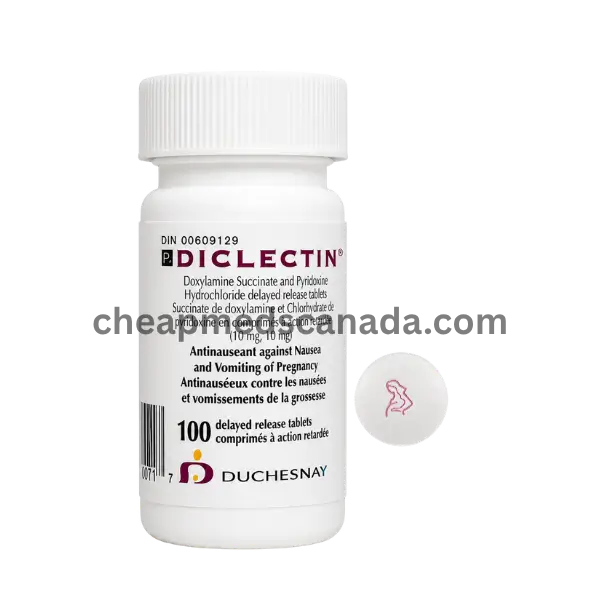
Diclectin is a delayed-release prescription tablet that combines two active ingredients:
- Doxylamine succinate 10 mg — an antihistamine with anti-nausea properties
- Pyridoxine hydrochloride 10 mg — also known as Vitamin B6
Each tablet contains equal amounts of both. The pink tablet is coated in a way that releases the medication slowly over time — not all at once. That delay is deliberate, and it's what makes Diclectin different from simply taking an antihistamine and a B6 supplement separately.
Diclectin is manufactured by Duchesnay Inc., a Canadian pharmaceutical company. In the United States, the same medication is sold under the brand name Diclegis.
Why "Delayed-Release" Matters
This is something many women don't fully understand when they first start taking Diclectin — and it explains why the dosing schedule is so specific.
The delayed-release coating means the active ingredients aren't absorbed immediately. Instead, they're released gradually as the tablet moves through the digestive system. This gives you sustained, consistent relief over several hours rather than one short burst of effect.
Because of this, Diclectin needs to be taken on a schedule — not just when you feel nauseous. If you wait until symptoms start and then take a tablet hoping it'll kick in quickly, you'll be disappointed. That's not how it works.
The medication needs to be in your system, working steadily in the background, before nausea hits. Think of it less like a painkiller you reach for when something hurts and more like a preventative that keeps nausea from taking hold in the first place.
What Does Diclectin Treat?
Diclectin is prescribed for nausea and vomiting of pregnancy (NVP) — commonly called morning sickness, though that term doesn't really do it justice.
NVP affects somewhere between 50% and 85% of pregnant women. It typically starts between weeks 4 and 6, peaks around weeks 8 to 10, and for most women improves significantly by weeks 14 to 16. But about 20% of women continue to experience it well beyond the first trimester, and some deal with it throughout the entire pregnancy.
At its most severe, NVP can escalate into a condition called hyperemesis gravidarum — persistent, extreme vomiting that leads to dehydration, dangerous weight loss, and nutrient deficiencies serious enough to require hospital care. Diclectin is often a key part of managing this condition, though severe cases may need additional treatment.
Diclectin can be used at any stage of pregnancy — first trimester, second, or third — as directed by your doctor.
How Diclectin Works
The two ingredients in Diclectin work through different mechanisms, and together they provide better anti-nausea coverage than either would alone.
Doxylamine is an antihistamine. Antihistamines block certain signals in the brain that trigger the vomiting reflex. It also has a calming, sedative effect — which is why drowsiness is one of the most commonly reported side effects. Doxylamine alone was actually used as a sleep aid before its anti-nausea properties were recognized.
Pyridoxine (Vitamin B6) plays a supporting role in reducing nausea, though the exact reason isn't entirely understood. What's known is that pregnant women with lower B6 levels tend to experience more severe nausea, and supplementing with B6 has consistently shown benefit in clinical studies.
Together, these two ingredients — delivered slowly through the delayed-release coating — keep nausea under control across the hours they were designed to cover.
Diclectin Dosage: How to Take It Correctly
The standard dosing schedule for Diclectin looks like this:
For mild to moderate symptoms:
- 2 tablets at bedtime
For symptoms that continue into the afternoon or throughout the day, your doctor may increase to:
- 1 tablet in the morning
- 1 tablet in the mid-afternoon
- 2 tablets at bedtime
Maximum dose: Up to 4 tablets per day, unless your doctor advises otherwise based on your specific situation.
A few things that matter:
- Take the bedtime dose even if you feel okay that evening — it's working ahead of morning symptoms
- Swallow tablets whole. Do not crush, cut, or chew them — this breaks the delayed-release coating and ruins how the medication works
- Take with a glass of water; food isn't required but may help with any mild stomach discomfort
- Do not stop taking Diclectin suddenly without speaking to your doctor first. Stopping abruptly can cause symptoms to return quickly
- If one dose isn't controlling your symptoms well enough, talk to your doctor — they may adjust the schedule rather than having you simply take more tablets on your own
Starting Diclectin: What to Expect in the First Few Days
Many women don't feel a dramatic improvement overnight. Diclectin typically takes a few days of consistent use before the full benefit kicks in. This is normal and worth knowing ahead of time so you don't give up too soon.
The most noticeable feeling in the early days is often drowsiness. The doxylamine component has a sedating effect, especially at first. Most women find this becomes less pronounced after the first week as their body adjusts — but it's real, and it's worth planning around.
Don't drive, operate heavy equipment, or do anything that requires sharp mental focus until you know how Diclectin affects you personally.
Side Effects: What's Common and What's Not
Common side effects — these affect many women and are generally manageable:
- Drowsiness or sleepiness (the most frequently reported)
- Dizziness
- Headache
- Dry mouth
- Stomach discomfort
- Diarrhea or constipation
- Feeling irritable or restless
These are often most noticeable in the first few days of treatment and tend to lessen over time. Taking the bedtime dose first actually helps with this — the drowsiness happens while you're already sleeping.
Less common but serious side effects — contact your doctor immediately if you experience:
- Difficulty or pain when urinating
- Disorientation or confusion
- Irregular heartbeat or palpitations
- Seizures
- Severe allergic reaction (rash, swelling, difficulty breathing)
These are rare, but they require prompt medical attention.
Drug Interactions: What to Avoid While Taking Diclectin
Diclectin interacts with several types of medications. Always give your doctor and pharmacist a complete list of everything you're currently taking — prescriptions, over-the-counter medications, vitamins, and herbal supplements.
Do not combine Diclectin with:
- Alcohol — significantly increases the sedative effect and is not safe during pregnancy for other reasons too
- Sleep aids or sedatives — combining two sedating medications can cause excessive drowsiness and other complications
- Antihistamines (found in many cold and allergy products) — additional doxylamine effect increases sedation risk
- Pain medications with sedating properties — ask your pharmacist before taking anything for headaches or muscle pain
- MAO inhibitors (MAOIs) — a class of antidepressants that can interact dangerously with doxylamine
- Cough and cold preparations — many contain antihistamines; check with your pharmacist before taking any
When in doubt, call your pharmacist before taking anything new alongside Diclectin. They can check your full medication list quickly and give you a clear answer.
Is Diclectin Safe for My Baby?
This is the question every pregnant woman asks — and it's the right question to ask.
The short answer is yes. Decades of safety data back up this medication.
Research involving over 200,000 women who took doxylamine and pyridoxine in the first trimester showed no increased risk of birth defects or adverse pregnancy outcomes compared to the general population. Diclectin has been used in Canada since 1979 and has been prescribed to tens of millions of pregnant women globally.
Regulatory bodies in Canada, and eventually the United States (where it was approved under the name Diclegis in 2013), have reviewed this data extensively. Diclectin is considered safe throughout pregnancy — first, second, and third trimester.
Breastfeeding and Diclectin
This is a different consideration. Doxylamine can pass into breast milk, and its sedating effects could affect a newborn. Some reports have noted unusual drowsiness or irritability in infants of mothers taking doxylamine-containing medications.
For this reason, most doctors advise against using Diclectin while breastfeeding. If you're nursing and still experiencing significant nausea, talk to your doctor about alternatives that are compatible with breastfeeding.
Who Should Not Take Diclectin?
Diclectin is not suitable for everyone. Tell your doctor before starting if you have:
- A known allergy to doxylamine, pyridoxine, or any ingredient in the tablet
- A history of urinary retention or difficulty urinating
- Glaucoma (particularly closed-angle glaucoma)
- Epilepsy or a seizure disorder
- Significant liver problems
Your doctor will weigh these factors and recommend the safest course of action for your situation.
Diclectin vs Generic Doxylamine/Pyridoxine
Generic versions of doxylamine succinate and pyridoxine hydrochloride at 10 mg/10 mg are available in Canada at a lower price point.
Here's what's important to understand about the difference:
The branded Diclectin tablet uses a specific delayed-release formulation. The enteric coating is what allows the drug to be absorbed in a controlled, sustained way throughout the gut. Generic versions that use the same ingredients but a different release mechanism may not work identically — and in some cases, immediate-release versions of doxylamine simply won't provide the same steady coverage for NVP symptoms.
If your pharmacist offers you a generic, ask specifically whether it's formulated as a delayed-release tablet. If it is, the clinical effect should be comparable. If it's not, it may be worth discussing with your doctor before making the switch.
Ordering Diclectin Online in Canada
Diclectin is a prescription-only medication in Canada. You'll need a valid prescription from a licensed Canadian physician or your own doctor before placing an order.
When ordering online:
- Submit your valid prescription during the ordering process — a legitimate pharmacy will always require this
- Confirm the strength matches what your doctor prescribed: 10 mg doxylamine / 10 mg pyridoxine per tablet
- Order in advance, especially if you're in the first trimester when symptoms tend to be most severe — don't wait until you've run out
- Factor in shipping time when planning your refill
Tips From Women Who've Used Diclectin
A few practical pieces of advice that come up repeatedly from pregnant women who've been through this:
- Set an alarm for your bedtime dose if you tend to fall asleep early — missing the nighttime dose is the most common reason the next morning goes badly
- Keep water and plain crackers near the bed so you can take your morning dose (if prescribed) before you even sit up
- Give it at least 3 to 4 days before deciding whether it's working — many women almost give up in the first couple of days and then notice a real shift by day 4 or 5
- Tell your partner about the drowsiness so they can help cover morning responsibilities during the adjustment period
- Track your symptoms in a journal for a week or two — it helps your doctor adjust the dosing schedule if needed
When to Call Your Doctor
Reach out to your healthcare provider if:
- Symptoms are not improving after a week of consistent use
- Vomiting is so severe you can't keep food, water, or the medication itself down
- You're losing weight or showing signs of dehydration (dark urine, dizziness, dry lips)
- You experience any unusual symptoms after starting Diclectin
- You want to stop taking the medication — always do this with your doctor's guidance
Severe nausea and vomiting during pregnancy is not just uncomfortable — it can have real health consequences for both you and your baby. Don't try to push through it without proper support.
Can I take Diclectin in my second or third trimester?
Yes. Diclectin is approved for use throughout pregnancy. Some women continue to require it beyond the first trimester, and it is considered safe for use at all stages of pregnancy when taken as directed by a healthcare provider.
What if I vomit shortly after taking a tablet?
If you vomit within 30 minutes of taking a dose, you may take another tablet. If more than 30 minutes have passed, wait until your next scheduled dose. If vomiting continues and you are unable to keep the medication down, contact your doctor for further advice.
Can I take Diclectin with my prenatal vitamins?
Yes, Diclectin can generally be taken alongside prenatal vitamins. Since many prenatal supplements also contain vitamin B6 (pyridoxine), it is important to inform your doctor about all supplements you are taking so your total intake can be considered appropriately.
Is Diclectin the same as Unisom and B6?
Not exactly. Diclectin contains a combination of doxylamine and vitamin B6 in a delayed-release formulation. While some people in other countries use over-the-counter doxylamine (such as Unisom SleepTabs) with vitamin B6 as an alternative, these products are immediate-release and may not work in the same way or provide the same consistent effect as Diclectin.
How long will I need to take Diclectin?
Many women use Diclectin during the first trimester and into the early second trimester. However, duration of use varies depending on symptom severity, and some may require it for a longer period under medical guidance.
The information provided about Diclectin is for educational and informational purposes only and should not be considered medical advice. Diclectin is a prescription medication used for the management of nausea and vomiting during pregnancy and should only be taken under the supervision of a qualified healthcare professional. Always follow your doctor’s instructions regarding dosage and usage. Do not self-medicate. If you experience any side effects or concerns, consult your healthcare provider immediately. Individual results may vary.



Reviews
There are no reviews yet.