
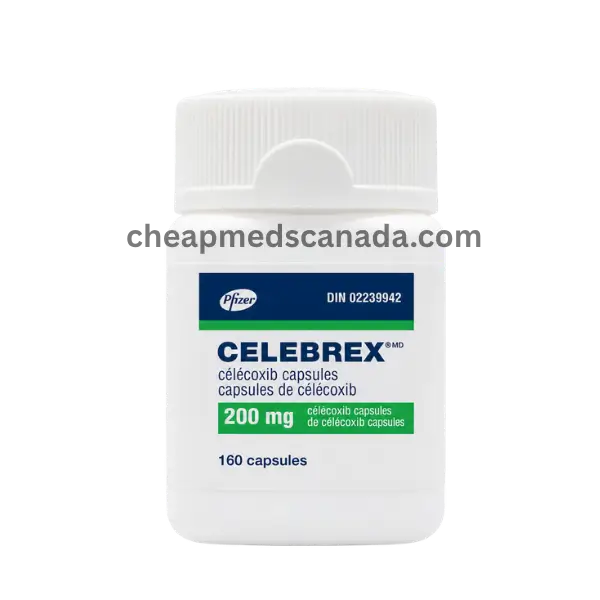
Description
What Is Celebrex?
Most NSAIDs block two enzymes at once — COX-1 and COX-2. COX-2 drives inflammation and pain. COX-1 protects the stomach lining. Block both, and you get pain relief alongside increased risk of stomach ulcers and gastrointestinal bleeding.
Celecoxib is different. It selectively targets COX-2 only, leaving COX-1 largely intact. Your inflammation goes down. Your pain decreases. But your stomach lining keeps its protection.
That selectivity is what separates Celebrex from ibuprofen, naproxen, and diclofenac. Same anti-inflammatory result — significantly better gastrointestinal tolerability.
What Conditions Does Celebrex Treat?
Osteoarthritis: The most common form of arthritis — wear-and-tear damage to joint cartilage, most often in the knees, hips, and hands. Celebrex reduces the joint inflammation that causes pain and stiffness, helping people move more comfortably without needing to reach for pain relief every few hours.
Rheumatoid Arthritis: An autoimmune condition where the immune system attacks joint tissue. The result is chronic inflammation, swelling, and pain that progressively damages the joints. Celebrex helps manage the inflammatory component, reducing daily pain and improving mobility when used as part of a broader treatment plan.
Ankylosing Spondylitis: A type of inflammatory arthritis that primarily affects the spine. The inflammation causes pain and stiffness that starts in the lower back and can spread upward. Celebrex is one of the recommended treatments for managing this condition's daily symptoms.
Acute Pain (Short-Term): For pain that needs to be dealt with fast — after surgery, after a dental procedure, or from a sprain — Celebrex 200 mg is prescribed for short-term relief of up to 7 days. At this dose and duration, it provides powerful pain control without the GI risk that comes from extended NSAID use.
Celebrex Dosage — By Condition
Your doctor will prescribe the lowest dose that controls your symptoms. Here's what standard dosing looks like:
Osteoarthritis: 200 mg once daily, or 100 mg twice daily
Rheumatoid Arthritis: 100 mg to 200 mg twice daily
Ankylosing Spondylitis: 200 mg once daily; can be increased to 400 mg daily if response is insufficient after 6 weeks
Acute pain or post-surgical pain: 400 mg as a first dose, followed by 200 mg on the same day if needed. Then 200 mg twice daily for up to 7 days
How to take it:
- Swallow the capsule whole with water
- Can be taken with or without food — food may help if you notice any mild stomach discomfort
- Take at the same time each day for consistent effect
- Never exceed the prescribed dose; more doesn't mean faster or better relief
Side Effects of Celebrex — What's Normal and What's Not
Because Celebrex spares COX-1, it's gentler on the stomach than traditional NSAIDs. But it's not completely side effect free.
Common side effects (mild, usually manageable):
- Headache
- Mild stomach upset or indigestion
- Nausea
- Diarrhea
- Gas or bloating
- Dizziness
- Mild swelling in the legs or feet
- Upper respiratory symptoms (cold-like symptoms)
Most of these settle on their own. If any of them are persistent or getting worse, check with your doctor.
Side effects that need a doctor's attention promptly:
- Noticeable increase in blood pressure readings
- Unusual fatigue or weakness
- Rapid or irregular heartbeat
- Changes in hearing
- Signs of fluid retention — significant swelling, sudden weight gain
- Skin yellowing or dark urine (possible liver involvement)
Stop Celebrex and get emergency help immediately if you notice:
- Chest pain, shortness of breath, or pain spreading to the arm or jaw — signs of a heart attack
- Sudden weakness or numbness on one side, slurred speech, vision changes — signs of stroke
- Stomach pain combined with black or bloody stools — signs of GI bleeding
- Severe skin reaction — blistering, peeling, or widespread rash covering large areas
- Swelling of the face, throat, or tongue with difficulty breathing — severe allergic reaction
The Cardiovascular Risk — Something Every Patient Should Know
This is the conversation that doesn't always happen clearly enough between patients and prescribers.
Celebrex does carry a real, dose-dependent cardiovascular risk. The selective inhibition of COX-2 shifts the balance between two compounds that affect blood vessel behavior — in a direction that can increase the tendency for clotting. For most healthy people using it at low doses for a short time, that risk is small. But it's not zero.
The risk is higher when:
- Doses are high (200 mg twice daily or more)
- Treatment duration is long (months to years)
- The patient has pre-existing heart disease, prior heart attack, or stroke history
- Other cardiovascular risk factors are present (hypertension, diabetes, smoking, high cholesterol)
For many people with arthritis who also have some cardiovascular risk factors — which is common, since both conditions become more prevalent with age — this needs to be a frank discussion with a doctor, not an assumption.
Celebrex still has a better cardiovascular profile than diclofenac, another NSAID often used for arthritis. And for patients at high GI risk and moderate cardiovascular risk, the equation often still favors Celebrex. But this is case-by-case decision territory — not a blanket yes or no.
Drug Interactions — Medications That Don't Mix Well With Celebrex
Warfarin and other blood thinners Celebrex can increase the anticoagulant effect of warfarin. If you're on warfarin, your INR should be monitored more frequently, especially when starting or stopping Celebrex.
ACE inhibitors and ARBs (blood pressure medications) Medications like ramipril, lisinopril, or valsartan may be less effective when taken alongside Celebrex. There's also increased risk of kidney function deterioration when combining the two long-term.
Diuretics (water pills) Celebrex can reduce the effectiveness of diuretics like furosemide and hydrochlorothiazide, and the combination puts additional pressure on kidney function.
Fluconazole (antifungal) Fluconazole significantly increases celecoxib levels in the blood. Your doctor may reduce your Celebrex dose if you need fluconazole treatment.
Lithium Celebrex can raise lithium concentrations in the blood to potentially toxic levels. Lithium monitoring is essential if you use both.
Clopidogrel (Plavix) Celebrex may reduce the antiplatelet effectiveness of clopidogrel, which is a concern for patients who take it to prevent heart attacks or strokes after a cardiac event.
Alcohol Alcohol + any anti-inflammatory medication increases GI irritation risk. This combination also puts extra pressure on the liver. Keep alcohol minimal while taking Celebrex.
Who Should Not Take Celebrex
Celebrex is not appropriate for everyone. Tell your doctor your full medical history before starting.
Do not take Celebrex if you:
- Have a known allergy to celecoxib, sulfonamides, aspirin, or any NSAID
- Have experienced asthma, hives, or allergic reaction after taking aspirin or other NSAIDs
- Are in the third trimester of pregnancy
- Have recently had or are planning coronary artery bypass graft (CABG) surgery
- Have active stomach or intestinal bleeding or ulcers
- Have severe kidney or liver disease
- Have uncontrolled heart failure
Pregnancy: Celebrex must be avoided from 20 weeks of pregnancy onward. Use before 20 weeks should only happen when strictly necessary and under close medical supervision. Avoid entirely in the third trimester.
Elderly patients: Older adults metabolize Celebrex more slowly and are more vulnerable to both GI and cardiovascular side effects. Doctors typically start at the lowest effective dose.
Celebrex vs Generic Celecoxib — Is There a Difference?
Generic celecoxib contains the exact same active ingredient at the same dose as brand-name Celebrex. Generic versions must meet the same bioequivalence standards — meaning the same amount of the drug reaches the bloodstream over the same timeframe.
The price difference is significant. Generic celecoxib from Canada can cost a fraction of what brand-name Celebrex costs — particularly compared to US retail prices where brand Celebrex can cost over $1,000 for 100 capsules. The same capsules from a licensed Canadian pharmacy can cost 80% less.
How long before Celebrex starts working?
Some people notice pain relief within a few hours of taking their first dose. For chronic inflammatory conditions such as osteoarthritis or rheumatoid arthritis, the full therapeutic benefit may take 1 to 2 weeks of regular use to develop.
Can I take Celebrex with food?
Yes. Celebrex can be taken with or without food. If it causes mild stomach discomfort, taking it with a meal may help improve tolerability.
Is Celebrex safer for the stomach than ibuprofen?
For many patients, Celebrex may be associated with a lower risk of stomach irritation and gastrointestinal complications compared with traditional NSAIDs such as ibuprofen. However, all NSAIDs can still cause stomach-related side effects, especially with long-term use.
Can I take Celebrex long-term?
Celebrex may be used long-term for certain chronic conditions when prescribed by a healthcare provider. Regular medical follow-up is important to monitor for potential side effects and ensure the medication remains appropriate for your needs.
Can I take Celebrex alongside regular paracetamol (Tylenol)?
In many cases, Celebrex and paracetamol can be used together because they work through different mechanisms. However, you should always consult your doctor or pharmacist to confirm that the combination is suitable for your individual situation and current medications.
Celebrex contains celecoxib and should be used only as prescribed by a qualified healthcare professional. NSAIDs may increase the risk of serious cardiovascular and gastrointestinal side effects in some patients. Use the lowest effective dose for the shortest duration necessary. Consult your healthcare provider before use if you have heart disease, stomach ulcers, kidney problems, or are taking other medications.

Reviews
There are no reviews yet.